Told in the hills
Three lamas, a churn of milk and a stone throne
In 1641 and 1642 three Tibetan lamas of the Nyingma school made their way into Sikkim from different directions: Lhatsun Chenpo, Ngadak Sempa Chenpo and Kathok Rigzin Chenpo. They met in the Rathong Chu valley at a place the Lepchas came to call Yuksom, which Wikipedia's history of Sikkim renders as 'the place where the three monks met'. Their task, as they understood it, was to find the man who would rule the hidden land as a Buddhist king.
Tradition says Guru Rinpoche had foretold that the fourth man would come from the east. The lamas found Phuntsog Namgyal near present-day Gangtok, churning milk, and recognised him as the chosen one. Whatever the truth of the milk churn, the record is firm on the next part: in 1642, aged 38, Phuntsog Namgyal was crowned the first Chogyal of Sikkim on a stone seat under a pine at Norbugang, and anointed with water from a sacred urn.
The throne still stands at Yuksom, four stone seats with the highest kept for Lhatsun Chenpo, under a huge old cryptomeria. Opposite is the Norbugang Chorten, said to hold earth and water from every part of Sikkim. The Namgyal dynasty that began here lasted until 1975, when Sikkim joined India. You can walk to the throne from Yuksom's main road in fifteen minutes, and in the early morning you will often have it to yourself.
Pinned to the board
Did you know
Yuksom was Sikkim's first capital from 1642, and in 1670 the second Chogyal, Tensung Namgyal, moved the court to Rabdentse, whose ruins stand near Pelling.
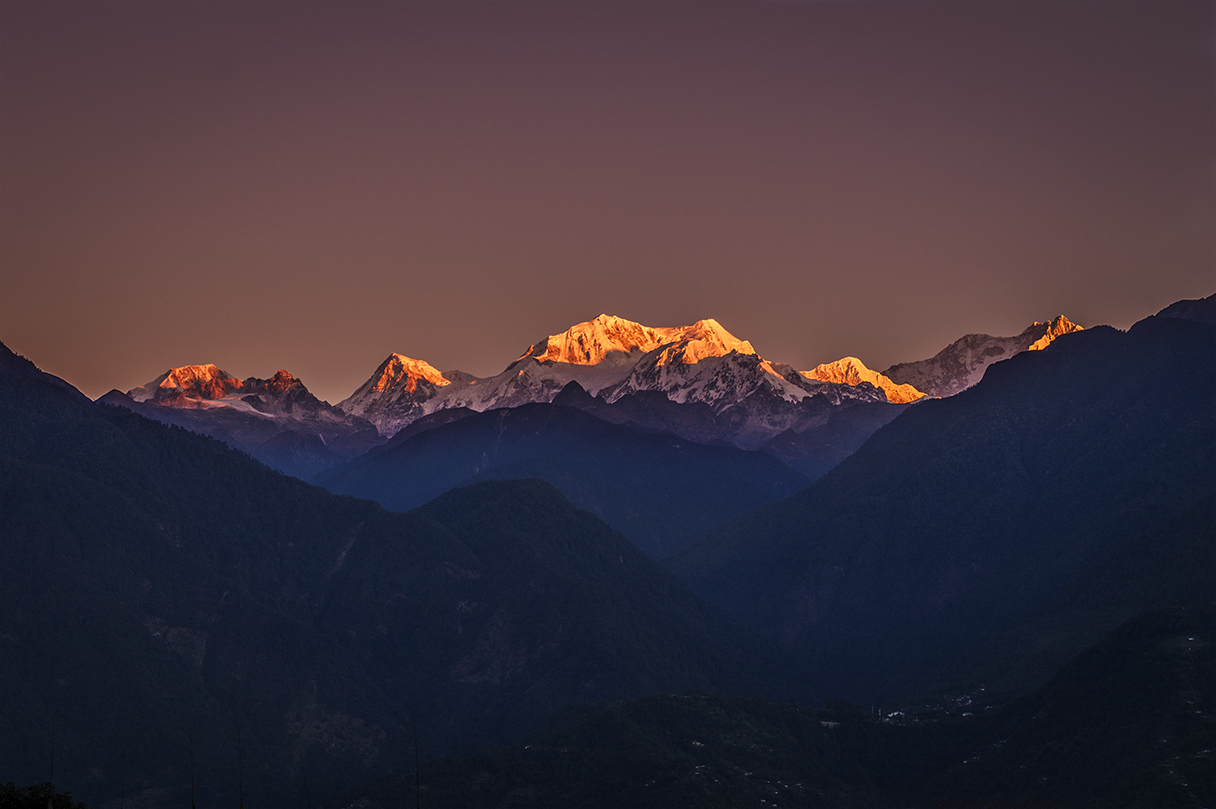
Joe Brown and George Band, who made the first ascent of Kangchenjunga on 25 May 1955, stopped a few feet short of the summit to keep a promise to Sikkim's ruler that the top would stay untrodden.
The 130-foot Buddha statue at Ravangla's Buddha Park was consecrated by the 14th Dalai Lama on 25 March 2013.
Temi Tea Garden, set up in 1969 under Sikkim's last Chogyal, Palden Thondup Namgyal, covers about 177 hectares on the slopes below Tendong hill.
Khangchendzonga National Park, which the Goecha La trek crosses from Yuksom, was inscribed as a UNESCO World Heritage Site in 2016.