Now in the hills

DarjeelingTour Plan
Yuksom
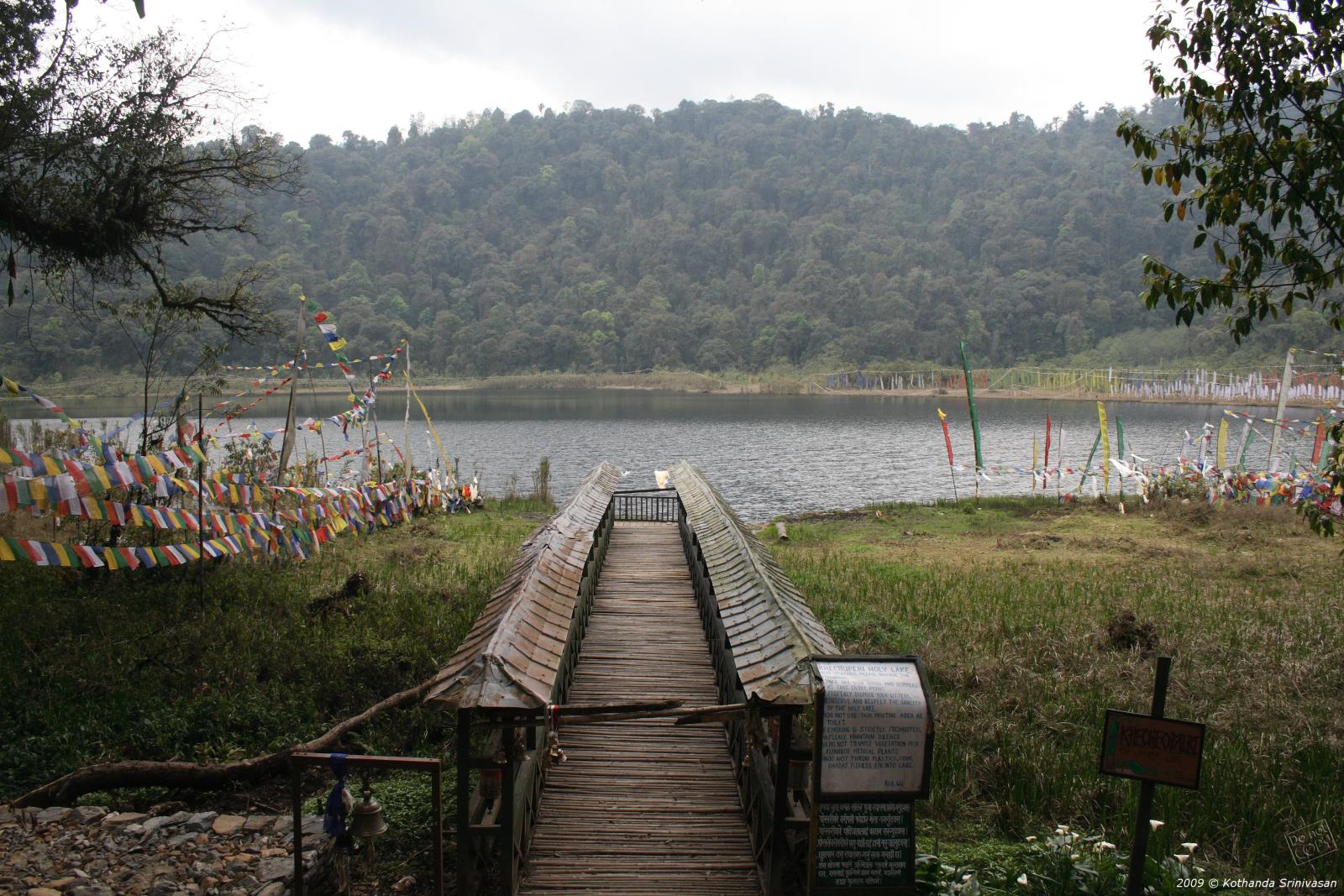
Photo: Kothanda Srinivasan · CC BY 2.0, Wikimedia Commons

village · West and South Sikkim

Sikkim's first capital and the start of the Goecha La trail

Best Mar – May · Oct – Nov1–2 nights
Yuksom is a village at 1,780 m, about 35 km north of Pelling, where Phuntsog Namgyal was crowned the first Chogyal of Sikkim in 1642. Today it is the starting point of the Dzongri and Goecha La trek. Plan 1–2 nights. A shared jeep from Gyalshing costs about ₹120–180, indicative, 2026.

Yuksom sits on a green shelf at the end of the road north from Pelling, about 35 km and 1.5–2 hours away. Beyond it there are no more roads, only the trail into Khangchendzonga National Park. The village is small: one main street of homestays, lodges, small shops and trekking agencies, with terraced fields and cardamom groves falling away below. According to the 2011 census, 1,951 people lived here, and Bhutias form the largest community.

Its place in history is far bigger than its size. In 1642 three lamas crowned Phuntsog Namgyal here as the first Chogyal of Sikkim, and Yuksom stayed the capital until 1670. The stone coronation throne still stands under an old cryptomeria at Norbugang, a short walk from the bazaar. An hour's climb above the village, Dubdi Monastery dates to 1701 and is described as the oldest surviving monastery in Sikkim. All of it costs little or nothing to see.

Most visitors come for one of two reasons. Day-trippers from Pelling see Norbugang, Kathok Lake and perhaps Dubdi, then drive back. Trekkers sleep here before and after the Dzongri and Goecha La trek. We think Yuksom deserves a night of its own even if you are not trekking. The evenings are quiet, the food is homely, and early mornings bring clear air and the sound of prayer wheels in the lanes.

Don't miss

Highlights of Yuksom

Norbugang Coronation Throne

The four-seated stone throne where Phuntsog Namgyal was crowned in 1642 stands under an old cryptomeria, a short walk from the bazaar. It is free, quiet and easy to miss. Read the boards, sit for a while and imagine the three lamas taking their seats.

Kathok Lake and Norbugang Chorten

Water from the small Kathok Lake was used to consecrate the first Chogyal, and the white Norbugang Chorten is said to hold earth from every corner of Sikkim. Both sit within ten minutes' walk of each other, so you can do the whole royal circuit in an hour.

Dubdi Monastery

Dubdi, established in 1701, sits on a forested hill about 3 km and an hour's walk above Yuksom at around 2,100 m. It is often called the oldest surviving monastery in Sikkim. The path is steep but short, and the view back over the village is worth the climb.

Gateway to Goecha La

Yuksom is where the Dzongri and Goecha La trek begins and ends. Agencies, porters and pack animals gather here, and park permits are checked at the forest checkpost. Even if you are not trekking, walk the first kilometre of the trail for a taste of the forest.

Kanchenjunga Falls on the way

On the road from Pelling you pass Kanchenjunga Falls, about 28 km from Pelling, which runs through most of the year and is fullest after the monsoon. Rimbi waterfall sits on the same road. A reserved car can stop at both without much extra cost.

Tashiding next door

Tashiding Monastery, founded in 1641 by Ngadak Sempa Chenpo, one of the three lamas of the coronation, is about 19 km and an hour from Yuksom. Doing both on the same trip ties the story together: the lamas' meeting place and one of their monasteries.

Told in the hills

Three lamas, one king and a stone throne

In the early 17th century three Tibetan lamas of the Nyingma school entered Sikkim from different directions: Lhatsun Chenpo, also known as Lhatsun Namkha Jigme, Ngadak Sempa Chenpo and Kathok Rigzin Chenpo. They met at the spot that became Yuksom. Wikipedia's History of Sikkim explains the Lepcha name as 'the place where the three monks met': yukmun for lama and som for three. Tradition holds that Guru Rinpoche had foretold that a fourth man, from the east, would complete their meeting.

Tradition goes on to say that the lamas sent out messengers and found a man named Phuntsog churning milk near present-day Gangtok. Whatever the details, the record is clear on the result. In 1642, aged 38, Phuntsog Namgyal was crowned at Norbugang as the first Chogyal of Sikkim, and the lamas gave him the title of a religious king. The throne is a stone platform with four seats under a large cryptomeria; the highest seat was for Lhatsun Chenpo.

Water from the small Kathok Lake nearby was used for the consecration, and the Norbugang Chorten opposite the throne is said to hold earth and stones from all parts of Sikkim. A depression in a stone near the throne is shown as the footprint of one of the lamas, a tradition you can judge for yourself. Phuntsog Namgyal went on to unite Bhutia, Lepcha and Limbu under one rule; Yuksom remained the capital until his son Tensung Namgyal moved the court to Rabdentse in 1670.

Pinned to the board

Did you know

Dubdi Monastery above Yuksom was established in 1701, and its name is usually translated as 'the retreat'.

The Norbugang Chorten at Yuksom is said to contain earth and stones gathered from all parts of Sikkim.

Yuksom stayed the capital of Sikkim from 1642 until 1670, when the second Chogyal, Tensung Namgyal, moved the court to Rabdentse.

Getting there

How to reach Yuksom

Shared jeepShared jeeps run from Gyalshing to Yuksom for about ₹120–180 a seat, indicative, 2026. Reach Gyalshing first by shared jeep from Siliguri (₹400–550) or Gangtok (₹350–500). Departures from Gyalshing to Yuksom are few, so ask at the stand the evening before. From Pelling, catch a jeep down to Gyalshing first. Check current status before you travel.
Reserved carA reserved car from Pelling to Yuksom costs about ₹2,000–2,800 one way, indicative, 2026, for about 35 km and 1.5–2 hours via Rimbi and Kanchenjunga Falls. A full-day Pelling sightseeing loop covering Yuksom and Khecheopalri costs about ₹3,000–4,000. From Siliguri, most cars go via Jorethang, Legship and Gyalshing.
Rail / AirThe nearest railhead is New Jalpaiguri (NJP) and the nearest reliable airport is Bagdogra (IXB). Both are a long day's drive away: about 140 km to Pelling, then 35 km more to Yuksom, so allow 6.5–8 hours. Most people break the journey with a night in Pelling. Check road status in the monsoon before you travel.

Costs in Yuksomindicative, 2026

  • Shared jeep Gyalshing → Yuksom₹120–180 a seat
  • Reserved car Pelling → Yuksom₹2,000–2,800 one way
  • Homestay with meals₹1,200–2,000 per person per day
  • Thali or momo meal₹150–350
  • Goecha La group trek from Yuksom₹14,000–25,000 per person

Fares and fees change with fuel prices, season and local union rates. Check current rates before you travel.

Money-saving tip

Stay in a homestay with dinner and breakfast included and walk to Norbugang, Kathok Lake and Dubdi yourself; the three main sights cost nothing, so a full day here can come in under ₹2,000 per person.

Where to stay

Sleeping in Yuksom

Yuksom is a homestay and lodge village, and that keeps prices low. Hotel Yangrigang on the main road is a well-known budget base for trekkers, simple and close to the agencies and the trailhead. Family homestays around the village usually include dinner and breakfast, at about ₹1,200–2,000 per person per day, indicative, 2026, and are the best way to eat local food. There are no big resorts here. If you want a premium room, stay in Pelling and visit Yuksom as a day trip, but you will miss the quiet evening, which is half the point.

On the map

Map of Yuksom, Dzongri and Goecha La, Tashiding, Khecheopalri Lake, PellingIndiaChinaBhutanNepalYuksom1YuksomDzongri and Goecha La2Dzongri and Goecha LaTashiding3TashidingKhecheopalri Lake4Khecheopalri LakePelling5Pelling20 kmN
  1. 1Yuksom
  2. 2Dzongri and Goecha La
  3. 3Tashiding
  4. 4Khecheopalri Lake
  5. 5Pelling
Drawn by Darjeeling Tour Plan from Natural Earth outlines (public domain). Borders as depicted by India. Not for navigation.

Questions people ask

Yuksom: questions answered

How do I reach Yuksom from Pelling

Yuksom is about 35 km from Pelling, 1.5–2 hours by road via Rimbi and Kanchenjunga Falls. A reserved car costs about ₹2,000–2,800 one way, indicative, 2026. By shared jeep, go down to Gyalshing first, then take a Gyalshing–Yuksom jeep for ₹120–180 a seat. Departures are few, so ask the evening before.

Is Yuksom worth visiting if I am not trekking

Yes. Yuksom was the first capital of Sikkim, and the 1642 coronation throne at Norbugang, the Norbugang Chorten, Kathok Lake and Dubdi Monastery are all within walking distance and mostly free. One night in a homestay lets you see the village at its quietest, which is the real reason to come.

What does Yuksom mean

Wikipedia's history of Sikkim explains Yuksom as a Lepcha name meaning 'the place where the three monks met', from yukmun (lama) and som (three). It refers to the meeting of three Tibetan lamas who crowned Phuntsog Namgyal as the first Chogyal of Sikkim at Norbugang in 1642.

Do I need a permit for Yuksom

Indian nationals do not need a permit to visit Yuksom village, but carry photo ID. Foreign nationals need the Sikkim Restricted Area Permit. Going beyond Yuksom into Khangchendzonga National Park, for Dzongri or Goecha La, needs a park permit at the Yuksom forest checkpost and a registered agency. Check current status before you travel.

When is the best time to visit Yuksom

March to May and October to December are best. Spring brings rhododendrons on the trails and mild days; autumn brings clear skies and the main trekking season. January and February are cold but quiet. From June to September heavy rain and landslides make the Pelling–Yuksom road slow, and leeches are common on forest paths.

How many days do I need in Yuksom

One full day and one night covers Norbugang, Kathok Lake, Dubdi Monastery and the village. Add a second night if you want to visit Tashiding or simply rest. Trekkers usually spend a night in Yuksom before and after the Dzongri or Goecha La trek, which takes about 8–10 days on the trail.

What is the cheapest way to stay in Yuksom

Family homestays are the best value, at about ₹1,200–2,000 per person per day with dinner and breakfast, indicative, 2026. Budget lodges such as Hotel Yangrigang on the main road are popular with trekkers. There are no big resorts. Book ahead in October and April–May, when trekking groups fill the village.

Is there mobile network in Yuksom

Mobile coverage in Yuksom is patchy, depending on your operator, and internet can be slow or drop out. Some homestays offer Wi-Fi that works on good days. Download maps and tickets before you arrive, and let family know you may be hard to reach. Above Yuksom, on the trek, there is little or no signal.

Can I see Kangchenjunga from Yuksom

Not well. Yuksom sits in a valley surrounded by forested ridges, so the big Kangchenjunga views are from Pelling, from Dzongri Top on the trek, or on the drive in. In Yuksom itself you get forest, terraced fields and nearby hills. For the mountain, spend your clear mornings in Pelling.

Start planning

Tell us the trip, we'll price it three ways

Dates, who is coming and roughly what you want to spend. A planner replies within one working day with a route and a budget, comfort and premium price, so you can see exactly what each extra rupee buys.

  • No payment to startPay only when you confirm
  • Three prices, in writingBudget, comfort, premium, line by line
  • One plannerOn WhatsApp from pickup to drop
  • Permits handledSikkim and Bhutan paperwork sorted

Get a free plan and price

Reply within one working day · no payment to start

We reply by email or WhatsApp. Read our privacy policy.

Get a free plan