Told in the hills
The Zhabdrung, the dzongs and the kings
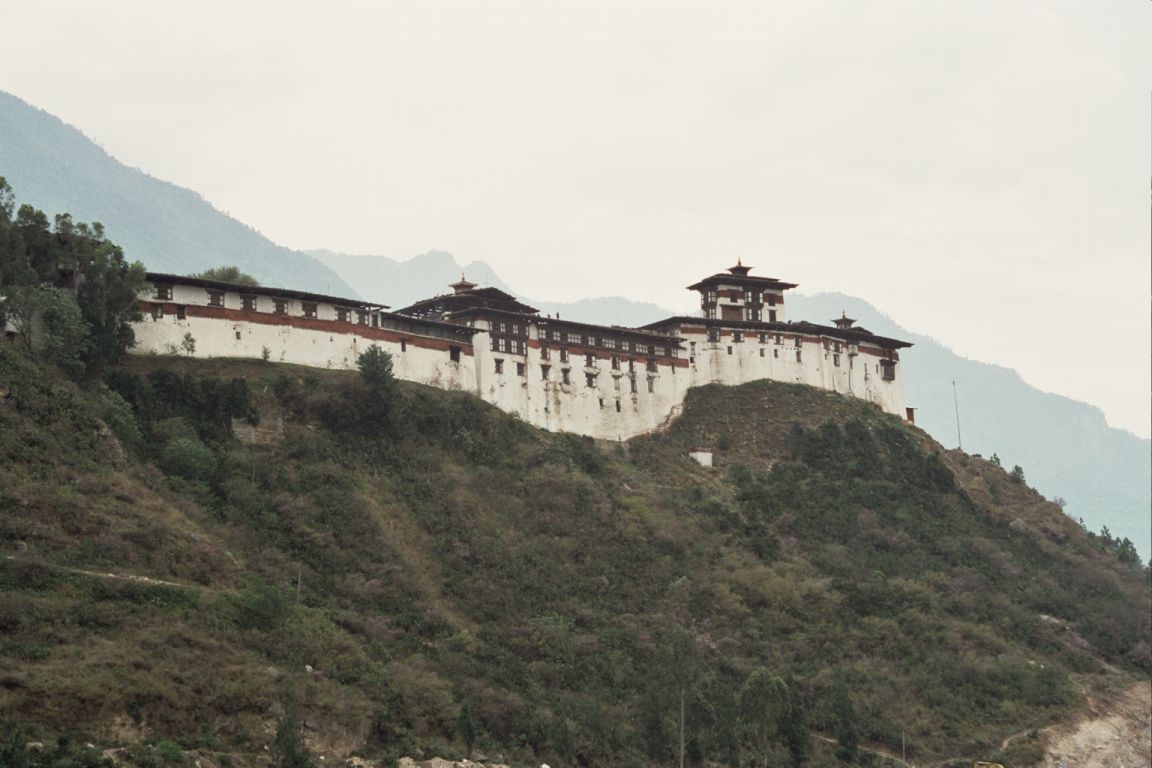
Modern Bhutan begins with a lama crossing the mountains. In 1616 Ngawang Namgyal, a senior lama of the Drukpa Kagyu school, left Ralung in Tibet after a dispute over who was the true reincarnation of his school's head, and came south into the valleys of western Bhutan. Known as the Zhabdrung, 'at whose feet one submits', he spent the next three decades bringing the valleys under one authority, fighting off Tibetan invasions and rival schools, and building the dzongs. Simtokha, near Thimphu, was the first, in 1629; Punakha followed in 1637–38.
The Zhabdrung set up a dual system of government, with a religious head, the Je Khenpo, and a civil head, the Druk Desi, and gave the country its legal code. The dzong, half fortress, half monastery, half administration, became the shape of the state. After his death in 1651, which was kept secret for decades, power slowly passed to regional governors, the Penlops of Paro and Trongsa, and the 19th century saw long civil wars between them.
The Penlop of Trongsa, Ugyen Wangchuck, came out on top, and on 17 December 1907, at Punakha, he was chosen as the first hereditary king. That date is now Bhutan's National Day. His adviser, Ugyen Dorji, ran Bhutan's dealings with British India from Bhutan House in Kalimpong, a link our hills still remember. A century later the fourth king guided the country to a written constitution, and in 2008 Bhutan held its first national elections and became a constitutional monarchy.
Pinned to the board
Did you know
Bhutan allowed television and the internet only in 1999.
Bhutan's 2008 constitution requires that at least 60% of the country remain under forest cover for all time.
The Bhutanese ngultrum is pegged at par to the Indian rupee, and rupees are widely accepted in Bhutan.
In 1994 Bhutan banned climbing peaks above 6,000 m, one reason Gangkhar Puensum, at about 7,570 m, is often called the highest unclimbed mountain in the world.
Bhutan's National Day, 17 December, marks the day in 1907 when Ugyen Wangchuck became the first king at Punakha.