Now in the hills

DarjeelingTour Plan
Phobjikha and Gangtey
Photo: Phuentsho · CC BY-SA 4.0, Wikimedia Commons

valley · Bhutan

A wide glacial valley where black-necked cranes spend the winter

Best Nov – Feb1–2 nights
Phobjikha is a broad, U-shaped glacial valley at about 2,900–3,000 m in Wangdue district, 3 hours from Punakha. From late October to mid-February it is the winter home of endangered black-necked cranes. Stay one or two nights for crane watching, Gangtey Goenpa, the Gangtey nature trail and a farmhouse dinner.

Cross the Lawa La from the Wangdue side and the forest suddenly opens onto a wide, flat-bottomed valley of marsh, potato fields and scattered farmhouses, ringed by pine and dwarf bamboo. This is Phobjikha, also called Gangtey after the monastery on the ridge at its head. It sits at roughly 2,900–3,000 m, and the valley floor is a wetland, protected as a Ramsar site, where a stream meanders slowly between grassy banks. In winter frost lies white across it until mid-morning.

The valley is famous for one visitor. Black-necked cranes, a threatened species that breeds on the Tibetan plateau, fly over the Himalaya each autumn and winter here from late October to mid-February. Local tradition says they circle Gangtey Goenpa three times when they arrive and again when they leave for Tibet. The Royal Society for Protection of Nature runs an information centre with spotting scopes on the valley edge, and the cranes feed in the marsh within easy sight of the road.

Phobjikha has protected its birds in practical ways. Overhead power lines were never allowed across the valley because they kill cranes in flight, and the grid arrived through underground cables. Villagers still grow seed potatoes, their main cash crop, which are sold to India. Phobjikha is cold: nights in December and January drop well below freezing and snow is possible. Rooms are heated with wood stoves called bukhari. The valley needs a route permit and is about 3 hours from Punakha and 5–6 hours from Thimphu.

Don't miss

Highlights of Phobjikha and Gangtey

Crane watching from the valley edge

From November to mid-February, black-necked cranes feed in the marsh below the road. Early morning and late afternoon are best, when they fly to and from their roosts calling loudly. Keep at least 100 m away, stay on paths and never chase them for a photo.

The Black-necked Crane Information Centre

Run by the Royal Society for Protection of Nature on the valley edge, with spotting scopes, displays on crane ecology and a small shop. Entry about Nu 200, indicative 2026. It is the best place to start if you have only a few hours.

Gangtey Goenpa on its ridge

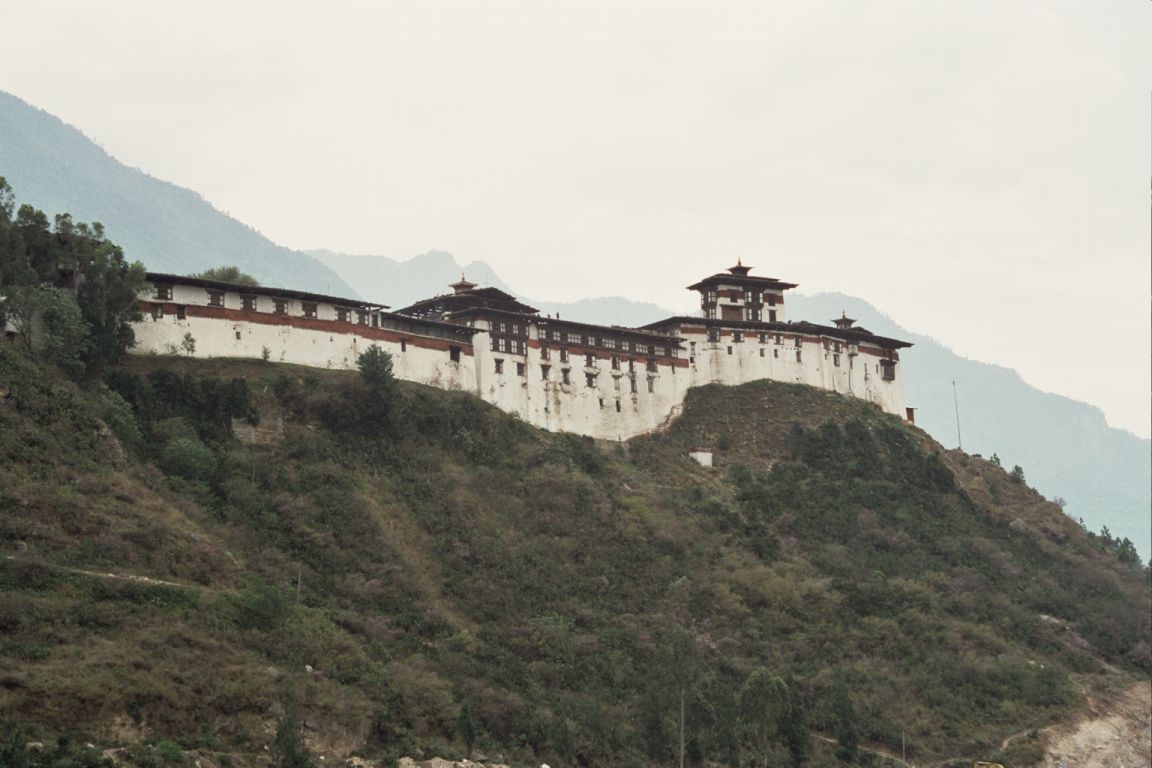
Founded in 1613 and restored between 2000 and 2008, the monastery overlooks the whole valley. It is the main seat of the Pema Lingpa tradition in western Bhutan. Walk through the courtyard and the main hall; monks' quarters surround the temple.

The Gangtey nature trail

A gentle 1.5-hour walk from a mani wall below the monastery, through pine forest and across the valley floor to Khewa Lhakhang. It is the easiest good walk in Bhutan and suits families and seniors; in crane season you pass the feeding grounds.

A night in a farmhouse

Several farmhouses in Phobjikha take guests, with a wood stove in the room, dinner of red rice, potatoes and datshi, and butter tea in the morning. It is cheaper than the hotels and the best way to see village life; ask for extra blankets in winter.

The crane festival in November

Held in the courtyard of Gangtey Goenpa on or around 11 November, with masked dances, folk songs and a crane dance by local school children. It welcomes the cranes and raises money and awareness for their conservation. Book rooms early.

Told in the hills

Cranes that circle the monastery three times

Gangtey Goenpa was founded in 1613 by Gyalse Pema Thinley, grandson of the great treasure-revealer Pema Lingpa of Bumthang, and it is the main seat of the Pema Lingpa tradition in western Bhutan. Wikipedia notes that Pema Lingpa had foretold a descendant would build a monastery here. The buildings were thoroughly restored between 2000 and 2008 and reconsecrated in October 2008 in the presence of the Fourth King.

The cranes are part of the monastery's story. Local tradition holds that when the black-necked cranes arrive in late October they circle Gangtey Goenpa three times before landing in the marsh, and do the same before they leave for Tibet in February. People here regard the birds as heavenly visitors and their arrival as a sign of a good year. The Black-necked Crane Festival, started by the Royal Society for Protection of Nature in 1998, is held in the monastery courtyard each November, with school children performing a crane dance.

Pinned to the board

Did you know

Overhead electricity lines have never been allowed across Phobjikha because they endanger cranes; the valley's power comes through underground cables.

Seed potatoes grown in Phobjikha are the valley's main cash crop and are sold to India.

Gangtey Goenpa was founded in 1613 by Gyalse Pema Thinley, a grandson of the Bumthang treasure-revealer Pema Lingpa.

Getting there

How to reach Phobjikha and Gangtey

Reserved car with guideFrom Punakha it is about 78 km, 3 hours via Wangdue Phodrang and the Lawa La. From Thimphu allow 5–6 hours. A car with driver costs ₹4,500–6,500 a day, indicative 2026. A route permit is required and is issued in Thimphu; check current status before you travel.
Onward to central BhutanPhobjikha is the natural stop on the way east to Trongsa and Bumthang. From the valley, the road climbs back to the main highway and crosses Pele La (about 3,390 m) to Trongsa, roughly 120 km and 4 hours. In winter, snow on Pele La can delay the drive.
BusThere is no practical public transport for tourists. Occasional local buses reach the valley, but you would still need a guide and permit. Almost every visitor comes by hired car as part of a guided itinerary.

Costs in Phobjikha and Gangteyindicative, 2026

  • Black-necked Crane Information Centre≈ Nu 200 per person, indicative 2026
  • Gangtey Goenpa≈ Nu 300–500 per person, indicative 2026
  • Farmhouse homestay with dinner₹2,500–4,500 per room night, indicative 2026
  • Certified 3-star hotel₹3,000–5,500 per room night, indicative 2026
  • Hot stone bath₹1,500–2,500 per person, indicative 2026

Fares and fees change with fuel prices, season and local union rates. Check current rates before you travel.

Money-saving tip

Stay in a registered farmhouse with dinner and breakfast included; it costs about half a hotel room in crane season and puts you closer to the marsh at dawn.

Where to stay

Sleeping in Phobjikha and Gangtey

Hotels and farmhouses are spread across the valley near Gangtey Goenpa and the village of Tabiting, and along the road towards Kilkhorthang. Dewachen Hotel, on the valley slope with wood-stove rooms and big windows, is our comfortable pick. Gangtey Lodge, just below the monastery, is the premium choice, with 12 suites and fireplaces. Amankora also has a lodge in the valley. For budget trips, registered farmhouse homestays and certified 3-star hotels charge ₹3,000–5,500 per room night, indicative 2026. All rooms in winter depend on stoves and electric blankets, so ask what heating is provided.

On the map

Map of Phobjikha and Gangtey, Wangdue Phodrang, Punakha, TrongsaIndiaChinaBhutanPhobjikha and Gangtey1Phobjikha and GangteyWangdue Phodrang2Wangdue PhodrangPunakha3PunakhaTrongsa4Trongsa20 kmN
  1. 1Phobjikha and Gangtey
  2. 2Wangdue Phodrang
  3. 3Punakha
  4. 4Trongsa
Drawn by Darjeeling Tour Plan from Natural Earth outlines (public domain). Borders as depicted by India. Not for navigation.

Questions people ask

Phobjikha and Gangtey: questions answered

When is the best time to visit Phobjikha

November to mid-February if you want the black-necked cranes, with the crane festival on or around 11 November. April to May is good for spring flowers and mild days, and October for clear skies before the cranes peak. June to September is wet, with leeches on the trails and fewer reasons to come.

How do I reach Phobjikha from Thimphu

By car over Dochula to Punakha and Wangdue, then up over the Lawa La into the valley: about 5–6 hours. Most itineraries break the trip with two nights in Punakha. A route permit is needed and is issued in Thimphu on working days; your guide arranges it. Check current status before you travel.

Is Phobjikha worth visiting outside crane season

Yes, for a quiet valley, the Gangtey nature trail, the monastery and farm life, especially in April–May and October. But the cranes are its great draw, so if your time is short and you are travelling between March and October, Punakha, Paro and Haa may give more for each day.

How cold is Phobjikha in winter

Very. Nights in December and January drop to about −5 °C to −10 °C and days reach 5–10 °C. Frost covers the valley until mid-morning, and snow is possible. Pack a down jacket, thermals, gloves and a warm cap. Rooms rely on wood stoves and electric blankets.

Is there electricity in Phobjikha

Yes. The valley was connected to the national grid through underground cables, because overhead lines were not allowed in order to protect the cranes. Power cuts still happen, especially in winter storms. Carry a torch and a power bank, and charge devices when you can.

How many nights should I spend in Phobjikha

One night is enough to see the cranes at dusk and dawn and walk the nature trail. Two nights let you slow down, spend a full day watching birds and visit a farmhouse. Phobjikha pairs naturally with two nights in Punakha, or with Trongsa and Bumthang if you continue east.

What is the Black-necked Crane Festival

An annual festival in the courtyard of Gangtey Goenpa on or around 11 November, the Fourth King's birthday. It was started by the Royal Society for Protection of Nature in 1998 to celebrate the cranes and raise awareness of their protection, with masked dances, folk songs and a crane dance by local children.

Are there good hotels in Phobjikha

Yes, across budgets. Dewachen Hotel is a comfortable mid-range choice with wood-stove rooms and big valley windows. Gangtey Lodge and Amankora Gangtey are premium. Certified 3-star hotels and registered farmhouse homestays cover budget trips at ₹2,500–5,500 per room night, indicative 2026.

Can I see cranes without going into the marsh

Yes, and you should. The cranes feed in fields and marsh visible from the road and from the Black-necked Crane Information Centre, which has telescopes. Walking into the marsh disturbs the birds and is discouraged. Binoculars and patience at dawn or dusk are all you need.

Start planning

Tell us the trip, we'll price it three ways

Dates, who is coming and roughly what you want to spend. A planner replies within one working day with a route and a budget, comfort and premium price, so you can see exactly what each extra rupee buys.

  • No payment to startPay only when you confirm
  • Three prices, in writingBudget, comfort, premium, line by line
  • One plannerOn WhatsApp from pickup to drop
  • Permits handledSikkim and Bhutan paperwork sorted

Get a free plan and price

Reply within one working day · no payment to start

We reply by email or WhatsApp. Read our privacy policy.

Get a free plan