Told in the hills
From a meditation hut to the seat of kings
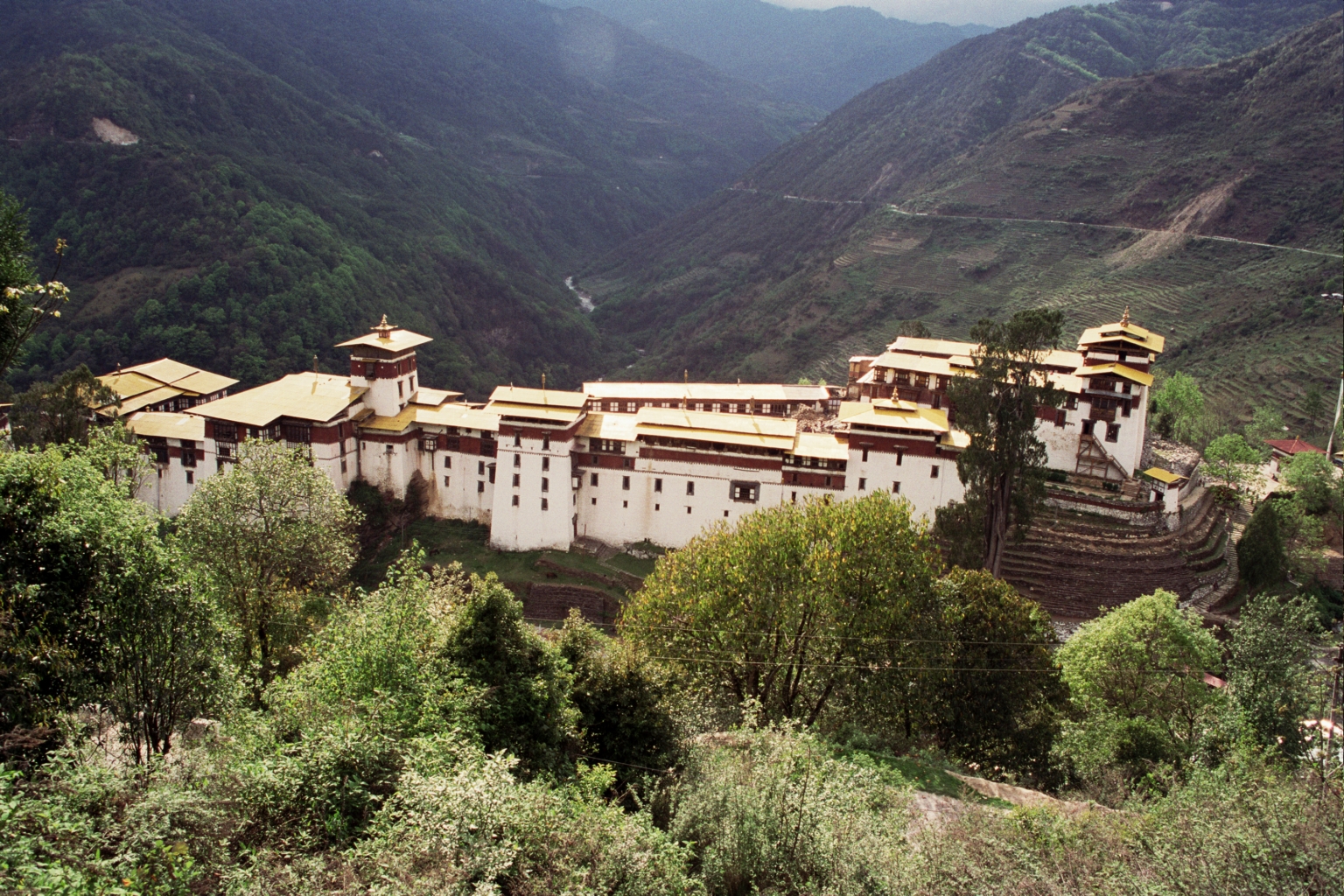
The story of Trongsa begins, by tradition, with a lama and a light. In 1543 Ngagi Wangchuk, a Drukpa lama and the great-grandfather of Zhabdrung Ngawang Namgyal, came to the area and, as the story goes, saw a light shining from the ridge where the dzong now stands. He built a small meditation room there. Houses grew up around it, and the name Trongsa is usually translated as 'new village'. A century later, in 1644, Chogyal Minjur Tempa, acting for the Zhabdrung, built the first proper dzong on the site, and in 1652 he added the Ta Dzong, the round watchtower on the hill above.
Because the dzong controlled the only practical route between east and west, its governor, the Penlop of Trongsa, collected tolls, raised troops and, over time, held real power across central and eastern Bhutan. In the 19th century the Penlop Jigme Namgyal fought his way to the top of Bhutanese politics. His son, Ugyen Wangchuck, followed him as Penlop, defeated his rivals at the Battle of Changlimithang in 1885, and in 1907 was chosen by the clergy, officials and leading families as the first hereditary king of Bhutan.
The link has never been broken. Every heir to the throne since has been invested as Trongsa Penlop before taking the crown; the present king, Jigme Khesar Namgyel Wangchuck, received the title in 2004. The dzong has been enlarged and repaired many times, including after an earthquake in 1897, and the Ta Dzong now houses a museum on the monarchy. When you walk through the dzong's courtyards, you are walking through the building that made the Wangchuck dynasty.
Pinned to the board
Did you know
Trongsa Dzong is the largest dzong in Bhutan, and its first buildings were raised in 1644 by Chogyal Minjur Tempa.
Ugyen Wangchuck was Penlop of Trongsa before he became the first king of Bhutan in 1907.
The heir to Bhutan's throne is traditionally invested as Trongsa Penlop before becoming king; Jigme Khesar Namgyel Wangchuck received the title in 2004.