Now in the hills

DarjeelingTour Plan
Photo: Ashinpt at enwiki · CC BY-SA 3.0, Wikimedia Commons

Tsomgo turquoise and marigold

Gangtok and East Sikkim

Monasteries, high lakes and the old Silk Route

Best Mar – May · Oct – DecPackages from ₹7,000
East Sikkim is Gangtok plus everything within a day of it: Tsomgo Lake and Nathu La at 3,700–4,300 m, the old wool road through Zuluk, and the monasteries of Rumtek and Ranka. Go October to May, sleep in Gangtok, and budget for permits and Gangtok-registered vehicles.

Gangtok sits on a ridge at about 1,650 m, and almost everything in East Sikkim is measured from it. Two hours up the Nathu La road you reach Tsomgo Lake at 3,753 m, then the border pass itself at 4,310 m. An hour across the valley is Rumtek, seat in exile of the Karmapa. Four hours east, past the old bazaar at Rongli, the road climbs to Zuluk and the zigzags that once carried mule trains towards Tibet.

Since the 2021 reorganisation, the old East Sikkim district is split in two. Gangtok district covers the capital, Tsomgo, Nathu La, Rumtek, Ranka and the Fambong Lho forests. The new Pakyong district holds the airport at Pakyong, Rongli, Rhenock, Aritar and the Silk Route villages of Zuluk and Nathang. We keep calling the whole area East Sikkim, as most drivers and hotels still do.

This is the busiest corner of Sikkim, and it is easy to overspend. Hotel rates double in the Puja weeks of October and in May–June, and almost every high-altitude trip runs in a Gangtok-registered vehicle with a permit. The way to save is simple: travel in March, November or early December, share vehicles, sleep central so you can walk, and eat where Gangtok's office workers eat.

The stories here are worth the trip on their own. Gangtok was a small monastery hamlet until the Chogyal moved his court here in 1894. Sikkim was a separate kingdom until 1975. The Lepcha, Bhutia and Nepali-speaking Gorkha communities each have their own festivals, food and histories. We point you to the places where those stories are still visible, not just the viewpoints.

Told in the hills

From a Himalayan kingdom to India's 22nd state

Sikkim's royal line began in 1642, when Phuntsog Namgyal was consecrated as the first Chogyal, or dharma king, at Yuksom in the west. The capital moved from Yuksom to Rabdentse and then Tumlong. In 1861 the Treaty of Tumlong made Sikkim a British protectorate in all but name, and in 1894 the ninth Chogyal, Thutob Namgyal, shifted the court to Gangtok. A small settlement of monks and farmers became the capital.

Gangtok grew as the gateway to Tibet. Wool, musk and salt came down over Nathu La and Jelep La; cloth, sugar and tea went up. The royal chapel at Tsuklakhang hosted coronations and weddings. Under a 1950 treaty, Sikkim became an Indian protectorate while keeping its king. Palden Thondup Namgyal, the last Chogyal, was crowned in 1965, two years after marrying the American Hope Cooke.

The 1970s brought political unrest and pressure for democratic reform. In a referendum on 14 April 1975, voters backed abolishing the monarchy, and on 16 May 1975 Sikkim became India's 22nd state, with Kazi Lhendup Dorjee as first Chief Minister. People in Sikkim still hold different views about how the merger came about. What everyone agrees on is that the palace chapel, the dances and the old families of Gangtok keep that royal past in daily view.

Pinned to the board

Did you know

Gangtok has been Sikkim's capital only since 1894, when Thutob Namgyal moved the royal court there from Tumlong.

Sikkim was declared India's first fully organic state in January 2016.

The 14th Dalai Lama laid the foundation stone of the Namgyal Institute of Tibetology in Gangtok in 1957, and Jawaharlal Nehru opened it in 1958.

Nathu La was sealed after the 1962 war and reopened for India–China border trade only in 2006.

Aritar's Dak Bungalow was built in 1895 by John Claude White, the first British Political Officer in Sikkim.

Why go

What Gangtok does best

Tsomgo Lake and Nathu La in one day

Leave Gangtok at 7 am and climb 2,600 m in under three hours to a glacial lake at 3,753 m and the India–China border at 4,310 m. Baba Harbhajan Singh's shrine sits on the way. Indian nationals only for Nathu La, Wednesday to Sunday.

Zuluk and the Silk Route zigzags

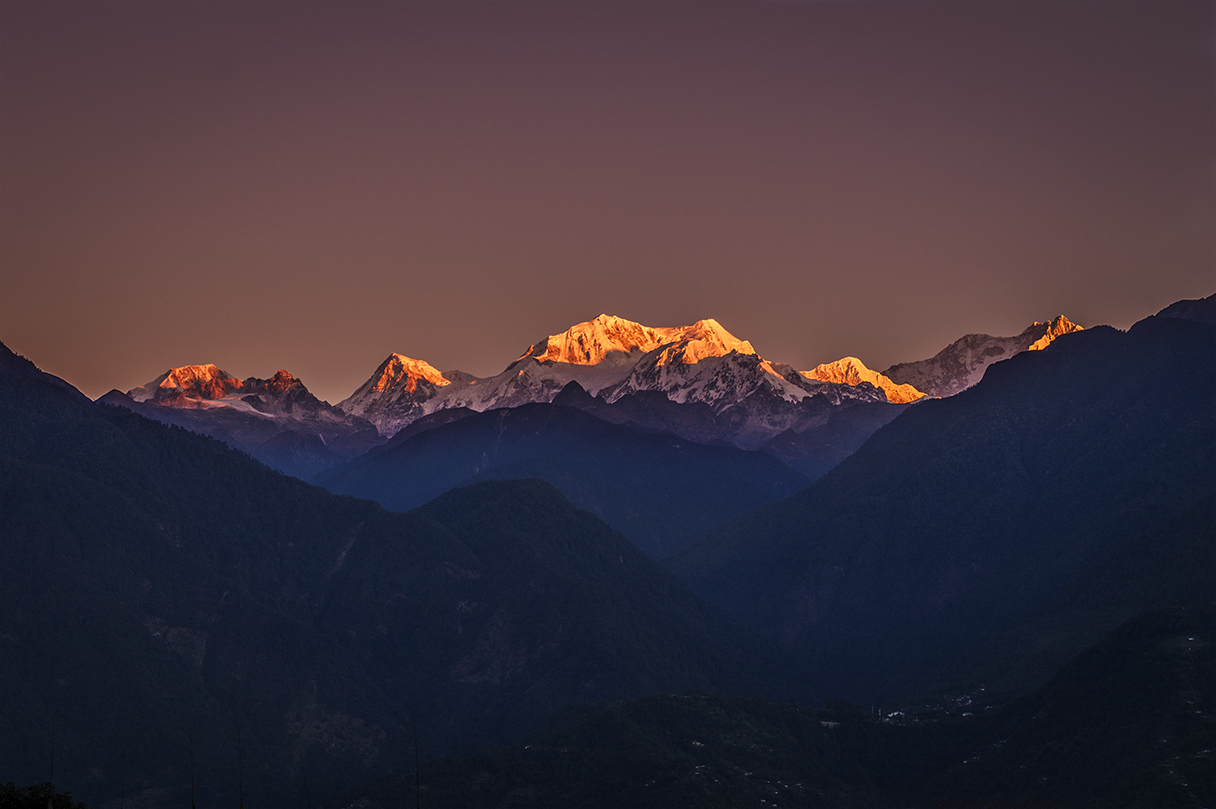
The old Kalimpong–Lhasa mule road climbs from Rongli through Zuluk to Nathang and Kupup. Sleep in a village homestay at 2,900 m, watch sunrise over Kangchenjunga from Thambi viewpoint, then drive the loops that photographers come for. Permit needed; not open to foreigners.

Gangtok's royal and monastic core

Walk from MG Marg to Tsuklakhang, the royal chapel, then on to the Namgyal Institute of Tibetology and Do Drul Chorten. Most of it costs under ₹100 and fits in one unhurried day, with momos on MG Marg at the end.

Rumtek, seat of the Karmapa in exile

The 16th Karmapa rebuilt Rumtek after fleeing Tibet in 1959 and opened it on Losar 1966. Visit the main hall, the golden stupa with his relics and Old Rumtek lower down, then loop back via Lingdum Monastery at Ranka.

Aritar and Lampokhari Lake

A quiet village at about 1,400 m with one of Sikkim's oldest natural lakes, a British dak bungalow from 1895 and forest walks. It is the easy first night on the Silk Route and far cheaper than Gangtok.

Winter festivals in Gangtok

Early December brings the Kagyed masked dances at Tsuklakhang and then Losoong, the Bhutia harvest new year. Days are clear and cold, the Kangchenjunga range is sharp, and hotel rates drop after the October rush.

Stations on the line

Where to go in Gangtok

Aritar
Aritar1,400 m

Lampokhari Lake, an 1895 dak bungalow and a gentle Silk Route start

Village · best Mar – May · Oct – Nov · 1–2 nights
Baba Harbhajan Singh Mandir
Baba Harbhajan Singh Mandir4,000 m

The Army shrine to a soldier who died near Nathu La in 1968

Viewpoint · best Apr – May · Oct – Nov · 0 (day trip) nights
Fambong Lho Wildlife Sanctuary
Fambong Lho Wildlife Sanctuary2,100 m

Oak, rhododendron and red panda country an hour from Gangtok

Wildlife sanctuary · best Mar – May · Oct – Nov · 0–1 nights
Gangtok
Gangtok1,650 m

Sikkim's hilltop capital, walkable, clean and good value

City · best Mar – May · Oct – Nov · 3–4 nights
Kupup
Kupup3,980 m

Elephant Lake, the Yak Golf Course and the old road to Jelep La

Valley · best Apr – May · Oct – Nov · 0 (stop on the Silk Route) nights
Nathang Valley
Nathang Valley4,000 m

A yak herders' valley at about 4,000 m, and the 1888 Gnathang fight

Valley · best Apr – May · Oct – Nov · 0–1 nights
Nathu La
Nathu La4,310 m

The India–China border pass at 4,310 m, open to Indians Wed–Sun

Pass · best Apr – May · Oct – Nov · 0 (day trip) nights
Ranka
Ranka1,300 m

Lingdum Monastery and green farm country, under an hour from Gangtok

Monastery town · best Mar – May · Oct – Nov · 0 nights
Rhenock
Rhenock1,040 m

Border bazaar on the old Kalimpong–Jelep La road into Sikkim

Village · best Mar – May · Oct – Nov · 1 nights
Rongli
Rongli850 m

Old trade bazaar on the Rangpo River and the Silk Route permit gate

River town · best Mar – May · Oct – Nov · 0–1 nights
Rumtek
Rumtek1,500 m

The Karmapa's seat in exile, on a quiet hill across from Gangtok

Monastery town · best Mar – May · Oct – Nov · 0–2 nights
Tsomgo Lake
Tsomgo Lake3,753 m

A sacred glacial lake at 3,753 m, 40 km above Gangtok

Lake · best Apr – May · Oct – Nov · 0 (day trip) nights
Zuluk
Zuluk2,900 m

Silk Route village above the zigzag road to Thambi

Village · best Apr – May · Oct – Nov · 2 nights
Map of Aritar, Baba Harbhajan Singh Mandir, Fambong Lho Wildlife Sanctuary, Gangtok, Kupup, Nathang Valley, Nathu La, Ranka, Rhenock, Rongli, Rumtek, Tsomgo LakeIndiaChinaBhutanAritar1Baba Harbhajan Singh Mandir2Fambong Lho Wildlife Sanctuary3Gangtok4Kupup5Nathang Valley6Nathu La7Ranka8Rhenock9Rongli10Rumtek11Tsomgo Lake12Zuluk1320 kmN
  1. 1Aritar
  2. 2Baba Harbhajan Singh Mandir
  3. 3Fambong Lho Wildlife Sanctuary
  4. 4Gangtok
  5. 5Kupup
  6. 6Nathang Valley
  7. 7Nathu La
  8. 8Ranka
  9. 9Rhenock
  10. 10Rongli
  11. 11Rumtek
  12. 12Tsomgo Lake
  13. 13Zuluk
Drawn by Darjeeling Tour Plan from Natural Earth outlines (public domain). Borders as depicted by India. Not for navigation.

The affordable way

Gangtok for less

East Sikkim gets expensive in three places: peak-week hotel rates, reserved Gangtok vehicles for the passes, and resort food. Cut the first by travelling in March, November or early December. Cut the second by buying shared seats for Tsomgo and Nathu La and sharing a Silk Route car with another couple. Cut the third by sleeping near MG Marg and eating momos, thukpa and thalis where locals eat.

  1. Book the Nathu La permit for a Wednesday or Thursday, when quotas are less contested than at weekends.
  2. Use Gangtok's local shared taxis at ₹20–40 a seat instead of hiring a car for every hop around town.
  3. Ask your Silk Route homestay for full board; it costs less than eating out and there are few restaurants anyway.
  4. Skip the paid coat and boot hire at Tsomgo in October and May if you have a warm jacket and closed shoes.
  5. Avoid the Durga Puja and Diwali weeks if you can: the same room often costs 50–100% more than in November.

What things costindicative, 2026

  • Shared jeep Siliguri/NJP → Gangtok₹400–600 a seat
  • Reserved car Bagdogra → Gangtok₹4,000–7,500 per car
  • Tsomgo + Baba Mandir reserved vehicle₹4,500–6,500 per vehicle
  • Tsomgo + Nathu La shared seat₹1,500–2,500 per person
  • Silk Route vehicle, 2–3 days₹14,000–20,000 per vehicle
  • Budget hotel near MG Marg₹1,800–4,500 per room night
  • Village homestay, Zuluk or Aritar, with meals₹1,500–2,500 per person per night
  • Momos or thukpa in Gangtok₹60–150 a plate

Fares and fees change with fuel prices, season and local union rates. Check current rates before you travel.

Tour packages

Gangtok packages

Every package has a budget, comfort and premium fare. Prices are per person, twin sharing, from Siliguri, NJP or Bagdogra.

Compare all
Gangtok weekend break in 2 nights
Nº 64956 · Gangtok2N / 3D Gangtok weekend break in 2 nights Gangtok Budget fare from
per person, twin
₹7,000
Gangtok on a budget in 3 nights
Nº 46814 · Gangtok3N / 4D Gangtok on a budget in 3 nights Gangtok Budget fare from
per person, twin
₹9,500
Monsoon-friendly Gangtok and Kalimpong, 4 nights
Nº 57274 · Gangtok4N / 5D Monsoon-friendly Gangtok and Kalimpong, 4 nights Gangtok → Kalimpong Budget fare from
per person, twin
₹11,500
Gangtok and the Rumtek monastery trail in 4 nights
Nº 57196 · Gangtok4N / 5D Gangtok and the Rumtek monastery trail in 4 nights Gangtok → Rumtek Budget fare from
per person, twin
₹12,500
Silk Route short: Aritar and Zuluk in 3 nights
Nº 13393 · Gangtok3N / 4D Silk Route short: Aritar and Zuluk in 3 nights Aritar → Zuluk Budget fare from
per person, twin
₹12,500
Gangtok, Tsomgo Lake and Nathu La in 4 nights
Nº 93227 · Gangtok4N / 5D Gangtok, Tsomgo Lake and Nathu La in 4 nights Gangtok Budget fare from
per person, twin
₹13,000
Sikkim backpacker by shared jeep
Nº 46855 · Gangtok6N / 7D Sikkim backpacker by shared jeep Gangtok → Ravangla → Pelling Budget fare from
per person, twin
₹14,000
Gangtok and Darjeeling honeymoon
Nº 45247 · Gangtok5N / 6D Gangtok and Darjeeling honeymoon Gangtok → Darjeeling Budget fare from
per person, twin
₹16,000
Silk Route and Gangtok in 5 nights
Nº 93948 · Gangtok5N / 6D Silk Route and Gangtok in 5 nights Aritar → Zuluk → Gangtok Budget fare from
per person, twin
₹17,000
Gangtok and Darjeeling family trip
Nº 69857 · Gangtok6N / 7D Gangtok and Darjeeling family trip Gangtok → Darjeeling Budget fare from
per person, twin
₹17,500
Gangtok over the passes to Zuluk and Aritar
Nº 54345 · Gangtok6N / 7D Gangtok over the passes to Zuluk and Aritar Gangtok → Zuluk → Aritar Budget fare from
per person, twin
₹19,500
Gangtok, Pelling and Darjeeling
Nº 47844 · Gangtok7N / 8D Gangtok, Pelling and Darjeeling Gangtok → Pelling → Darjeeling Budget fare from
per person, twin
₹20,000
Gangtok with Lachen and Lachung
Nº 47504 · Gangtok6N / 7D Gangtok with Lachen and Lachung Gangtok → Lachen → Lachung → Gangtok Budget fare from
per person, twin
₹21,000
Darjeeling, Pelling, Gangtok and Lachung
Nº 20410 · Gangtok10N / 11D Darjeeling, Pelling, Gangtok and Lachung Darjeeling → Pelling → Gangtok → Lachung → Gangtok Budget fare from
per person, twin
₹28,000

Things to do

Experiences in Gangtok

All experiences

Read before you go

Gangtok guides

historyGangtok The Chogyals of Sikkim and the 1975 merger

Sikkim was a Buddhist kingdom ruled by the Namgyal dynasty of Chogyals from 1642 until 1975. The capital moved from Yuksom to …

6 min read
seasonsGangtok East Sikkim in monsoon: planning a June–September trip

Gangtok works in monsoon if you plan for the road. From June to September NH10 along the Teesta is often cut by …

5 min read
cultureGangtok Sikkim's organic farming story and what it means for you

Sikkim set out in 2003 to farm without chemical fertilisers and pesticides, and was declared India's first fully organic state at Gangtok …

6 min read
practicalGangtok East Sikkim permits explained: PAP, RAP and Nathu La

Indian citizens need no permit for Gangtok, but need a Protected Area Permit for Tsomgo Lake, Baba Mandir, Nathu La and the …

6 min read
foodGangtok Gangtok food guide: momos, phagshapa, gundruk and more

Gangtok eats from three kitchens: Nepali, Bhutia-Tibetan and Lepcha, with plains food alongside. Try momos and thenthuk, phagshapa (pork fat with radish …

5 min read
practicalGangtok MG Marg rules: Gangtok's car-free street, fines and manners

MG Marg is Gangtok's main street, a car-free stretch of about 1 km in the town centre. Smoking, spitting and littering are …

6 min read
budgetGangtok Gangtok on a budget: a good trip for less

A careful traveller can do Gangtok for about ₹2,000–3,000 a person a day, indicative 2026. The savings come from four habits: shared …

5 min read
budgetGangtok Gangtok shared taxi stands: which one goes where

Gangtok has no single bus station. Shared taxis to Siliguri, NJP, Kalimpong and Darjeeling use the Deorali stand on NH10; North Sikkim …

5 min read
historyGangtok The Silk Route story: mules, wool and Jelep La

The road tourists now call the Silk Route was mainly a wool route. From the 1880s to 1962, mule trains carried Tibetan …

6 min read
planningGangtok Tsomgo Lake and Nathu La day trip planner

The Tsomgo Lake, Baba Mandir and Nathu La trip is a full day from Gangtok, leaving at about 7 am and back …

5 min read

Getting there

How to reach Gangtok

Fly to Bagdogra (IXB) or take a train to New Jalpaiguri (NJP), then drive about 115–125 km up NH10 along the Teesta to Gangtok, normally 4–5 hours. Shared jeeps from Siliguri and NJP cost about ₹400–600 a seat and SNT buses ₹275–500, indicative 2026. A reserved small car costs ₹4,000–5,500, an Innova ₹5,500–7,500. Pakyong Airport, 31 km south of Gangtok, has no scheduled commercial flights as of 2026, and the Sevoke–Rangpo railway is still under construction, targeted for about 2027. In the monsoon, NH10 is often cut by landslides; drivers then detour via Kalimpong, Pedong and Rhenock or via Lava and Rorathang, adding 2–3 hours. Check current status before you travel.

Permits

Paperwork you need

Indian nationals need no permit to enter Sikkim but need a Protected Area Permit, arranged by a registered Gangtok agent with photos and ID, for Tsomgo Lake, Baba Mandir, Nathu La and the Silk Route beyond Rongli. Nathu La is open to Indians only, Wednesday to Sunday. Foreign nationals need a free Restricted Area Permit (Inner Line Permit) to enter Sikkim, available online and at Rangpo; they can visit Tsomgo on a day permit in a group, but not Nathu La or Zuluk. Sikkim also charges a ₹50 tourist fee at hotel check-in. Check current status before you travel.

Questions people ask

Questions about Gangtok

What is the best time to visit Gangtok and East Sikkim

October to mid-December and March to May are best. October and November give the clearest views; March and April bring rhododendrons; May is warm but crowded. Avoid July and August, when landslides often block NH10 and the high roads. December to February is cold but clear, with snow that can close Nathu La for days. Check current status before you travel.

How many days do I need for Gangtok and East Sikkim

Plan at least 4 nights: one day for Gangtok's monasteries and MG Marg, one for Tsomgo and Nathu La, one for Rumtek and Ranka, and a buffer for weather. Add 2–3 nights for the Silk Route through Aritar and Zuluk. With 7 nights you can do all of it without rushing or doubling back on long drives.

Do Indians need a permit for Gangtok

No permit is needed to enter Sikkim or to stay in Gangtok. Indian nationals need a Protected Area Permit only for restricted areas such as Tsomgo Lake, Baba Mandir, Nathu La and the Silk Route beyond Rongli. Registered Gangtok agents arrange it with two photos and a photo ID copy. Sikkim also charges a ₹50 tourist fee at hotel check-in; check current status before you travel.

Can foreigners visit Tsomgo Lake, Nathu La and Zuluk

Foreigners can visit Tsomgo Lake on a day permit arranged by a registered agent, usually in a group of two or more, after getting the free Sikkim Restricted Area Permit. Nathu La and the Silk Route through Zuluk, Nathang and Kupup are closed to foreign nationals. Rules change from time to time, so check current status before you travel.

How do I get from Bagdogra airport to Gangtok

Take a reserved car from the Bagdogra prepaid counter for about ₹4,000–5,500 in a small car or ₹5,500–7,500 in an Innova, indicative 2026. The 125 km drive takes 4.5–5.5 hours. On a budget, take a local cab to Siliguri and a shared jeep for ₹400–600 a seat. Pakyong Airport has no scheduled flights as of 2026.

How much does a budget trip to Gangtok cost per day

A careful traveller can manage about ₹2,500–3,500 per person per day, indicative 2026, sharing a budget room near MG Marg, eating local food and using shared taxis. Pass days cost more: a shared seat for Tsomgo and Nathu La runs ₹1,500–2,500. A 5-night Gangtok and Darjeeling package starts around ₹14,000–16,000 per person.

Is it safe to travel to Gangtok in the monsoon

Gangtok itself is safe, but the roads are the problem. From mid-June to September, landslides often close NH10 for hours or days, and high routes such as Nathu La, Zuluk and North Sikkim may shut. If you go, keep spare days, avoid driving after dark in rain, book refundable rooms and check current status before you travel.

When is Tsomgo Lake frozen

Tsomgo Lake is usually frozen or partly frozen from about late December to March, and sometimes into April in a cold year. January and February are the surest months. Snow can also close the road at this time, so keep a buffer day. From May to November the lake is open water, with autumn bringing the clearest skies.

Will I get altitude sickness at Nathu La

Some people feel headaches, breathlessness or nausea at Tsomgo and Nathu La, which sit at 3,753 m and 4,310 m. Sleep at least one night in Gangtok first, drink water, avoid alcohol the night before, walk slowly and limit time at the top to 30–45 minutes. Anyone with heart or lung problems should ask a doctor before going.

Start planning

Tell us the trip, we'll price it three ways

Dates, who is coming and roughly what you want to spend. A planner replies within one working day with a route and a budget, comfort and premium price, so you can see exactly what each extra rupee buys.

  • No payment to startPay only when you confirm
  • Three prices, in writingBudget, comfort, premium, line by line
  • One plannerOn WhatsApp from pickup to drop
  • Permits handledSikkim and Bhutan paperwork sorted

Get a free plan and price

Reply within one working day · no payment to start

We reply by email or WhatsApp. Read our privacy policy.

Get a free plan