Now in the hills

DarjeelingTour Plan
Paro
Photo: Gerd Eichmann · CC BY-SA 4.0, Wikimedia Commons

valley · Bhutan

Tiger's Nest, the airport valley and Bhutan's red rice fields

Best Mar – May · Sep – Nov2–3 nights
Paro is the broad valley at about 2,200 m that holds Bhutan's international airport, Rinpung Dzong, the National Museum and the Tiger's Nest monastery on its cliff. Spend two or three nights: one day for the Tiger's Nest hike, one for the dzong, museum, Kyichu Lhakhang and a farmhouse hot stone bath.

Paro is the valley most visitors see first and last. Flights drop between ridges into a narrow strip of runway beside the Paro Chhu, and within ten minutes you are among willow trees, red rice paddies and white farmhouses with carved, painted windows. The town itself is one main street of two-storey shops built in traditional style. Above it the river is guarded by Rinpung Dzong, and above that by the round watchtower of Ta Dzong, now the National Museum. Ten kilometres north, the Tiger's Nest clings to a cliff about 900 m above the valley floor.

Paro is the best place in Bhutan to see village life up close at short distances. The valley is wide by Bhutanese standards, so farms spread across flat land, and many offer lunch, a butter-tea welcome and a hot stone bath in a wooden tub. Paro red rice, grown here for centuries, is sold across the country. The road north to Drukgyel Dzong and the start of the Jomolhari trek passes Kyichu Lhakhang, one of the oldest temples in Bhutan, and a string of guesthouses and farmstays.

Plan the Tiger's Nest hike near the end of the trip, after a few days in Thimphu at a similar height have helped you acclimatise. Spring, from March to May, brings the Paro Tshechu festival and rhododendrons on the trail; autumn, from late September to November, brings the clearest skies. Paro is also where Bhutan's top-end lodges cluster, from COMO Uma Paro to Amankora, and where certified 3-star hotels are plentiful. Hotel Olathang, built in 1974 for coronation guests, sits in pine forest above town.

Don't miss

Highlights of Paro

The Tiger's Nest hike

Paro Taktsang sits at 3,120 m, about 900 m above the valley. The trail from the car park takes 2.5–3.5 hours up through pine and prayer flags, with a cafeteria halfway and a final flight of steps past a waterfall. Entry about Nu 1,000; start by 8 am.

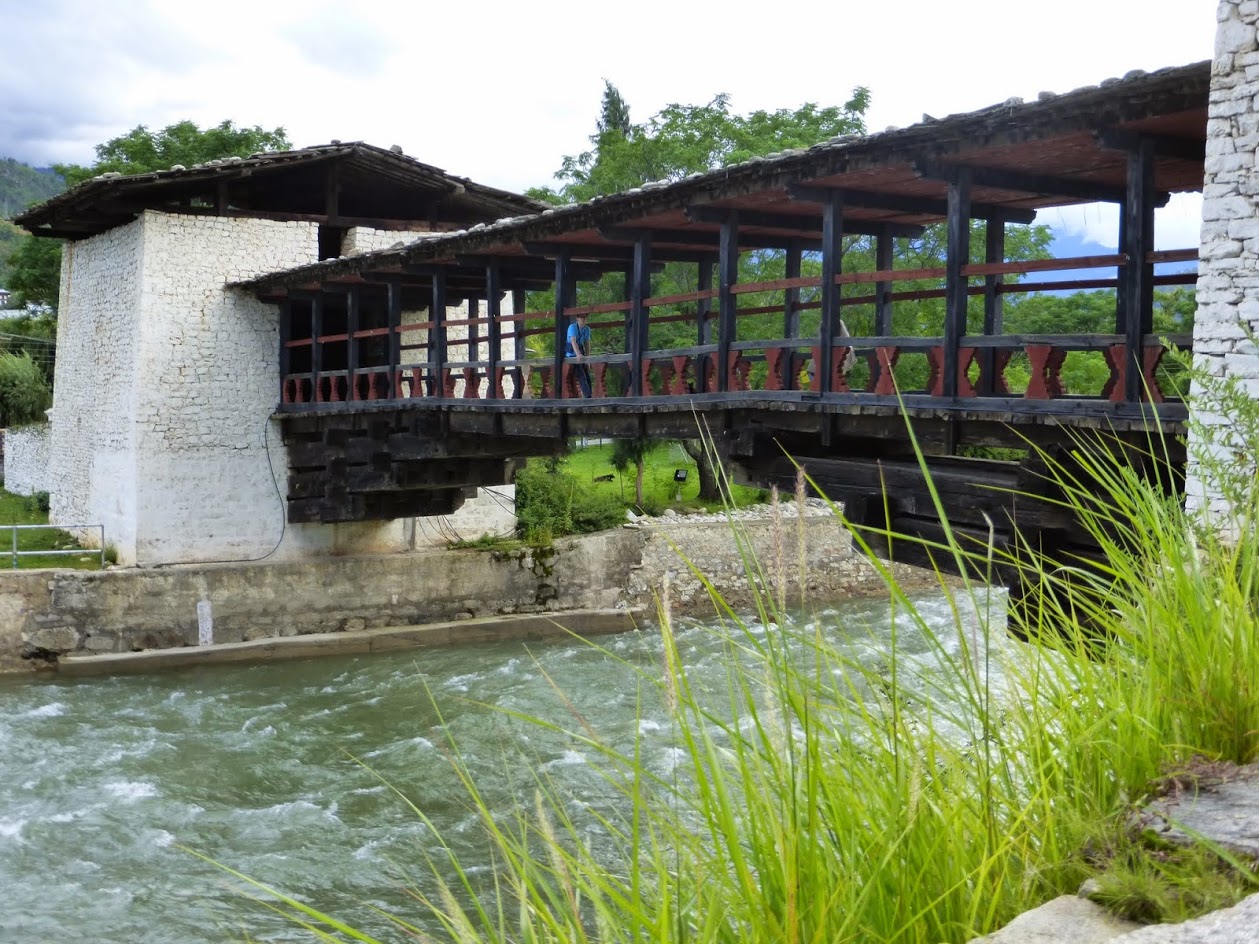
Rinpung Dzong and the covered bridge

Built under the Zhabdrung in 1644, the 'fortress on a heap of jewels' houses the district administration and the monk body. Walk down through its courtyards to the traditional cantilever bridge over the Paro Chhu, one of the best photographs in Bhutan.

National Museum in Ta Dzong

The round watchtower above the dzong, built in 1649, has held the National Museum since 1968. Galleries cover masks, thangkas, weapons, stamps and natural history. Allow an hour and a half; entry about Nu 500, indicative 2026. Opening days vary, so check with your guide.

Kyichu Lhakhang at dawn

Tradition holds that this small temple was built in the 7th century by the Tibetan king Songtsen Gampo, one of 108 meant to pin down a demoness. Elderly villagers walk around it from first light. It is calm, close to town and rarely crowded.

A farmhouse hot stone bath

River stones are heated in a fire until red hot and dropped into a wooden tub of water with herbs. Farmhouses around Paro offer the dotsho bath, often with a home-cooked dinner, for about ₹1,500–3,000 per person, indicative 2026. Perfect after the Tiger's Nest hike.

Paro Tshechu in spring

Five days of masked dances at Rinpung Dzong in March or April, ending with the dawn display of a giant thongdrel of Guru Rinpoche. Book hotels three to six months ahead, because Paro fills up and prices rise; dates follow the lunar calendar.

Told in the hills

A tigress, a cave and a fire in 1998

Bhutanese tradition says that in the 8th century Guru Rinpoche, the teacher who brought tantric Buddhism to the Himalaya, flew to this cliff on the back of a tigress. In the legend the tigress was a former queen who transformed herself to carry him from Tibet. He meditated in a cave here, the Taktsang Senge Samdup, and subdued the local demons. 'Taktsang' means tiger's lair. It is a legend, but it explains why Bhutanese consider this one of the holiest sites in the country and why pilgrims climb it in all weather.

The buildings came much later. Wikipedia records that the monastery complex around the cave was built in 1692 by the Fourth Desi, Tenzin Rabgye. On 19 April 1998 a fire broke out in the main building and destroyed much of it. Restoration under the Fourth King cost about 135 million ngultrum and was completed in 2005, using traditional methods and materials carried up the same path you will climb. So the temples you see are only about twenty years old, rebuilt faithfully on a site used for over a thousand years.

Pinned to the board

Did you know

Several scenes of Bernardo Bertolucci's 1993 film Little Buddha were shot at Rinpung Dzong in Paro.

The National Museum of Bhutan has occupied Ta Dzong, a 17th-century round watchtower above Rinpung Dzong, since 1968.

Paro is Bhutan's only international airport, and pilots land by sight between mountain ridges, which is why flights operate in daylight only.

Getting there

How to reach Paro

Reserved car with guideFrom Thimphu it is about 55 km, 1–1.5 hours. From Phuentsholing it is about 150 km, 5 hours via Chhuzom. Tourists travel with a licensed guide, so most people use a Bhutan-registered car with driver at ₹4,500–6,500 a day, indicative 2026; check current status before you travel.
Bus / taxiLocal buses and taxis link Paro and Thimphu, and a taxi costs about ₹1,500–2,500 one way, indicative 2026. As a tourist you still need your guide with you, so this is rarely cheaper than keeping your hired car for the day.
AirParo International Airport is the country's only international airport. Drukair and Bhutan Airlines fly from Delhi and Kolkata, and Drukair runs a few weekly flights from Bagdogra (about 45 minutes); schedules change by season, so check before you book. Flights land by sight in daylight and can be delayed by weather.

Costs in Paroindicative, 2026

  • Tiger's Nest entry≈ Nu 1,000 per person, indicative 2026
  • Rinpung Dzong, National Museum, Kyichu Lhakhang≈ Nu 500 each, indicative 2026
  • Pony up to the Tiger's Nest cafeteria₹800–1,500 one way, indicative 2026
  • Farmhouse hot stone bath₹1,500–3,000 per person, indicative 2026
  • Certified 3-star hotel₹3,500–6,000 per room night, indicative 2026
  • Farmhouse dinner₹500–900 per person, indicative 2026

Fares and fees change with fuel prices, season and local union rates. Check current rates before you travel.

Money-saving tip

Book a farmhouse that includes dinner and the hot stone bath in one price, which usually costs less than a hotel spa and a separate restaurant meal.

Where to stay

Sleeping in Paro

Paro town itself has a handful of certified 3-star hotels; more are spread along the valley road towards Drukgyel and on the slopes above the airport. Hotel Olathang, in pine forest above town, has been running since 1974 and is good value. Farmstays and homestays in villages such as Shaba and Dopshari give you dinner with a family and a hot stone bath. At the top end, COMO Uma Paro sits on a ridge above the valley, and Paro also has Amankora's lodge and Zhiwa Ling. Stay north of town if Tiger's Nest is your priority.

Tour packages

Packages that stop in Paro

Bhutan by road from Siliguri in 6 nights
Nº 31432 · Bhutan6N / 7D Bhutan by road from Siliguri in 6 nights Phuentsholing → Thimphu → Paro → Phuentsholing Budget fare from
per person, twin
₹31,000
Bhutan family trip in 6 nights
Nº 89650 · Bhutan6N / 7D Bhutan family trip in 6 nights Thimphu → Punakha → Paro Budget fare from
per person, twin
₹33,500
Bhutan honeymoon in 7 nights
Nº 66771 · Bhutan7N / 8D Bhutan honeymoon in 7 nights Thimphu → Punakha → Paro Budget fare from
per person, twin
₹37,000
Bumthang and central Bhutan in 9 nights
Nº 63730 · Bhutan9N / 10D Bumthang and central Bhutan in 9 nights Thimphu → Punakha → Phobjikha and Gangtey → Trongsa → Bumthang → Wangdue Phodrang → Paro Budget fare from
per person, twin
₹47,000
Darjeeling and Bhutan by road in 8 nights
Nº 71914 · Bhutan8N / 9D Darjeeling and Bhutan by road in 8 nights Darjeeling → Phuentsholing → Thimphu → Paro → Phuentsholing Budget fare from
per person, twin
₹39,000
Paro Tshechu festival trip in 6 nights
Nº 79601 · Bhutan6N / 7D Paro Tshechu festival trip in 6 nights Thimphu → Punakha → Paro Budget fare from
per person, twin
₹36,500
Phobjikha and the black-necked cranes in 7 nights
Nº 12843 · Bhutan7N / 8D Phobjikha and the black-necked cranes in 7 nights Thimphu → Punakha → Phobjikha and Gangtey → Paro Budget fare from
per person, twin
₹37,500
Thimphu and Paro classic in 4 nights
Nº 11927 · Bhutan4N / 5D Thimphu and Paro classic in 4 nights Thimphu → Paro Budget fare from
per person, twin
₹26,000

On the map

Map of Paro, Thimphu, Chele La, Haa, Druk Path TrekIndiaChinaBhutanParo1ParoThimphu2ThimphuChele La3Chele LaHaa4HaaDruk Path Trek5Druk Path Trek20 kmN
  1. 1Paro
  2. 2Thimphu
  3. 3Chele La
  4. 4Haa
  5. 5Druk Path Trek
Drawn by Darjeeling Tour Plan from Natural Earth outlines (public domain). Borders as depicted by India. Not for navigation.

Questions people ask

Paro: questions answered

How many days do you need in Paro

Two nights at least: one full day for the Tiger's Nest hike and one for Rinpung Dzong, the National Museum, Kyichu Lhakhang and a farmhouse. Add a third night for a day trip over Chele La to Haa or a slow day around the valley before your flight.

Should I do Tiger's Nest at the start or end of my Bhutan trip

Near the end. After a few days at 2,200–2,400 m in Thimphu and Paro your body is better adapted to the climb to 3,120 m. Most itineraries finish in Paro anyway, because the airport is there. Keep a spare morning in case rain postpones the hike.

Can I fly from Bagdogra to Paro

Yes, on some days. Drukair has run a small number of weekly flights between Bagdogra and Paro, about 45 minutes, with schedules that change by season. Check Drukair's current timetable before you plan. Otherwise Paro has flights from Delhi and Kolkata, or you can enter by road at Phuentsholing.

What is the best time to visit Paro

March to May and late September to November. Spring has the Paro Tshechu, rhododendrons and pleasant days; autumn has the clearest skies for Tiger's Nest views and flights. Winter is cold and clear with fewer visitors. The monsoon, June to August, brings rain, cloud and slippery trails.

Do I need a guide in Paro as an Indian tourist

Yes, on our reading of the current rules. The Department of Tourism notification of 8 April 2026 says all tourists must have a licensed guide at all times beyond the first checkpoint, including at monuments and from Paro airport to other districts. Older advice that Indians can explore Paro alone is out of date. Check current status before you travel.

Is Paro better than Thimphu for staying

They suit different things. Paro is quieter, rural and close to the airport and Tiger's Nest; Thimphu has more restaurants, shops and city sights. On a 5–6 night trip we split nights between both. If you have only one base, Paro works for a slower trip and Thimphu for a busier one.

Can I see Mount Jomolhari from Paro

Not from the town itself. On clear mornings Jomolhari (about 7,326 m) is visible from Chele La pass on the Haa road and from the Drukgyel Dzong area at the head of the valley. October to January gives the best chance. Ask your guide to time the Chele La drive for an early start.

What is Paro red rice

A short-grain rice with a red bran layer grown in the Paro valley, the most common rice in Bhutan. It cooks faster than brown rice, is slightly sticky and nutty, and is served with every datshi. You can buy it in the Paro and Thimphu markets for about ₹100–200 a kilo, indicative 2026.

Are there budget hotels in Paro for Indian tourists

Yes. Paro has many Department of Tourism-certified 3-star hotels at about ₹3,500–6,000 per room night with breakfast, indicative 2026. Hotel Olathang above town is a long-running choice. Farmstays are another good-value option, often with dinner included. Tourists must stay in certified hotels or registered homestays.

Start planning

Tell us the trip, we'll price it three ways

Dates, who is coming and roughly what you want to spend. A planner replies within one working day with a route and a budget, comfort and premium price, so you can see exactly what each extra rupee buys.

  • No payment to startPay only when you confirm
  • Three prices, in writingBudget, comfort, premium, line by line
  • One plannerOn WhatsApp from pickup to drop
  • Permits handledSikkim and Bhutan paperwork sorted

Get a free plan and price

Reply within one working day · no payment to start

We reply by email or WhatsApp. Read our privacy policy.

Get a free plan