Told in the hills
Rabdentse and the monks of pure lineage
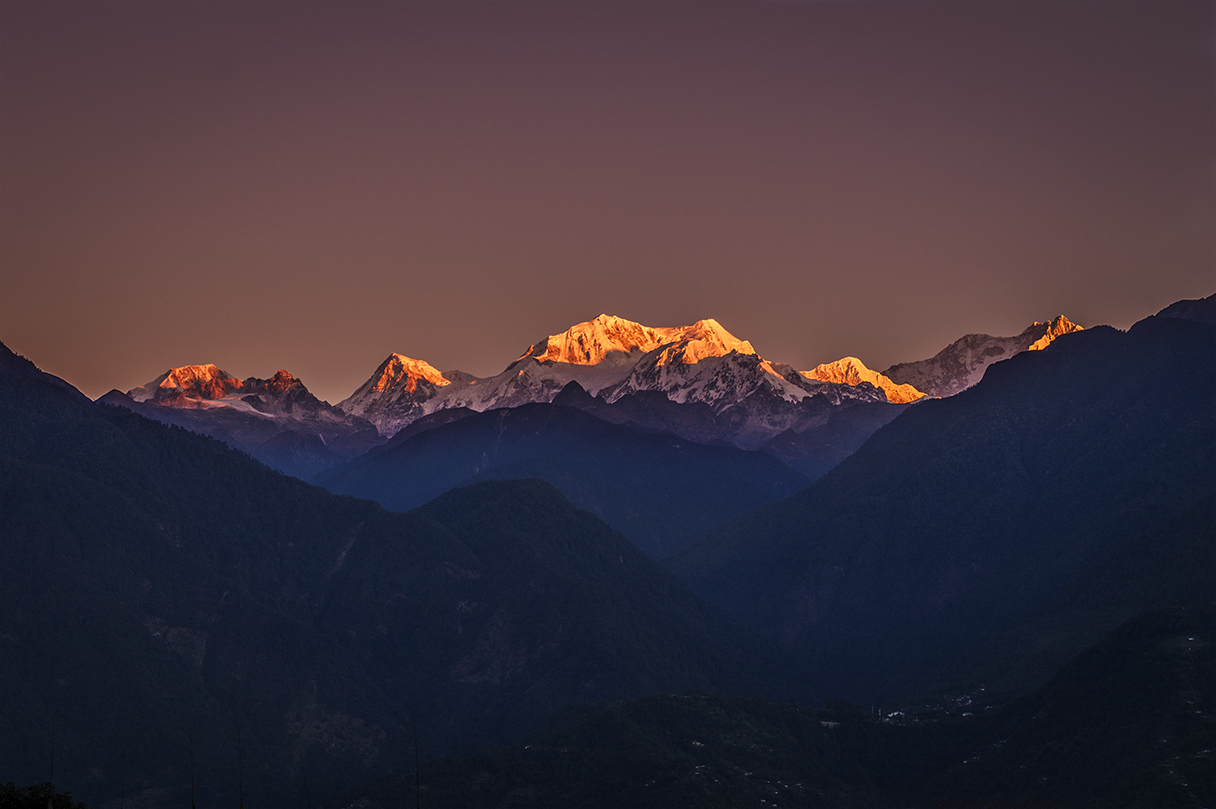
In 1670 the second Chogyal, Tensung Namgyal, moved the royal seat of Sikkim from Yuksom to a ridge just below present-day Pelling. Rabdentse stayed the capital until 1814. It sat on the edge of a long drop, with Kangchenjunga to the north and the Rangeet valley below, and it held the palace, the court and the chortens where the royal family prayed. Today you reach it by a forest path of about 15 minutes from a gate on the Pelling–Gyalshing road.
The kingdom was rarely quiet. Wikipedia records that in 1716 the third Chogyal, Chakdor Namgyal, was killed by bloodletting at the Ralang hot spring, a plot arranged by his half-sister Pende Ongmu, who was then executed. Later the Gorkha army from Nepal pushed into Sikkim and took Rabdentse in 1788. When Tshudpud Namgyal returned in 1793 he judged the ridge too exposed and moved the capital to Tumlong. What survives is wall stubs, three chortens, the Namphogang stone seat where judges gave verdicts, and the Taphap Chorten where visitors got off their horses.
Next door, Pemayangtse kept a different kind of order. Lhatsun Chenpo founded it in 1647 as a small temple, and it was enlarged under Chakdor Namgyal. It was set up for ta-tshang, 'monks of pure lineage', traditionally drawn from Bhutia families, and its head lama had the right to anoint the Chogyals with holy water. Walk from the ruins to the monastery and you cover the two pillars of the old kingdom, the throne and the gompa, in under two hours.
Pinned to the board
Did you know
The Pelling Skywalk and the 137-foot Chenrezig statue beside Sanga Choeling Monastery opened in November 2018.
The top floor of Pemayangtse holds a seven-tiered wooden model of Guru Rinpoche's heavenly palace, Zangdok Palri, carved by Dungzin Rinpoche over five years.
Pemayangtse means 'perfect sublime lotus', and the monastery was damaged by earthquakes in 1913 and 1960.