Now in the hills

DarjeelingTour Plan
Punakha
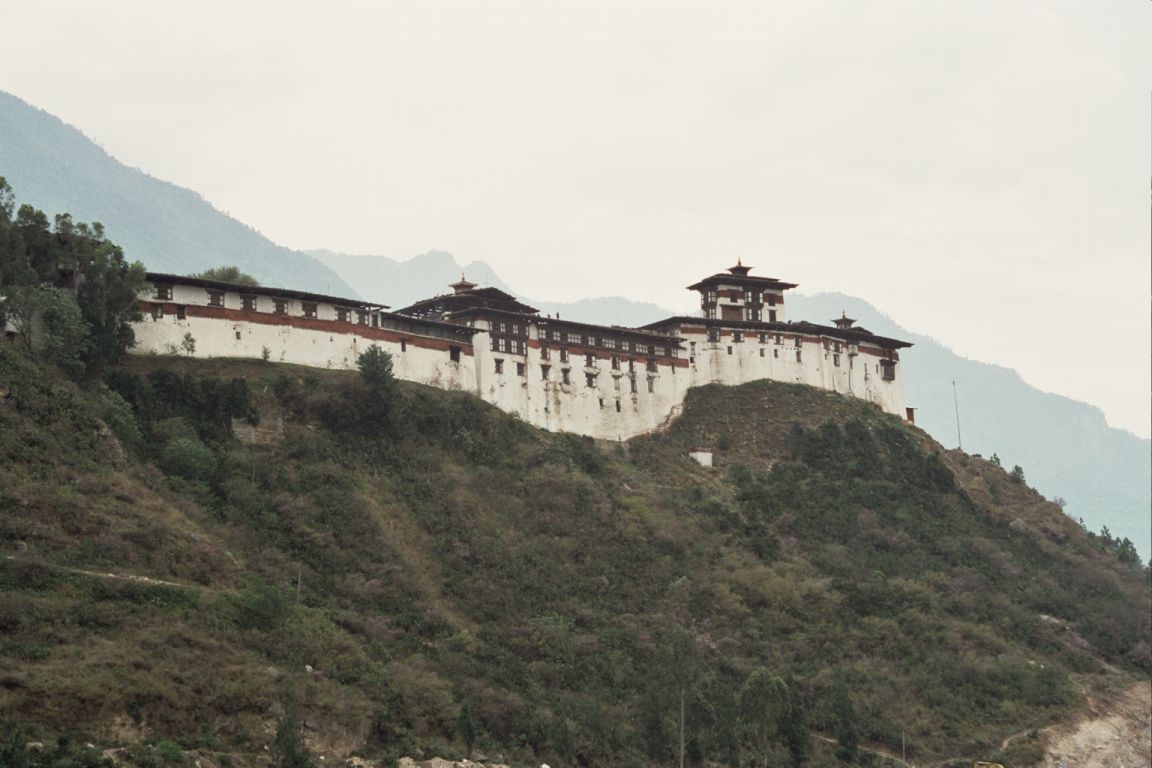
Photo: The original uploader was Technopilgrim at Eng… · CC BY-SA 3.0, Wikimedia Commons

valley · Bhutan

The old capital where two rivers meet below a great dzong

Best Oct – Apr2 nights
Punakha is a warm, low valley at about 1,250 m, 75 km and 3 hours from Thimphu over Dochula pass. Punakha Dzong, at the meeting of two rivers, was Bhutan's seat of government until 1955. Give it two nights for the dzong, Chimi Lhakhang, the long suspension bridge and the Khamsum Yulley Chorten hike.

After the cold of Thimphu and the pine forests of Dochula, the road to Punakha drops more than 1,800 m into a different climate. Rice terraces step down to the riverbanks, banana and orange trees grow beside farmhouses, and in winter the days are warm enough for short sleeves. Punakha sits at about 1,200–1,300 m, which is why Bhutan's rulers and its central monk body have always wintered here. The Je Khenpo, the chief abbot, still moves down from Thimphu with his monks each winter.

The valley's centre of gravity is Punakha Dzong, built by the Zhabdrung Ngawang Namgyal in 1637–38 on a tongue of land where the Pho Chhu and Mo Chhu, the 'male' and 'female' rivers, meet. It is 180 m long and six storeys high, and many Bhutanese call it the most beautiful dzong in the country. It was the seat of government until the capital moved to Thimphu in 1955. Ugyen Wangchuck became the first hereditary king here in 1907, and the present king married Queen Jetsun Pema here in 2011.

Most visitors stay two nights. One day is enough for the dzong and Chimi Lhakhang; the second for the hike to Khamsum Yulley Namgyal Chorten, the suspension bridge and perhaps a gentle raft on the Mo Chhu. Spring brings jacaranda blossom around the dzong and the Punakha Drubchen festival in February or March. Because the valley is low, it is pleasant even in December and January, when Paro and Thimphu are freezing. A route permit from Thimphu is needed to come here; your guide arranges it.

Don't miss

Highlights of Punakha

Punakha Dzong at the river confluence

Built in 1637–38, six storeys high and 180 m long, with three courtyards. Cross the covered wooden bridge over the Mo Chhu to the steep entrance stair. The jacaranda trees around it flower lilac in spring. Entry about Nu 500, indicative 2026; long sleeves required.

Chimi Lhakhang, the fertility temple

A 20-minute walk through rice fields from Sopsokha village leads to the temple built in 1499 on ground blessed by Drukpa Kunley. Couples come for a blessing. Painted houses in Sopsokha show the protective phallus symbols linked to the saint.

The Punakha suspension bridge

One of the longest suspension bridges in Bhutan, hung with prayer flags over the Pho Chhu a short drive above the dzong. Walking across it as it sways in the wind is free and children love it; people with a strong fear of heights may not.

Khamsum Yulley Namgyal Chorten

A four-storey chorten built by Queen Mother Ashi Tshering Yangdon Wangchuck in 2004, on a ridge above the Mo Chhu. The 30–45 minute uphill walk through rice fields ends at a roof terrace with a view over the whole upper valley.

Rice terraces of Lobesa and Talo

The lower Punakha valley is Bhutan's rice bowl. In April–May the terraces are flooded and planted, in September–October gold before harvest. Walk the field bunds near Lobesa or drive up to Talo village for views over the valley.

Rafting on the Mo Chhu

Gentle grade 2–3 rafting runs of about 1.5–2 hours end near the dzong, with licensed operators. Best from March to May and October to November, when water levels are moderate. Expect ₹3,000–5,000 per person, indicative 2026; check current status before you travel.

Told in the hills

The Divine Madman and the temple of Chimi

Drukpa Kunley (1455–1529) was a Tibetan yogi of the Drukpa school who taught by breaking every rule. Bhutanese stories have him drinking, singing bawdy songs and mocking pompous monks and officials, all to shake people out of their attachments. He is loved in Bhutan as a saint, not a joke. Tradition credits him with subduing a demoness at Dochula who took the form of a dog, and the name Chimi Lhakhang is linked to that story. He also introduced the painted phallus as a protection against the evil eye and gossip, which is why you see them on farmhouse walls.

The temple itself was built in 1499 by his cousin Ngawang Chogyal on a small round hill near Lobesa, where Drukpa Kunley had blessed the site. Couples hoping for children come from across Bhutan and beyond to receive a blessing: a lama touches them on the head with a wooden phallus said to have belonged to the saint, and some draw a bamboo slip from the altar to choose a name for the child. Visitors are welcome. Treat it as the place of prayer it is; the humour belongs to the stories, not to the people praying.

Pinned to the board

Did you know

Punakha Dzong was Bhutan's seat of government until 1955, when the capital moved to Thimphu.

The Zhabdrung Ngawang Namgyal's embalmed body is kept in the Machey Lhakhang inside Punakha Dzong, which is closed to visitors.

King Jigme Khesar Namgyel Wangchuck married Jetsun Pema at Punakha Dzong on 13 October 2011.

Getting there

How to reach Punakha

Reserved car with guideFrom Thimphu it is about 75 km over Dochula pass (3,100 m), 2.5–3 hours including a stop at the 108 chortens. Cars with driver cost ₹4,500–6,500 a day, indicative 2026. You need a route permit, issued in Thimphu on working days; check current status before you travel.
From Paro airportAbout 125 km and 4 hours via Thimphu and Dochula. Some itineraries fly into Paro and drive straight to Punakha to sleep low on the first night, which helps with altitude, then return to Thimphu and Paro.
BusBhutanese buses link Thimphu and Punakha (Khuruthang) for about Nu 150–250 a seat. As a tourist you would still need your guide with you and a route permit, so a hired car is usually simpler and not much dearer for a group.

Costs in Punakhaindicative, 2026

  • Punakha Dzong entry≈ Nu 500 per person, indicative 2026
  • Chimi Lhakhang entry≈ Nu 500 per person, indicative 2026
  • Rafting on the Mo Chhu₹3,000–5,000 per person, indicative 2026
  • Certified 3-star hotel₹3,000–5,500 per room night, indicative 2026
  • Local lunch in Khuruthang₹250–450 per person, indicative 2026

Fares and fees change with fuel prices, season and local union rates. Check current rates before you travel.

Money-saving tip

Punakha's lower altitude means cheaper heating-free nights in winter; stay in Khuruthang hotels rather than Lobesa resorts and walk to the dzong to save on car hours.

Where to stay

Sleeping in Punakha

Most hotels are in three areas: Khuruthang, the small new town near the dzong; Lobesa, on the slopes near Chimi Lhakhang; and the hillsides above the Punakha river towards Wolakha. Hotel Lobesa is a small certified 3-star with valley views and good value. Dhensa Boutique Resort, in cottages above the valley, is our comfortable pick. At the top end, Punakha has Amankora's farmhouse lodge, COMO Uma Punakha and a Six Senses lodge. For the cheapest beds, certified 3-star hotels in Khuruthang cost ₹3,000–5,000 per room night, indicative 2026.

On the map

Map of Punakha, Dochula Pass, Wangdue Phodrang, Gasa, ThimphuIndiaChinaBhutanPunakha1PunakhaDochula Pass2Dochula PassWangdue Phodrang3Wangdue PhodrangGasa4GasaThimphu5Thimphu20 kmN
  1. 1Punakha
  2. 2Dochula Pass
  3. 3Wangdue Phodrang
  4. 4Gasa
  5. 5Thimphu
Drawn by Darjeeling Tour Plan from Natural Earth outlines (public domain). Borders as depicted by India. Not for navigation.

Questions people ask

Punakha: questions answered

Do I need a permit to visit Punakha

Yes. The entry permit covers Thimphu and Paro only, so Punakha needs a route permit issued by the immigration office in Thimphu on working days. Your tour operator or guide arranges it with your entry permit and itinerary. Plan to be in Thimphu on a weekday before you drive to Punakha. Check current status before you travel.

How far is Punakha from Thimphu

About 75 km, 2.5–3 hours by car over Dochula pass at about 3,100 m. Most people stop at Dochula for 30–45 minutes to see the 108 chortens and, on clear days, the Himalayan range. In winter the pass can have snow and ice; check current status before you travel.

Is Punakha worth visiting

Yes. Punakha Dzong is the finest dzong in Bhutan for many visitors, and the valley adds Chimi Lhakhang, rice terraces, the suspension bridge and an easy chorten hike. It is also warmer than Thimphu and Paro, which makes winter trips more comfortable. Two nights is the right length.

What is the weather like in Punakha in winter

Mild. Days in December and January reach about 15–20 °C and nights stay a few degrees above freezing, which is why the monk body winters here. Skies are often clear. It is the most comfortable Bhutan valley in winter, but you still cross the cold Dochula pass to get there.

Is Punakha hot in summer

Yes. From May to August daytime temperatures reach around 30–33 °C with humidity, and the monsoon brings heavy rain from June to September. Mornings are pleasant. If you travel in summer, visit sites early and plan a rest in the afternoon. October to April is more comfortable.

Can I visit Punakha and Phobjikha on the same trip

Yes. Phobjikha is about 78 km and 3 hours from Punakha via Wangdue Phodrang. A common plan is two nights in Punakha and one or two in Phobjikha before returning to Thimphu or Paro. In crane season, November to February, Phobjikha is well worth the extra night. Both need a route permit.

When is the Punakha festival

The Punakha Drubchen and the Punakha Tshechu are held in February or March, following the lunar calendar. The Drubchen re-enacts the 17th-century victory over Tibetan forces, with local militia in traditional battle dress. Dates change every year, so check the official festival calendar and book hotels early.

Which is the best hotel in Punakha for a honeymoon

For a comfortable couple's stay, Dhensa Boutique Resort, in cottages above the valley, is our pick at roughly ₹15,000–25,000 per room night, indicative 2026. At the top end, COMO Uma Punakha, Amankora Punakha and Six Senses Punakha are among the best lodges in Bhutan. Budget couples can use Hotel Lobesa.

How much does a day in Punakha cost for Indian tourists

For two people, roughly ₹2,400 SDF, ₹2,000–3,000 guide, ₹4,500–6,500 car, ₹3,000–5,500 hotel, ₹1,500 food and ₹2,000 entry fees: about ₹15,000–20,000 for the pair. A group of four sharing car and guide pays much less per head. All figures indicative 2026.

Start planning

Tell us the trip, we'll price it three ways

Dates, who is coming and roughly what you want to spend. A planner replies within one working day with a route and a budget, comfort and premium price, so you can see exactly what each extra rupee buys.

  • No payment to startPay only when you confirm
  • Three prices, in writingBudget, comfort, premium, line by line
  • One plannerOn WhatsApp from pickup to drop
  • Permits handledSikkim and Bhutan paperwork sorted

Get a free plan and price

Reply within one working day · no payment to start

We reply by email or WhatsApp. Read our privacy policy.

Get a free plan