Told in the hills
Wangdi's palace and the four ravens
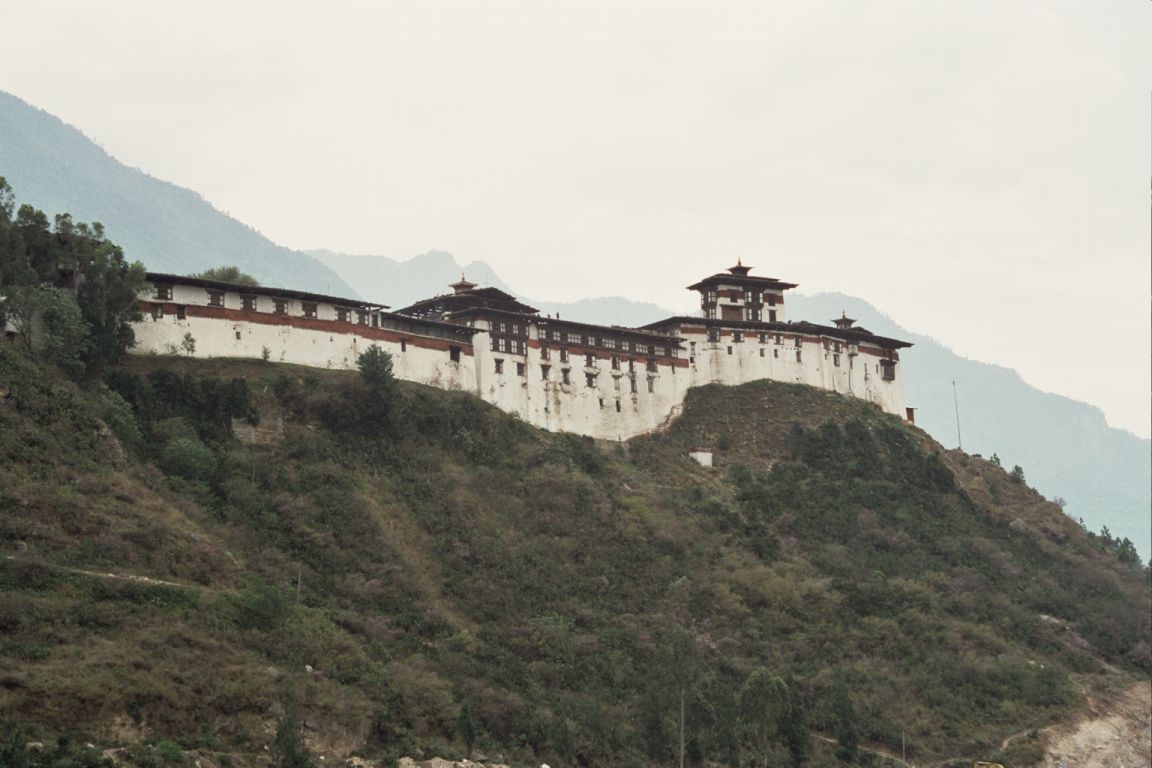
Two traditions explain why the dzong stands where it does. The first is about the name. Bhutanese tradition says that when Zhabdrung Ngawang Namgyal came to this ridge, he met a boy named Wangdi playing in the sand by the river, and named the place Wangdi's palace, Wangdue Phodrang, after him. The second is about the site. As the Zhabdrung was looking for the right place to build, four ravens are said to have flown up from the ridge in the four directions, which was taken as a sign that religion would spread from here across the country.
The history is firmer. The dzong was founded in 1638, a year after Punakha Dzong was completed, as part of the Zhabdrung's chain of fortresses that held the newly unified state together. Wangdue controlled the routes to the south and to central Bhutan, and its governor, the Wangdue Dzongpon, was one of the important officials of the old system. The building was enlarged over the centuries and long housed both the district administration and a monk body.
On 24 June 2012 a fire broke out and spread through the dry timber, destroying most of the dzong. Many of its religious treasures were carried out in time. Rather than leave a ruin, Bhutan rebuilt it on the same plan, with carpenters, masons and painters trained in the traditional way, and it was reconsecrated in 2022. Your guide may point out the difference between the new structure and old stones that survived.
Pinned to the board
Did you know
Wangdue Phodrang Dzong was founded by Zhabdrung Ngawang Namgyal in 1638.
A fire on 24 June 2012 destroyed most of Wangdue Phodrang Dzong; it was rebuilt using traditional methods and reconsecrated in 2022.
Phobjikha valley, home to the wintering black-necked cranes, lies inside Wangdue Phodrang district.


