Now in the hills

DarjeelingTour Plan
Khecheopalri Lake
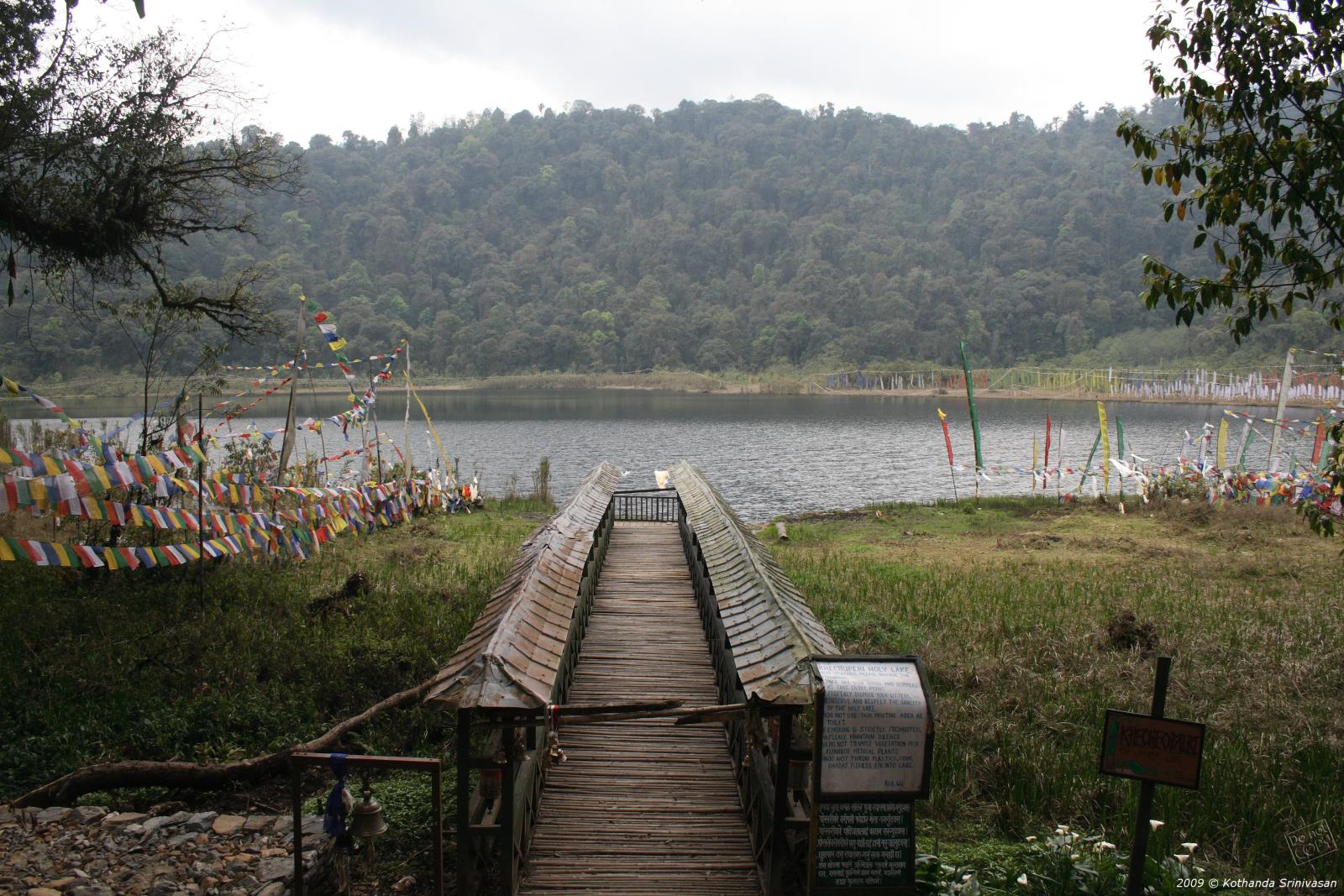
Photo: Kothanda Srinivasan · CC BY 2.0, Wikimedia Commons

lake · West and South Sikkim

The wish-fulfilling lake where, legend says, birds clear every leaf

Best Mar – May · Oct – Nov0–1 nights
Khecheopalri Lake is a sacred forest lake at about 1,700 m, roughly 30 km and 1–1.5 hours from Pelling. Buddhists and Hindus call it the wish-fulfilling lake, and legend says birds lift away any leaf that falls on it. Most people visit on a day trip; a homestay night is quieter and cheaper than you might expect.

Khecheopalri Lake lies in a bowl of forest north-west of Pelling, on the Buddhist pilgrim circuit that links Yuksom, Dubdi, Pemayangtse and Tashiding. It is small, about 3.8 hectares, and calm, with prayer flags strung over a wooden jetty and thick forest on every side. Seen from the hill above, it is said to be shaped like a footprint. Buddhists and Hindus both hold it sacred, and the Sikkim government declared it a protected lake in 2001.

Most visitors arrive late morning on the Pelling day tour, walk to the jetty, light a butter lamp, make a wish and leave within an hour. That is fine, but we think the lake is better early or late, when the day buses have gone. A short climb above the water leads to a small monastery and the Dupukney cave, and the village around the lake is largely Lepcha, with a few family homestays that cook simple, local food.

There are rules here, and they are taken seriously. No boating, fishing or swimming is allowed, and visitors are asked to keep quiet on the jetty. Entry is about ₹20–50, indicative, 2026. The lake is on the same road system as Yuksom, about 25 km and an hour away, so it fits easily into a Pelling–Yuksom loop by car. Shared jeeps are few, so plan your transport before you go.

Don't miss

Highlights of Khecheopalri Lake

The prayer-flag jetty

A wooden jetty leads out over the water under lines of prayer flags. Pilgrims light butter lamps, spin prayer wheels and make a wish. Come at 7 or 8 am, or after 3 pm, and you may have it almost to yourself. Shoes off where signs ask, and voices low.

The leaf legend

Legend says birds pick up any leaf that falls on the lake, so the water stays clean. Whatever the reason, the surface is remarkably clear of leaves, even with forest all around. Sit on the bank for twenty minutes and watch; it is the cheapest show in Sikkim.

Monastery and Dupukney cave

A path climbs from the lake to a small monastery and the Dupukney cave, where Hindu tradition says Shiva meditated. It takes about 30–45 minutes up and gives you a view down over the footprint-shaped lake and the village around it.

A Lepcha village

Most of the families around the lake are Lepcha. A few run simple homestays with home-cooked meals at about ₹1,200–2,000 per person per day, indicative, 2026. Staying a night lets you see the lake at dusk and dawn, when it is at its quietest.

Part of the pilgrim circuit

The lake sits on Sikkim's old Buddhist circuit with Yuksom, Dubdi, Pemayangtse and Tashiding. Yuksom is about 25 km and an hour away, Pelling about 30 km. A full-day car from Pelling covering the lake, Yuksom and the waterfalls costs about ₹3,000–4,000, indicative, 2026.

Told in the hills

Two conch shells and a lake that keeps itself clean

A legend told on a plaque by the lake, put up by Sikkim's Ecclesiastical Affairs department, says that long ago a Lepcha couple were peeling the bark of nettle plants to make fibre. They saw two conch shells fall from the sky. The earth shook, and water rose from the ground to fill the hollow where they stood. That water became the lake. Local people call it Sho Dzo Sho, which is translated as 'Oh Lady, sit here'.

Other traditions add more layers. The older name, Kha-Chot-Palri, is linked to Padmasambhava, and the lake is said to be shaped like a footprint, of Tara for many Buddhists and of Shiva in Hindu belief. The best-known legend is that no leaf is allowed to float on the water for long, because birds fly down and pick it up. Watch the surface for a while and judge for yourself; it is true that the water stays unusually clear of leaves.

The real story is about care. The lake's open water shrank from about 7.4 hectares in 1963 to about 3.8 hectares in 1997 as bog and reeds spread from the edges. In 2001 the state declared it a protected lake, and boating, fishing and swimming were banned. The Lepcha families who live around it still treat it as sacred. Your entry fee and your quiet on the jetty are part of that care.

Pinned to the board

Did you know

Khecheopalri Lake was declared a protected lake by a Government of Sikkim notification dated 20 September 2001.

Wikipedia gives the lake an average depth of 7.2 m and a maximum depth of 11.2 m.

The older name, Kha-Chot-Palri, is usually explained as 'the heaven of Padmasambhava'.

Getting there

How to reach Khecheopalri Lake

Shared jeepShared jeeps from Gyalshing to Khecheopalri are few and run mainly in the afternoon, so they suit an overnight stay rather than a day trip. Reach Gyalshing first from Pelling (₹50–80) or from Siliguri (₹400–550). Ask at the Gyalshing stand the day before. Fares indicative, 2026; check current status before you travel.
Reserved carMost visitors come on a full-day car tour from Pelling that also covers Rimbi, Kanchenjunga Falls and Yuksom, costing about ₹3,000–4,000 per car, indicative, 2026. The drive from Pelling is about 30 km and 1–1.5 hours; from Yuksom it is about 25 km and an hour. The last stretch is narrow and winding.
Rail / AirThe nearest railhead is New Jalpaiguri (NJP) and the nearest reliable airport is Bagdogra (IXB), both about 140–150 km from Pelling. Plan to spend your first night in Pelling, then visit the lake the next day by car or shared jeep. Allow time for monsoon landslides on the way.

Costs in Khecheopalri Lakeindicative, 2026

  • Entry, Khecheopalri Lake₹20–50 per person
  • Full-day car from Pelling (lake, Yuksom, falls)₹3,000–4,000 per car
  • Shared jeep Pelling → Gyalshing₹50–80 a seat
  • Homestay with meals₹1,200–2,000 per person per day
  • Thali or momo meal₹150–350

Fares and fees change with fuel prices, season and local union rates. Check current rates before you travel.

Money-saving tip

Split the ₹3,000–4,000 full-day Pelling car with another family, or take the afternoon shared jeep from Gyalshing and stay one night in a lake homestay; either way you see the lake and Yuksom for a fraction of a private tour.

Where to stay

Sleeping in Khecheopalri Lake

Very few people stay at the lake, which is exactly why we like it. A handful of family homestays in the village around Khecheopalri offer simple rooms, shared or basic attached bathrooms and home-cooked dinner and breakfast, at about ₹1,200–2,000 per person per day, indicative, 2026. Expect early nights and cold water in winter. If you want more comfort, stay in Pelling, at Hotel Garuda on a budget or Norbu Ghang Resort for comfort, and visit on a day trip. Homestays in the nearby village of Darap are another good-value base between Pelling and the lake.

On the map

Map of Khecheopalri Lake, Pelling, Yuksom, TashidingIndiaChinaBhutanNepalKhecheopalri Lake1Khecheopalri LakePelling2PellingYuksom3YuksomTashiding4Tashiding20 kmN
  1. 1Khecheopalri Lake
  2. 2Pelling
  3. 3Yuksom
  4. 4Tashiding
Drawn by Darjeeling Tour Plan from Natural Earth outlines (public domain). Borders as depicted by India. Not for navigation.

Questions people ask

Khecheopalri Lake: questions answered

How far is Khecheopalri Lake from Pelling

Khecheopalri Lake is about 30 km from Pelling, a drive of 1–1.5 hours on a narrow, winding road. Most people visit as part of a full-day car tour that also covers Rimbi, Kanchenjunga Falls and Yuksom, costing about ₹3,000–4,000 per car, indicative, 2026. From Yuksom, the lake is about 25 km away.

Is boating allowed in Khecheopalri Lake

No. Boating, fishing and swimming are not allowed at Khecheopalri Lake. It is sacred to Buddhists and Hindus and was declared a protected lake by the Sikkim government in 2001. Visitors walk out on the prayer-flag jetty, light butter lamps and spin prayer wheels, but should not touch or throw anything into the water.

Is Khecheopalri Lake worth visiting

Yes, if you go at the right time. Mid-morning the jetty can be busy with day tours, but at dawn or late afternoon the lake is calm and the forest quiet. The legends, the Lepcha village and the climb to the monastery and Dupukney cave make it more than a photo stop. It fits easily into a Pelling–Yuksom day.

What is the legend of Khecheopalri Lake

Legend says birds pick up any leaf that falls on the lake, keeping it clean. A plaque at the lake tells another legend, of a Lepcha couple who saw two conch shells fall from the sky; the earth shook and water rose to form the lake. Tradition also says the lake is shaped like a footprint.

Can I visit Khecheopalri Lake by shared jeep

Yes, but plan around the timings. Shared jeeps from Gyalshing to Khecheopalri are few and run mainly in the afternoon, so a shared-jeep trip works best with an overnight homestay. For a day trip, a reserved car from Pelling is easier. Check current status before you travel.

Do I need a permit for Khecheopalri Lake

Indian nationals do not need a permit for Khecheopalri Lake, though you should carry photo ID. Foreign nationals need the Sikkim Restricted Area Permit, which also covers Pelling and Yuksom and is available online or at Melli and Rangpo checkposts. You pay a small entry fee at the lake gate. Check current status before you travel.

How much time do I need at Khecheopalri Lake

An hour is enough to walk to the jetty, see the lake and spin the prayer wheels. Add 1.5–2 hours to climb to the monastery and Dupukney cave, and more for birding. If you can, stay overnight in a homestay and see the lake at dawn; it is the best way to experience it.

Is Khecheopalri Lake open in the monsoon

The lake stays open, but from June to September heavy rain, landslides and leeches make the trip slow and messy, and the road from Pelling can be blocked for hours. The forest is at its greenest, though, and crowds are thin. Keep a spare day and check current status before you travel.

What does Khecheopalri mean

Wikipedia explains the original name, Kha-Chot-Palri, as 'the heaven of Padmasambhava', with Khecheo referring to flying yoginis or Taras and palri meaning palace. The lake is also known locally as Sho Dzo Sho, translated as 'Oh Lady, sit here'. Both names reflect its long sacred history.

Start planning

Tell us the trip, we'll price it three ways

Dates, who is coming and roughly what you want to spend. A planner replies within one working day with a route and a budget, comfort and premium price, so you can see exactly what each extra rupee buys.

  • No payment to startPay only when you confirm
  • Three prices, in writingBudget, comfort, premium, line by line
  • One plannerOn WhatsApp from pickup to drop
  • Permits handledSikkim and Bhutan paperwork sorted

Get a free plan and price

Reply within one working day · no payment to start

We reply by email or WhatsApp. Read our privacy policy.

Get a free plan