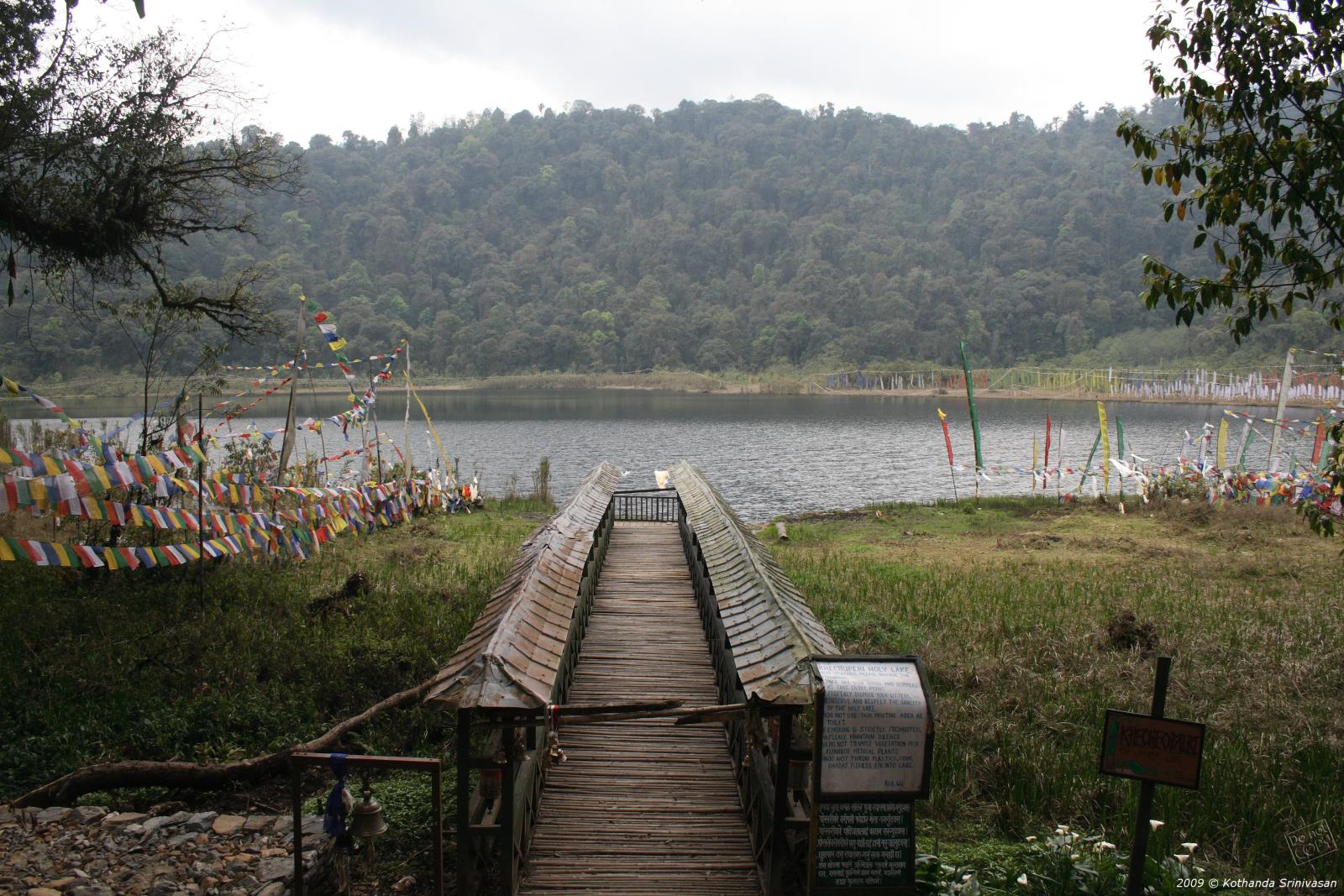
wildlife · Khecheopalri Lake, Pelling
Birding morning around the lake

Start at first light, when the forest is noisiest. Walk slowly along the lake path and the forest edges near the village, stopping often to listen. Binoculars matter more than a big camera. In winter, look for migratory water birds on the open water and at the reed margins; Wikipedia's list for the lake includes grebes, mergansers, cormorants, teals and tufted ducks. Numbers vary from year to year, so treat each sighting as a bonus rather than a promise.
Away from the water, the mixed forest around the lake is typical of Sikkim's middle hills, and flocks of small birds move through the trees in the early morning. Keep to the paths, do not use playback calls near the sacred lake, and do not walk into the reed beds, which are part of what the protection rules are meant to save. A notebook and a regional bird guide or app will help you put names to what you see.
If your homestay knows a local guide who knows the birds, it is worth hiring them for a morning; ask about the fee before you go. Pair the birding walk with breakfast and the climb to the monastery and Dupukney cave. From October to April the air is clearer and the leaves thinner, which makes spotting easier. In the monsoon, birds are still around, but rain, leeches and mist make it harder work.
Good for
Questions people ask
Good to know
What birds can you see at Khecheopalri Lake
Wikipedia lists migratory water birds such as grebes, mergansers, cormorants, teals and tufted ducks at Khecheopalri, mostly in the cooler months. Forest birds live in the woods around the lake. What you see depends on season and luck, so go early, walk slowly and carry binoculars for the best chance.
When is the best time for birding at Khecheopalri
Early mornings from about 6 to 9 am, between October and April, are best. Winter brings migratory water birds and clearer air, and spring adds breeding calls in the forest. From June to September rain and mist make birding harder, though the forest is green and lush. Avoid the late-morning tour rush.
Are there birding guides at Khecheopalri
There is no formal guide service at the lake that we can confirm. Some homestay families and local naturalists in the Pelling area take birders out, so ask your homestay or hotel a day ahead. Agree the fee and time first. Bring your own binoculars, as guides may not have spares.
Also in Khecheopalri Lake