Now in the hills

DarjeelingTour Plan
Rinchenpong and Kaluk
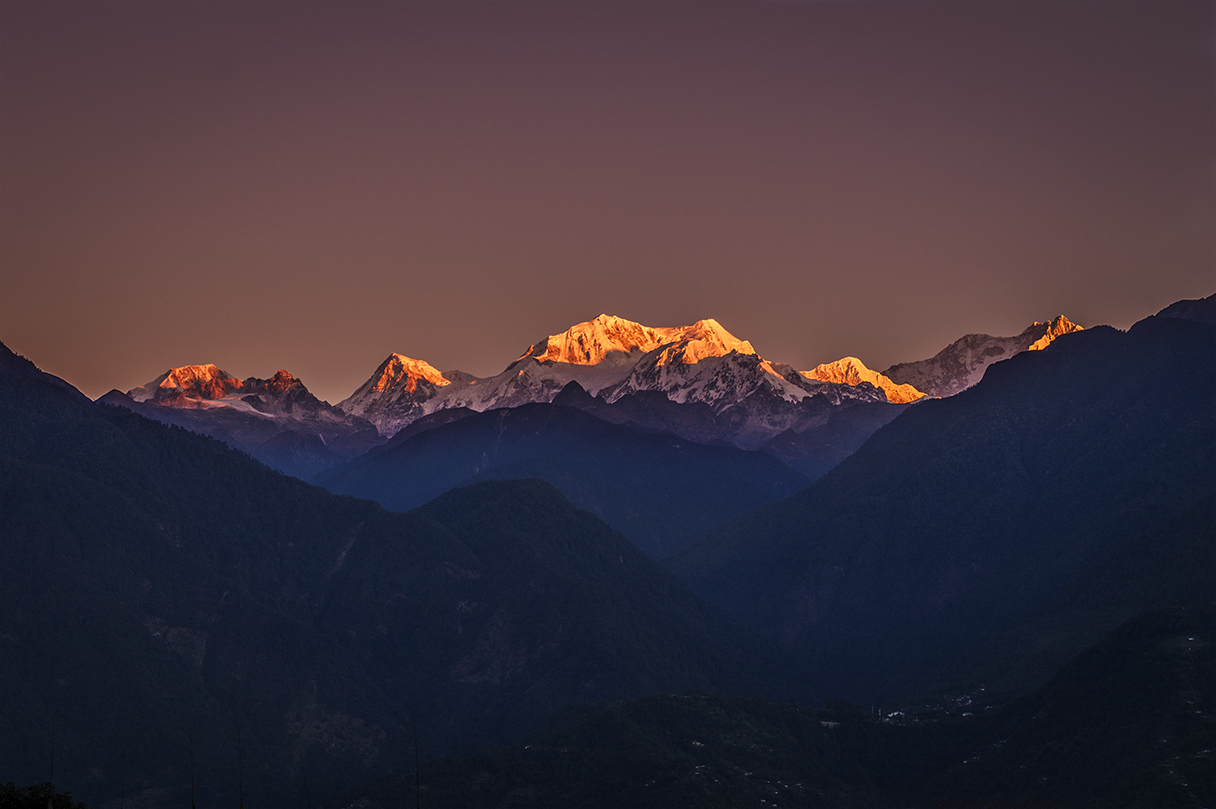
Photo: Rangan Chatterjee 261 · CC BY-SA 4.0, Wikimedia Commons

village · West and South Sikkim

A 1730 monastery, a windy ridge and Kangchenjunga at breakfast

Best Mar – Apr · Oct – Dec1–2 nights
Rinchenpong and neighbouring Kaluk sit on a windy ridge at about 1,700 m in Soreng district, roughly 40 km south of Pelling. Come for wide Kangchenjunga views, a monastery founded in 1730 with a rare Ati Buddha image, quiet village lanes and homestays. One or two nights is right, ideally October to May.

Rinchenpong is a small village and market on a ridge in Soreng district, at about 1,700 m. Kaluk is its neighbour on the same ridge, a few kilometres away, and most stays sit between the two. There is no big sight list here. You come for the view: on a clear morning the whole Kangchenjunga range lines the northern sky, and you can watch it from a homestay terrace with a cup of tea in your hand.

The place has more history than its size suggests. Rinchenpong Monastery was founded in 1730 and keeps a rare image of the Ati Buddha, the primordial Buddha. Below the village is a small pond that local tradition calls Bikh Pokhari, the poisoned pond, linked to a fight with a British force. Kaluk, meanwhile, is known as one of the windiest places in Sikkim, so pack a warm layer. Bring a torch for evening walks, because street lights are few.

For a budget trip, Rinchenpong works well as a quiet one or two nights between Pelling and Darjeeling. Pelling is about 40 km away, 1.5–2 hours by road, and Jorethang, the river town where jeeps from Darjeeling and Siliguri arrive, is the other gateway. Rooms are mostly in family homestays with home cooking. October to December gives the clearest mountain views, and March to May brings flowers and haze. June to September is monsoon, best skipped.

Don't miss

Highlights of Rinchenpong and Kaluk

Rinchenpong Monastery

Founded in 1730, the monastery sits above the bazaar up a stone-stepped path. Inside is a rare blue Ati Buddha image in yab-yum. Photography is not allowed in the sanctum. Go early, walk clockwise, and leave a small offering if you wish.

Kangchenjunga from the ridge

Rinchenpong and Kaluk face north across the valleys to the Kangchenjunga range. From October to December the peaks are often clear from first light until about 10 am. Many homestays have a terrace view, so the best seat costs nothing extra.

Bikh Pokhari, the poisoned pond

A small pond below the village carries a local tradition: fighters poisoned it to stop a British force. Nobody has put a date on the story. It is a short walk, free, and best heard with a host who grew up with the tale.

Kaluk's windy ridge

Kaluk is the quieter twin, a few kilometres along the ridge, and is known as one of the windiest places in Sikkim. Walk its lanes past small schools, temples and farms in the late afternoon, then come back for an early dinner.

Yangsum Heritage Farm

A family farmhouse on a 44-acre organic farm, with a house that dates to the 1800s and Tibetan-style wood-panelled rooms. Meals use produce from the farm. It is the comfortable end of a stay here and fills early in October.

A quiet bridge between Pelling and Darjeeling

Rinchenpong lies off the main tourist road, so a night here breaks the 4–5 hour Pelling–Darjeeling drive. You trade crowds for village silence, and rooms usually cost less than in Pelling for a similar view.

Told in the hills

A 1730 monastery and the poisoned pond

Rinchenpong Monastery stands on the slope above the village bazaar, reached by a path with stone steps. It was founded in 1730, and Wikipedia credits its founding to Ngadakpa Lama. Its best-known treasure is a rare image of the Ati Buddha, also called Adi Buddha, the primordial Buddha. He is shown in blue, in yab-yum, embracing a female figure, a symbol of the union of wisdom and compassion. Photography is not allowed inside the sanctum, so take the image home in your head.

Lower down is a small pond that people here call Bikh Pokhari, the poisoned pond. Local tradition holds that when a British force came this way, Lepcha and Gorkha fighters poisoned the only water source with herbs, and many soldiers fell ill or died. This is an oral tradition, told in the village and repeated on Wikipedia's Rinchenpong page, and we have found no written record that names a date, a commander or a number of casualties.

What is documented is the wider conflict. British India and Sikkim fought in 1860–61, and in March 1861 Sidkeong Namgyal signed the Treaty of Tumlong with Ashley Eden. Sikkim paid an indemnity of ₹7,000, opened its roads to British trade and became, in effect, a British protectorate. Whether the pond belongs to that campaign we cannot prove. Sit by it, hear the story from your host, and keep the label: tradition.

Pinned to the board

Did you know

Rinchenpong Monastery was established in 1730 and houses an image of the Ati Buddha (Adi Buddha) in yab-yum.

Kaluk, next to Rinchenpong, is described as one of the windiest places in Sikkim.

The Treaty of Tumlong of 1861, signed by Sidkeong Namgyal and Ashley Eden, made Sikkim a de facto British protectorate.

Getting there

How to reach Rinchenpong and Kaluk

Shared jeepTake a shared jeep from Darjeeling (₹150–200 a seat) or Siliguri to Jorethang, then a local jeep towards Rinchenpong and Kaluk, about ₹150–250 a seat, indicative, 2026. Onward jeeps from Jorethang mostly leave before about 1 pm, so start early. From Pelling, change at Gyalshing or Jorethang. Check current status before you travel.
Reserved carA reserved car from NJP or Bagdogra costs about ₹5,500–7,500 one way and takes 5–6 hours via Melli and Jorethang. From Pelling (≈ 40 km, 1.5–2 h) expect ₹2,000–3,000, and from Darjeeling about ₹3,500–5,000, all indicative, 2026.
Rail / AirThe nearest airport is Bagdogra (IXB) and the main railhead is New Jalpaiguri (NJP), both in Siliguri. From either, allow 5–6 hours by road. Foreign nationals need a Sikkim Restricted Area Permit, available at Melli checkpost on this road or online; check current status before you travel.

Costs in Rinchenpong and Kalukindicative, 2026

  • Shared jeep Jorethang → Rinchenpong₹150–250 a seat, indicative, 2026
  • Reserved car Pelling → Rinchenpong₹2,000–3,000 one way, indicative, 2026
  • Reserved car NJP/Bagdogra → Rinchenpong₹5,500–7,500 one way, indicative, 2026
  • Homestay with all meals₹1,200–2,000 per person per day, indicative, 2026
  • Rinchenpong MonasteryFree; small offering welcome
  • Thali or momo meal in the bazaar₹150–300, indicative, 2026

Fares and fees change with fuel prices, season and local union rates. Check current rates before you travel.

Money-saving tip

Stay at a full-board homestay with a mountain-facing terrace: the view is the main sight here, and it comes free with your room.

Where to stay

Sleeping in Rinchenpong and Kaluk

Most rooms in Rinchenpong and Kaluk are in family homestays and small lodges along the ridge road, many with a terrace facing Kangchenjunga. Expect clean, simple rooms, hot water by bucket or geyser, and home-cooked dal, rice, greens and local chicken. Full board usually runs ₹1,200–2,000 per person per day, indicative, 2026. For more comfort, Yangsum Heritage Farm is a family farmhouse on a 44-acre organic farm, with Tibetan-style wood-panelled rooms in a house dating to the 1800s and meals from its own fields. Book it well ahead for October and spring.

On the map

Map of Rinchenpong and Kaluk, Pelling, Okhrey, Jorethang, UttareyIndiaChinaNepalRinchenpong and Kaluk1Rinchenpong and KalukPelling2PellingOkhrey3OkhreyJorethang4JorethangUttarey5Uttarey20 kmN
  1. 1Rinchenpong and Kaluk
  2. 2Pelling
  3. 3Okhrey
  4. 4Jorethang
  5. 5Uttarey
Drawn by Darjeeling Tour Plan from Natural Earth outlines (public domain). Borders as depicted by India. Not for navigation.

Questions people ask

Rinchenpong and Kaluk: questions answered

Is Rinchenpong worth visiting

Yes, if you want quiet and mountain views rather than a sightseeing list. Rinchenpong offers clear Kangchenjunga views from October to December, a monastery founded in 1730 with a rare Ati Buddha image, the poisoned-pond tradition and friendly homestays. One or two nights is enough. If you want shops, cafés and many sights, stay in Pelling instead.

How far is Rinchenpong from Pelling

Rinchenpong is about 40 km from Pelling, which takes 1.5–2 hours by road. A reserved car costs about ₹2,000–3,000 one way, indicative, 2026. By shared jeep you usually change at Gyalshing or Jorethang, which takes longer. Many travellers link the two on the way between Pelling and Darjeeling.

How do I reach Rinchenpong from Darjeeling

Take a shared jeep from Darjeeling to Jorethang, about 30 km and 1.5–2 hours for ₹150–200, then a local jeep towards Rinchenpong and Kaluk for about ₹150–250, indicative, 2026. Jeeps from Jorethang mostly leave before about 1 pm. A reserved car from Darjeeling costs roughly ₹3,500–5,000 one way.

Which is better, Rinchenpong or Kaluk

They share one ridge and one view, so pick by the stay. Rinchenpong has the bazaar and the monastery, so it is handier on foot. Kaluk is a few kilometres along the ridge, quieter and known for strong wind. A north-facing room with a terrace matters more than the village name.

What is the best time to visit Rinchenpong

October to December is best for clear Kangchenjunga views, with cold mornings and dry days. March and April bring flowers and green slopes, but haze often hides the peaks after early morning. January and February are cold and clear. June to September is monsoon, with leeches, cloud and landslide risk on the roads.

Do I need a permit for Rinchenpong

Indian nationals need no permit for Rinchenpong but should carry photo ID, as Sikkim checkposts may ask for it. Foreign nationals need a Sikkim Restricted Area Permit, free and usually valid for 30 days, available online or at the Melli checkpost on the road from Siliguri. Check current status before you travel.

How many days are enough for Rinchenpong

One night is enough to see the sunrise, the monastery and the poisoned pond. Two nights give a slow day for village walks, Kaluk and a farm visit, and a second chance at clear peaks if the first morning is cloudy. It fits well between Pelling and Darjeeling or before Okhrey and Barsey.

Are there ATMs and mobile signal in Rinchenpong

There are few ATMs in the area, so carry enough cash from Jorethang, Gyalshing or Siliguri. Mobile data works in most places on the ridge but can drop in bad weather or inside thick-walled houses. UPI is common, yet homestays still like cash when the network is slow.

Is Rinchenpong good for a budget trip

Yes. Shared jeeps via Jorethang cost a few hundred rupees, homestays with all meals run about ₹1,200–2,000 per person per day, and the main sights, the monastery, the pond and the view, are free. Travel in November or February to March for quieter, cheaper rooms, avoiding the October Puja rush.

Start planning

Tell us the trip, we'll price it three ways

Dates, who is coming and roughly what you want to spend. A planner replies within one working day with a route and a budget, comfort and premium price, so you can see exactly what each extra rupee buys.

  • No payment to startPay only when you confirm
  • Three prices, in writingBudget, comfort, premium, line by line
  • One plannerOn WhatsApp from pickup to drop
  • Permits handledSikkim and Bhutan paperwork sorted

Get a free plan and price

Reply within one working day · no payment to start

We reply by email or WhatsApp. Read our privacy policy.

Get a free plan