culture · Trongsa, Bhutan
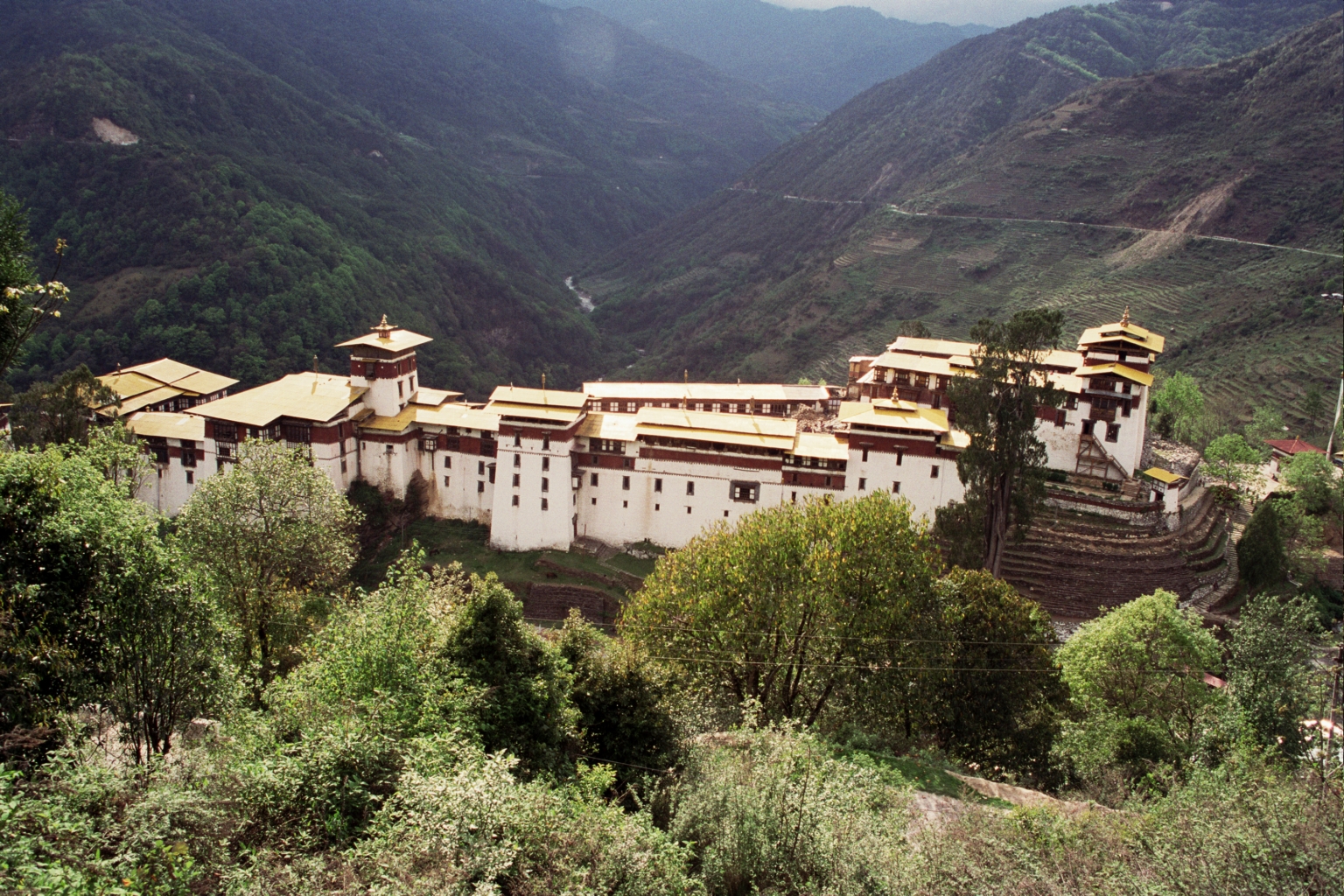
Kuenga Rabten, the old winter palace

Kuenga Rabten lies about 23 km south of Trongsa on the road towards Zhemgang, roughly an hour's drive along the side of the Mangde Chhu valley. The palace was built in the late 1920s and served as a winter residence for the second king, Jigme Wangchuck, who reigned from 1926 to 1952 and spent his winters here, lower and warmer than Trongsa. It is a two-storey building around a courtyard, smaller and plainer than a dzong.
Part of the building is now used by a nunnery and religious school, and part is looked after as a heritage site, so what you can see depends on who is there and what is happening. Your guide arranges access. The drive is the other reason to go: terraced fields, farm villages and views down the valley, with almost no tourist traffic.
We suggest Kuenga Rabten for travellers who sleep in Trongsa and have a spare morning, or who are especially interested in Bhutan's royal history. It is not essential on a short trip. Combine it with the dzong and the Ta Dzong museum for a full Trongsa day. Wear the same modest clothes you would for a dzong.
Good for
Questions people ask
Good to know
How far is Kuenga Rabten from Trongsa
About 23 km south of Trongsa on the road towards Zhemgang, which takes roughly an hour each way by car. With time at the palace, plan on 2–3 hours for the round trip. It suits a morning if you sleep in Trongsa, and is hard to fit in if you are only passing through on the way to Bumthang.
Who lived at Kuenga Rabten
It was a winter residence of Jigme Wangchuck, the second king of Bhutan, who reigned from 1926 to 1952. The site is lower and warmer than Trongsa, which made it a better winter base. Today part of the building is used by a nunnery, so access to some rooms depends on the time of day and current arrangements.
Is Kuenga Rabten worth the detour
If you have a spare morning in Trongsa and like history, yes; it is quiet, rarely visited and the valley drive is pleasant. If you are passing through Trongsa in a few hours on the way to Bumthang, skip it and spend the time at the dzong and the Ta Dzong museum, which tell the same royal story more fully.