Now in the hills

DarjeelingTour Plan
Dzongri and Goecha La
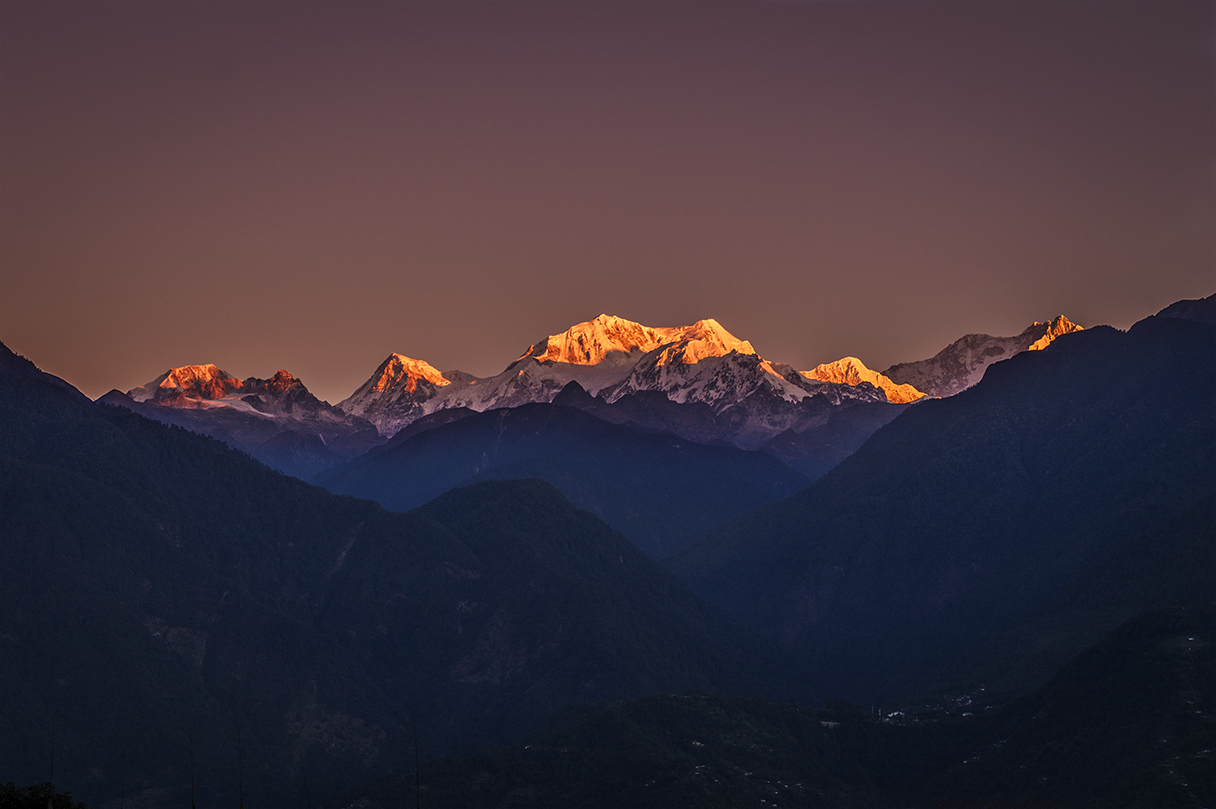
Photo: Atulbhats · CC BY-SA 4.0, Wikimedia Commons

trek route · West and South Sikkim

Sikkim's classic high trek, from Yuksom to the face of Kangchenjunga

Best Apr – May · Oct – Nov9–11 nights
Dzongri, at about 4,020 m, is the high meadow camp on the Yuksom–Goecha La trek inside Khangchendzonga National Park. The round trip takes about 8–10 days on foot, roughly 90 km, with a registered agency and licensed guide. Go April–May or October–November. Group treks cost about ₹14,000–25,000 per person, indicative, 2026.

The Goecha La trek is the best-known high walk in Sikkim. It starts and ends at Yuksom, 1,780 m, and climbs through forest to Sachen and Tshoka, then up to the open slopes of Dzongri at about 4,020 m. From there the trail drops to the Prek Chu valley, runs up to Thansing and Lamuney, passes Samiti Lake and ends below the south-east face of Kangchenjunga. Goecha La itself is listed at 4,940 m on Wikipedia, and the round trip is about 90 km of walking.

Dzongri is the turning point of the trek. Most groups spend a rest day here to acclimatise, and use it to climb Dzongri Top before dawn. From the ridge you see a long line of peaks, among them Kangchenjunga, Kabru, Rathong, Kokthang and Pandim, at 6,691 m. On a clear October morning this view alone justifies the effort. The camp is cold, often windy and well above the tree line, so nights can drop below freezing even in spring and autumn.

This is a serious trek, not a stroll. You need a registered agency, a licensed guide and a park permit from the forest checkpost at Yuksom, and foreign nationals need a separate trek permit arranged through the agency. Many groups now turn back at Viewpoint 1, at about 4,600 m, and whether trekkers may go further depends on current forest department rules. We plan this trek in detail with our partners, and we always say: check current status before you travel.

Don't miss

Highlights of Dzongri and Goecha La

Sunrise from Dzongri Top

On the acclimatisation day at Dzongri, groups climb the ridge above camp in the dark and wait for first light. Kangchenjunga, Kabru, Rathong, Kokthang and Pandim catch the sun one after another. It is bitterly cold before dawn, so take a down jacket, gloves and a hot drink.

Rhododendron forests below Tshoka

Between Sachen, Tshoka and Phedang the trail climbs through forests of oak, magnolia and many kinds of rhododendron. In April and early May they flower in reds, pinks and whites. Listen for blood pheasants, Sikkim's state bird, scratching on the forest floor.

Samiti Lake

Above Lamuney, at about 4,200 m, Samiti Lake lies in the Onglakthang valley below Pandim. Local people consider it sacred as a source of the Prek Chu. Walk around it quietly, do not wash or throw anything in the water, and look for the mountain's reflection on still mornings.

Viewpoint 1 and Goecha La

The final push leaves Lamuney or Thansing at about 2–3 am for Viewpoint 1, at about 4,600 m, facing Kangchenjunga's south-east face. Goecha La itself is 4,940 m. How far groups may go changes with forest department rules, so check current status before you travel.

A rest day that matters

The extra night at Dzongri is not a luxury. Going from 1,780 m at Yuksom to about 4,020 m in three days is a big gain, and the rest day helps your body adjust. Walk a little higher during the day, drink plenty of water and sleep lower.

Told in the hills

The summit two climbers chose not to tread

Kangchenjunga, at 8,586 m, is the third-highest mountain in the world. For the Lepcha people it is Kongchen Kongchlo, and in Lepcha tradition the first Lepcha couple were made from the snows of its summit. For Sikkim as a whole it is a guardian deity, honoured each year at Pang Lhabsol. That reverence shaped one of the most unusual moments in mountaineering, and you are walking towards the mountain it concerns when you climb above Dzongri.

In 1955 a British expedition led by Charles Evans attempted the mountain from the Nepal side. Before they set out, they promised Sikkim's ruler, Chogyal Tashi Namgyal, that the very top would stay untrodden. On 25 May 1955 Joe Brown and George Band climbed to within a few feet of the summit and stopped there, keeping the promise. Norman Hardie and Tony Streather reached the same point the next day and also stopped short.

Many climbers since then have kept the same custom, stopping just below the true top. On the Indian side the mountain remains closed to climbing expeditions, out of respect for its place in Sikkimese belief. From Dzongri Top and from the viewpoints near Goecha La you see the south-east face of that untrodden summit. It is worth knowing the story before you get there; it changes how you look at the mountain at dawn.

Pinned to the board

Did you know

Khangchendzonga National Park, through which the whole Goecha La trail runs, became India's first 'mixed' UNESCO World Heritage Site in 2016.

Samiti Lake on the Goecha La trail lies at about 4,200 m and is considered sacred by local people as a source of the Prek Chu river.

Mount Pandim, which towers over the upper Goecha La valley, is 6,691 m high.

Getting there

How to reach Dzongri and Goecha La

Shared jeepFirst reach Yuksom, the trailhead. Take a shared jeep from Siliguri to Gyalshing (₹400–550 a seat) or from Gangtok to Gyalshing (₹350–500), then on to Yuksom (₹120–180). Departures to Yuksom are few, so most trekkers arrive in Pelling or Gyalshing the day before. Fares are indicative, 2026; check current status before you travel.
Reserved carMany agencies arrange a shared or reserved vehicle from NJP or Bagdogra to Yuksom as part of the package, a long day of 6.5–8 hours. If you hire your own, a car from NJP or Bagdogra to Pelling costs about ₹5,500–7,500 and Pelling to Yuksom about ₹2,000–2,800, indicative, 2026.
Rail / AirThe nearest railhead is New Jalpaiguri (NJP), and the nearest reliable airport is Bagdogra (IXB). Plan to arrive in Siliguri by midday the day before your drive, or a full day before the trek starts. Keep a buffer day at the end too, as rain or road closures can delay the return.
On footFrom Yuksom the trail runs about 10 km to Sachen, 7 km to Tshoka and 10 km to Dzongri. From Dzongri it is about 10 km to Thansing, then on to Lamuney, Samiti Lake and the viewpoints, before returning by Thansing and Tshoka to Yuksom. Total walking is about 90 km over 8–10 days.

Costs in Dzongri and Goecha Laindicative, 2026

  • Goecha La group trek with registered agency₹14,000–25,000 per person
  • Private trek for a small group₹35,000+ per person
  • Shared jeep Gyalshing → Yuksom₹120–180 a seat
  • Homestay in Yuksom with meals₹1,200–2,000 per person per day
  • Park entry and camping feesPaid at Yuksom checkpost; amounts change, check

Fares and fees change with fuel prices, season and local union rates. Check current rates before you travel.

Money-saving tip

Join a fixed-departure group trek from Yuksom rather than a private one; you share the guide, cook and pack animals, and the price drops from ₹35,000 or more to about ₹14,000–25,000 per person, indicative, 2026.

Where to stay

Sleeping in Dzongri and Goecha La

Before and after the trek you stay in Yuksom, where Hotel Yangrigang on the main road is a long-standing budget base for trekkers and family homestays cost about ₹1,200–2,000 per person per day with meals, indicative, 2026. On the trail there are no hotels. Agencies use the forest department trekkers' huts at Sachen, Tshoka, Dzongri, Thansing and Lamuney where available, and pitch tents at the same camps. Huts are basic: wooden bunks, no heating and shared toilets. Bring or rent a warm sleeping bag rated well below freezing, even in May.

On the map

Map of Dzongri and Goecha La, Yuksom, Tashiding, PellingIndiaChinaBhutanNepalDzongri and Goecha La1Dzongri and Goecha LaYuksom2YuksomTashiding3TashidingPelling4Pelling20 kmN
  1. 1Dzongri and Goecha La
  2. 2Yuksom
  3. 3Tashiding
  4. 4Pelling
Drawn by Darjeeling Tour Plan from Natural Earth outlines (public domain). Borders as depicted by India. Not for navigation.

Questions people ask

Dzongri and Goecha La: questions answered

How many days is the Goecha La trek

Most itineraries take 8–10 days of walking from Yuksom and back, or 9–11 nights including travel from Siliguri. A typical plan is Yuksom, Sachen, Tshoka, Dzongri with a rest day, Thansing, Lamuney, Viewpoint 1, then back by Thansing and Tshoka to Yuksom. Total walking is about 90 km.

How much does the Goecha La trek cost

A group trek with a registered agency costs about ₹14,000–25,000 per person, indicative, 2026, usually covering food, tents or huts, guide, cook, pack animals or porters and permits. A private trek costs ₹35,000 or more per person. Add travel to and from Yuksom and a night there at each end.

Do I need a permit for the Goecha La trek

Yes. The trek runs inside Khangchendzonga National Park, so you need a park permit from the forest checkpost at Yuksom and must go with a registered agency and a licensed guide. Foreign nationals also need a trek permit arranged through the agency, normally for groups of two or more. Check current status before you travel.

Is the Goecha La trek safe for beginners

It is possible for fit beginners who train for two or three months, go with a good agency and respect the acclimatisation day at Dzongri. The main risk is altitude sickness above 4,000 m. If you have heart or lung conditions, talk to your doctor first. Never hide symptoms from your guide.

What is the best time for the Goecha La trek

October and early November are best for clear mountain views, with cold nights. April and May are second best, with rhododendrons in bloom but more haze and cloud. March and December are possible but cold and snowy. The trek is not normally run from June to August, and January and February are closed by snow in practice.

How high is Dzongri

Dzongri camp is at about 4,020 m, reached on the third day from Yuksom by way of Sachen and Tshoka. It is the first high camp on the Goecha La trek, above the tree line, and most groups spend two nights there to acclimatise. Expect freezing nights and strong wind, even in spring and autumn.

Is there mobile network on the Goecha La trek

Mobile network is weak or absent above Yuksom, with occasional signal at a few points depending on your operator. Plan to be offline for most of the trek. Tell family your dates in advance, and carry a power bank because there is no charging on the trail. Your agency may carry a radio or satellite phone for emergencies.

Can I do the Goecha La trek without a guide

No. Rules for Khangchendzonga National Park require trekkers to go with a registered agency and a licensed guide, and the park permit is issued on that basis at the Yuksom checkpost. Solo or unguided trekking is not allowed. These rules are enforced and can change, so check current status before you travel.

Is Dzongri trek different from Goecha La trek

Dzongri is a camp and viewpoint on the way to Goecha La. A Dzongri trek usually means a shorter loop from Yuksom to Dzongri and back, about 5–6 days, for the Dzongri Top sunrise. The full Goecha La trek continues to Thansing, Lamuney, Samiti Lake and Viewpoint 1, taking 8–10 days.

Start planning

Tell us the trip, we'll price it three ways

Dates, who is coming and roughly what you want to spend. A planner replies within one working day with a route and a budget, comfort and premium price, so you can see exactly what each extra rupee buys.

  • No payment to startPay only when you confirm
  • Three prices, in writingBudget, comfort, premium, line by line
  • One plannerOn WhatsApp from pickup to drop
  • Permits handledSikkim and Bhutan paperwork sorted

Get a free plan and price

Reply within one working day · no payment to start

We reply by email or WhatsApp. Read our privacy policy.

Get a free plan