Where the money really goes
In West Sikkim the biggest cost is not the hotel. It is the car. A reserved car from NJP to Pelling and back, plus three sightseeing days, can easily come to ₹18,000–22,000 for a family. Entry fees, by contrast, are small: most monasteries and lakes charge ₹20–100, and several of the best things here are free.
So a budget plan starts with transport. Use shared jeeps for the long legs, walk wherever you can, and when you need a car, share it. Then choose rooms in the right part of town, or better, in a village, and eat where the drivers eat. You will lose very little of the experience and save a lot of money.
It also helps to be honest about what you came for. If it is the mountain, you need clear mornings, not a fancy room: a ₹2,000 room in Upper Pelling and a ten-minute walk to the viewpoint give you the same sunrise as a suite. If it is the monasteries and the stories, you need time more than transport, and two slow days in Yuksom cost less than one rushed day of driving. Spend on the one or two things that matter to you, and cut the rest without guilt.
A sample five-day budget
This is a realistic plan for one person travelling with a friend and sharing rooms: Siliguri to Pelling by shared jeep, two nights in Upper Pelling, a shared car day to Khecheopalri and Yuksom, two nights in Yuksom, and back by jeep. Figures are indicative for 2026 and per person.
| Item | What we assume | Cost per person |
|---|---|---|
| Siliguri → Pelling | Shared jeep seat (+ Gyalshing change) | ₹450–630 |
| Pelling, 2 nights | Budget hotel, twin room shared | ₹1,500–3,000 |
| Pelling sights | Walk to Rabdentse, Sanga Choeling, Pemayangtse; entry fees | ₹100–250 |
| Pelling → Yuksom day | Car shared by four, via Rimbi, Kanchenjunga Falls, Khecheopalri | ₹550–700 |
| Yuksom, 2 nights | Homestay with breakfast and dinner | ₹2,400–4,000 |
| Yuksom sights | Norbugang, Kathok Lake, Dubdi walk; Tashiding by shared jeep | ₹200–400 |
| Yuksom → Siliguri | Shared jeeps via Gyalshing | ₹520–730 |
| Food outside homestays | Momos, thukpa, thalis, tea | ₹1,200–2,000 |
| Total, 5 days / 4 nights | ≈ ₹7,000–11,500 |
Free and nearly free things to do
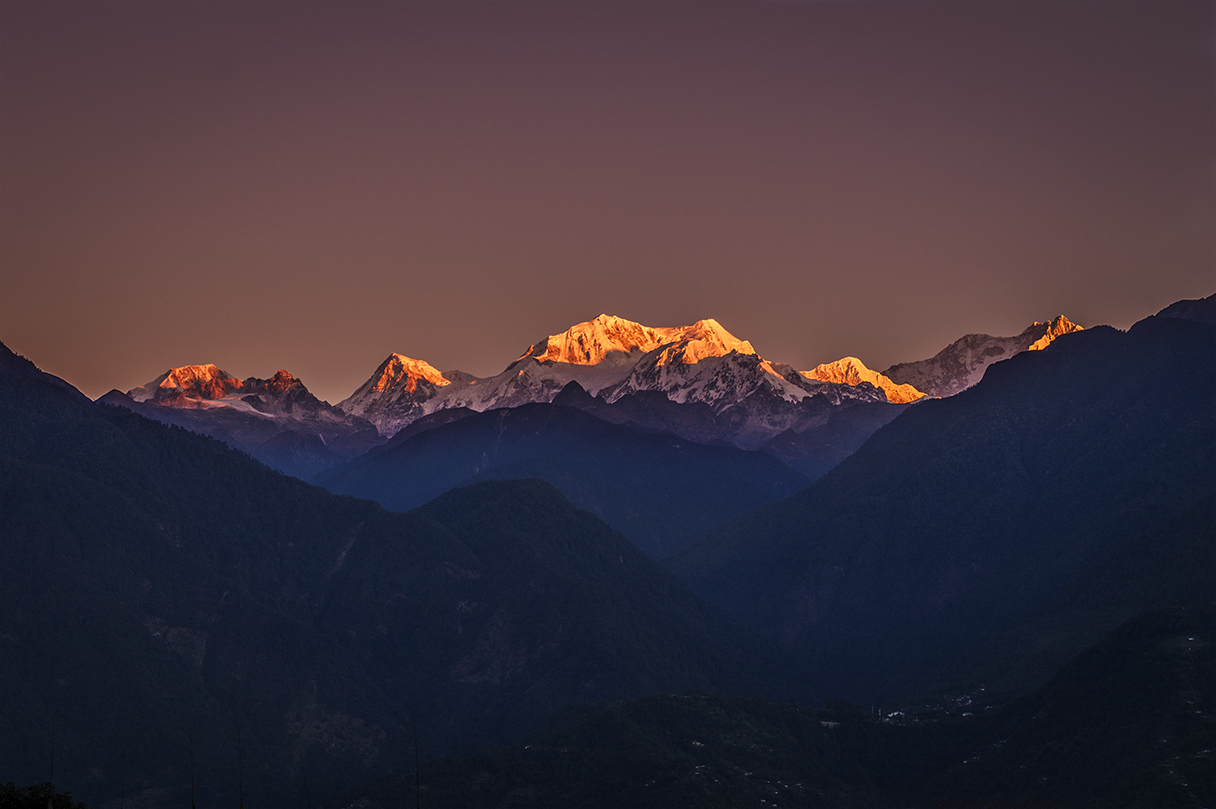
Some of the best mornings in West Sikkim cost nothing but an alarm. From Upper Pelling, the range lights up at sunrise between October and February. From the Rabdentse ridge or Pemayangtse's courtyard the view is just as good. The walks between them are short and pleasant.
- Sunrise over Kangchenjunga from Upper Pelling: free.
- Rabdentse ruins, Sikkim's second capital (1670–1814): a 15-minute forest walk from the gate, small entry fee.
- Pemayangtse Monastery: walk from Upper Pelling in about 40 minutes, small entry fee.
- Sanga Choeling Monastery: a steep 40-minute climb through forest from Pelling; the monastery is free, the nearby Skywalk and Chenrezig statue charge a small fee.
- Norbugang coronation throne and Kathok Lake, Yuksom: free, a short walk from the main road.
- Dubdi Monastery, Yuksom: an hour's uphill walk, free, a donation is welcome.
- Khecheopalri Lake: small entry fee; walk the boardwalk and climb to the monastery above.
Homestays versus hotels
Pelling is a hotel town. Rooms range from about ₹1,500 at the simple end to well over ₹15,000 at the top, and the cheapest rooms rarely have a view. In villages the deal is different. A homestay at Yuksom, Darap, Khecheopalri, Rinchenpong or Okhrey typically costs ₹1,200–2,000 per person a night with dinner and breakfast, indicative, and the food is home-cooked: rice, dal, a local green such as nettle or fern, and pickle.
For value, we suggest a mix: one or two nights in Upper Pelling for the views and the walks, then villages for the rest. You get the comfort of a town when you arrive and the quiet and food of a village when you slow down. Book homestays by phone, ask for the meals-included rate, and carry cash, as many do not take cards.
One caution: homestay standards vary. Ask about hot water, heating and whether the bathroom is attached before you book, especially in December–February. A good host will answer plainly. If they cannot, choose another.
When to go for the best prices
Prices in West Sikkim swing with the holidays of eastern India. The most expensive weeks are Durga Puja and Diwali in October, the Christmas–New Year week, and the school holidays from mid-April to early June. In those weeks room rates can double and cars are hard to find.
The best value weeks for clear views are early December and January–February outside the New Year week. It is cold, often 0–10 °C in Pelling, but the skies are usually clear and the hotels empty. Late September, as the monsoon eases, is another good window. The monsoon itself, June to August, brings the lowest rates of all, but also cloud, leeches and landslides.
Food without the hotel markup
Hotel restaurants in Pelling charge two or three times what the small eateries on the main road do. A plate of momos or a bowl of thukpa costs ₹80–150 in a local place, and a full thali ₹150–300, indicative. Try sha phaley (meat-filled fried bread), chhurpi in soups and pickles, and sishnu (nettle) soup when it is on. Drivers' dhabas at Legship and Jorethang serve good, cheap rice meals on transfer days.
Carry a refillable bottle. Most homestays and many hotels will refill it with boiled or filtered water, which saves money and plastic. Sikkim is strict about plastic, and some areas restrict packaged water bottles.
Cutting transport costs
Transport is where careful planning pays most, so think about the order of your stops before you book anything. Every time you double back, you pay for a car twice. A one-way line, such as Siliguri to Pelling, Pelling to Yuksom, Yuksom to Tashiding and Ravangla, and Ravangla down to Siliguri, uses each road once and lets shared jeeps do most of the work.
When you need a car, use it as a transfer as well as a sightseeing day. A car from Pelling to Yuksom via Rimbi, Kanchenjunga Falls and Khecheopalri Lake costs only a little more than the straight transfer and replaces a separate sightseeing day. Hotel receptions and homestay hosts can often find other travellers to share it with; ask the evening before.
- Arrive in Siliguri by mid-morning so shared jeeps are still running.
- Plan a one-way loop rather than returning to the same base.
- Combine transfers with sightseeing stops in one car day.
- Share cars with other guests; four people make a car nearly as cheap as jeep seats.
- Use local shared jeeps for short hops such as Gyalshing to Pelling.
What to skip or question
Not every paid stop earns its price. Some sightseeing packages list ten or twelve points in a day, half of which are roadside waterfalls or photo stops. They are pleasant, but do not pay extra for a longer list. In winter the waterfalls are thin; in the monsoon the views are hidden. Ask your driver which stops are worth it that week.
Be careful with very cheap package deals from the plains that quote a low price but use the cheapest rooms on the main road and add costs on arrival. Ask for the hotel name, the vehicle type and whether the car is reserved or shared. The honest trip is not always the cheapest quote, but it is the one with no surprises.
Questions people ask
Good to know
How much does a Pelling trip cost per person
A careful budget trip costs about ₹2,000–2,500 per person a day, indicative 2026, using shared jeeps, budget hotels or homestays and a shared car for sightseeing. A comfort trip with a private car and mid-range hotels runs about ₹4,500–6,000 a day. Travel to Siliguri is extra. Peak weeks in October, May and New Year cost more.
What is the cheapest month to visit Pelling
The monsoon months, June to August, have the lowest rates, often 30–50% below peak, but views are rare. For low prices with clear skies, choose January or February outside the New Year week, or early December. Late September is another good value window before the Puja holidays.
Can I see Pelling's sights without a car
Yes, the main ones near town. From Upper Pelling you can walk to the Rabdentse ruins, Pemayangtse Monastery and Sanga Choeling. For Khecheopalri Lake, the waterfalls and Yuksom you need a car or a shared jeep, and sharing a car with other travellers is the cheapest way to see the stops on that road.
Are homestays in West Sikkim cheaper than hotels
Usually, once you count meals. A village homestay at Yuksom, Khecheopalri, Darap, Rinchenpong or Okhrey costs about ₹1,200–2,000 per person a night with dinner and breakfast, indicative. A budget Pelling room costs ₹1,500–3,000 for the room alone. Homestays also give you home-cooked local food and a quieter night.
How can I save on the NJP to Pelling transfer
Take a shared jeep or the SNT bus from Siliguri instead of a reserved car: about ₹300–550 a seat against ₹5,500–7,500 for the car, indicative. Reach Siliguri by mid-morning so jeeps are still leaving. If you are four people with luggage, compare the cost; a shared car may be fairer.
Is Pelling expensive during Durga Puja
Yes. Durga Puja and Diwali in October are the busiest weeks of the year, when room rates can double and cars are hard to find. If you must travel then, book rooms and transport two to three months ahead, or base yourself in a village such as Yuksom or Rinchenpong where prices rise less.
How much money should I carry in cash
Carry enough for transport, homestays and small entry fees, roughly ₹1,500–2,000 a day per person on a budget trip. ATMs work in Pelling, Gyalshing, Jorethang, Namchi and Ravangla, but can run dry in peak weeks, and villages often have none. UPI works in towns when the network does.
What food is cheap and local in Pelling
Momos and thukpa at ₹80–150, thalis at ₹150–300, sha phaley, and soups with chhurpi cheese, indicative prices. Eat at the small places on the main road rather than hotel restaurants. On transfer days, drivers' dhabas at Legship and Jorethang serve filling rice meals at fair prices.
Are sightseeing packages in Pelling worth it
A one-day sightseeing car is worth it for the Khecheopalri–Yuksom road, especially if you share it. Be wary of long point lists that pad the day with minor photo stops. Agree the stops and the price before you start, and ask which waterfalls are worth seeing in that season.