Told in the hills
Guras on the Singalila Range
Guras is the Nepali word for rhododendron, and in this corner of Sikkim it is the tree that marks the seasons. Rhododendron arboreum, the tree rhododendron with deep red flowers, is the national flower of Nepal, whose border runs along the ridge above Barsey. Sikkim chose another species, Rhododendron niveum, as its state tree. Several species grow in the sanctuary at different heights, which is why the flowering moves uphill through March, April and May.
The plants were famous long before the sanctuary existed. In 1848–49 the botanist Joseph Hooker travelled through Sikkim, much of it with Archibald Campbell, the superintendent of Darjeeling, and collected rhododendrons unknown to European science. His book, The Rhododendrons of Sikkim-Himalaya, appeared from 1849 to 1851, and seeds he sent home started a craze for Himalayan rhododendrons in British gardens. We do not know that Hooker walked this exact ridge, so we claim only Sikkim.
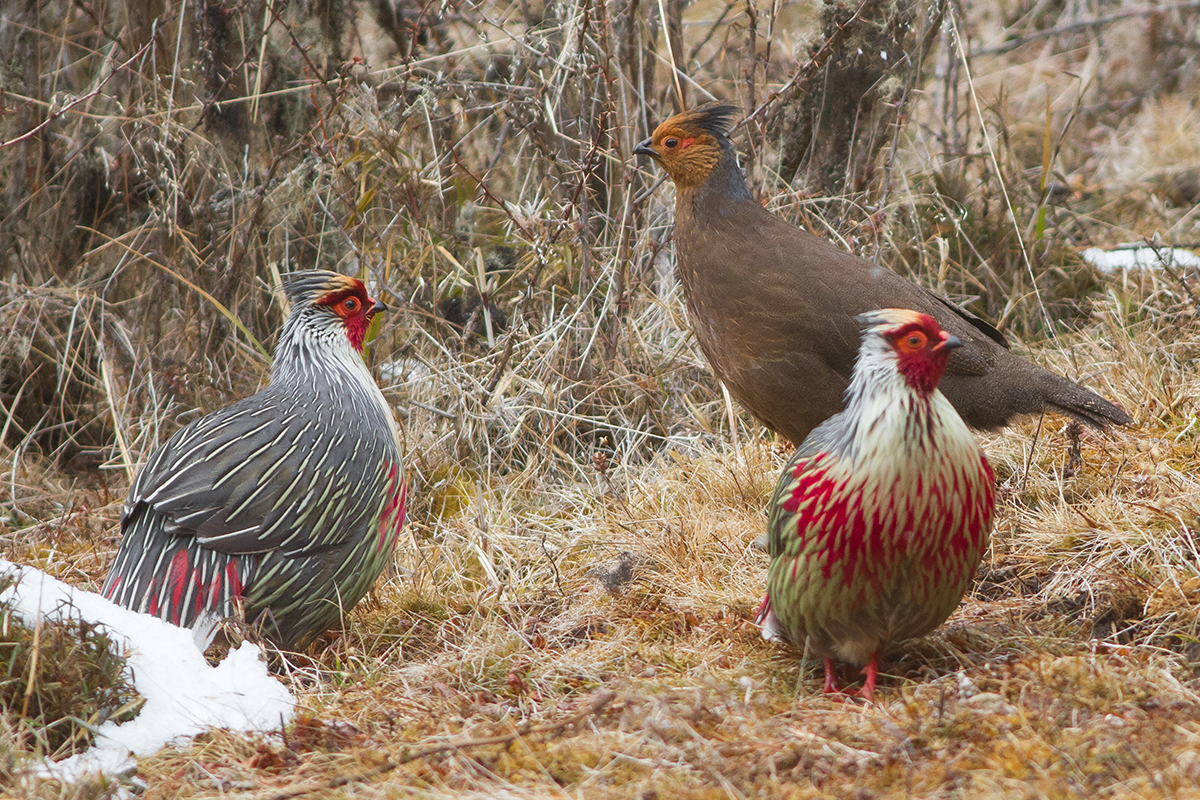
Today the forest is protected as a sanctuary of about 104 km², with the Guras Kunj hut on the ridge as the only place to sleep inside it. Guras kunj loosely means rhododendron grove. Spring brings walkers from Siliguri, Kolkata and beyond, and most come for one short walk. Stay longer and you may also hear pheasants calling at dawn. Sikkim's state bird, the blood pheasant, lives in these high forests, though seeing one is never guaranteed.
Pinned to the board
Did you know
Varsey Rhododendron Sanctuary covers about 104 km² and borders Nepal to the west and West Bengal to the south across the Rambong Khola.
Rhododendron arboreum is the national flower of Nepal, while Sikkim's state tree is Rhododendron niveum.
The blood pheasant is the state bird of Sikkim.