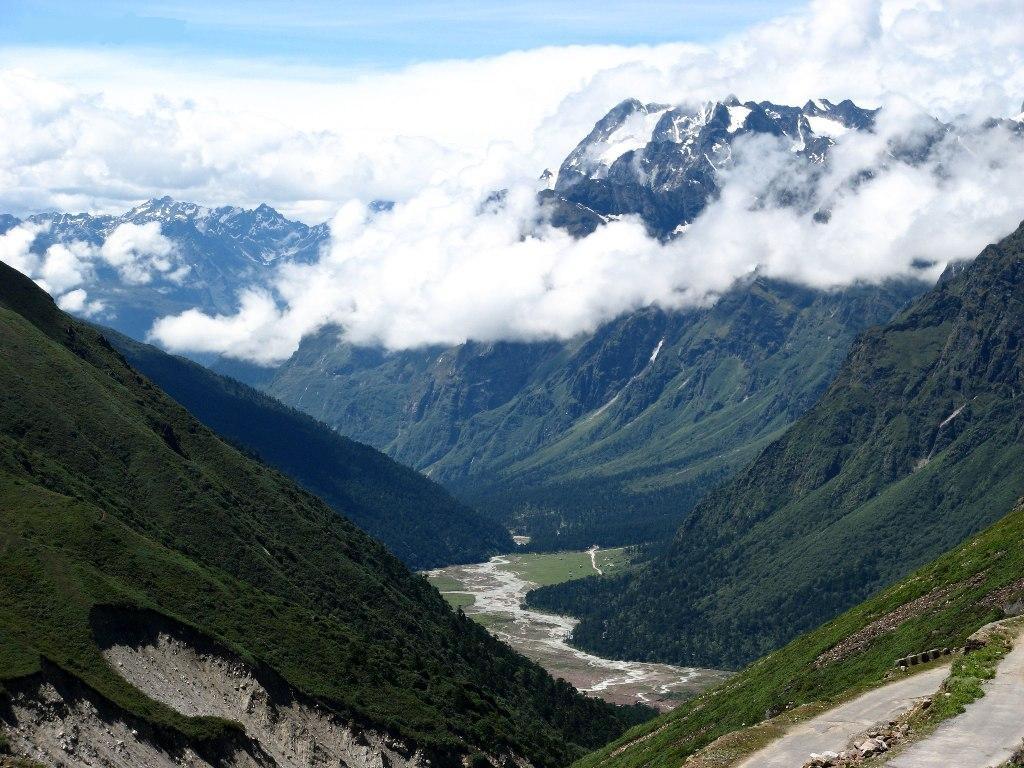
Told in the hills
Hooker's rhododendrons and Sikkim's state tree
In 1849 the Kew botanist Joseph Dalton Hooker travelled through the Lachen and Lachung valleys collecting plants. His folio The Rhododendrons of Sikkim-Himalaya, published between 1849 and 1851, described species that had never been seen in Europe, and the seed he sent home started a craze. As Richard Temple noted in 1887, many rhododendrons in English gardens of that time came from Hooker's Sikkim seed.
One of the species Hooker described was Rhododendron niveum, a small tree with magenta to lilac flower heads and leaves white-felted underneath. It grows between about 2,600 and 3,500 m in Sikkim, Bhutan and southern Tibet, and today it is the state tree of Sikkim.
To protect these forests the state created the Shingba Rhododendron Sanctuary in 1984, covering about 43 square km around Yumthang. Sources count between two and four dozen rhododendron species here. When you see a crimson tree by the road in May, you are looking at a plant family that Victorian England first met through this valley.
Pinned to the board
Did you know
Yumthang lies at 3,564 m, about 150 km by road from Gangtok, and has only one permanent building: a forest rest house.
There is a natural sulphur hot spring in the valley, with simple bathing sheds by the river.
Villagers from Lachung still take their animals up to Yumthang in summer, a seasonal grazing practice that the sanctuary allows.


