Told in the hills
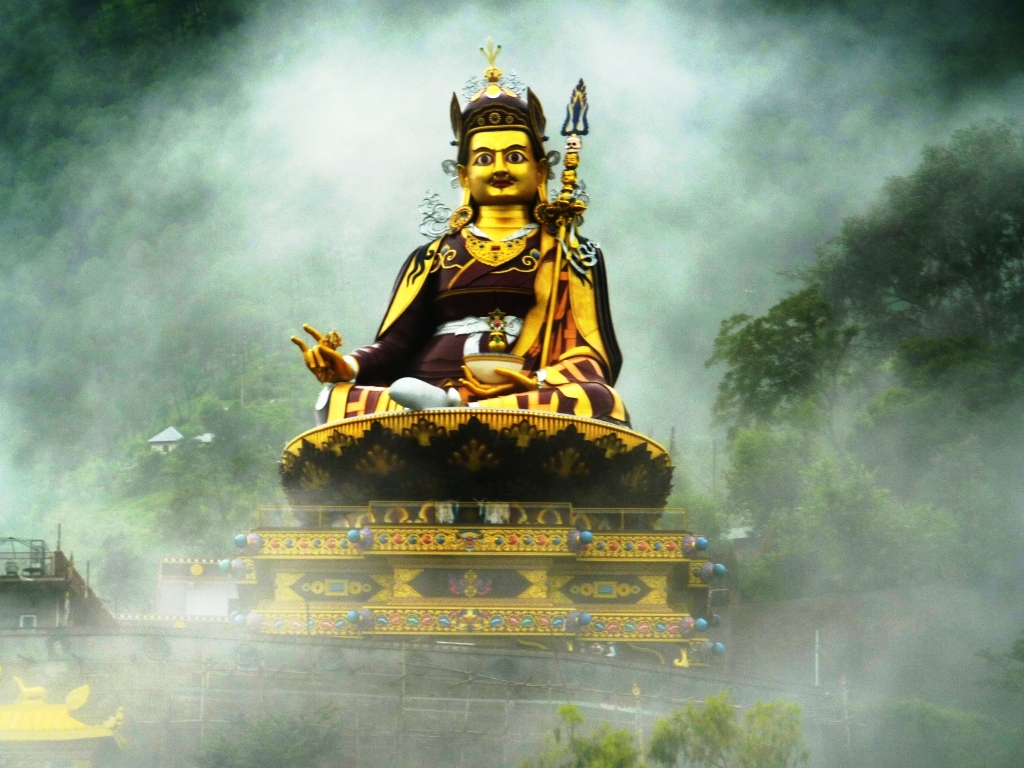
Guru Rinpoche and the lake that would not freeze
Local Buddhist tradition holds that Guru Padmasambhava, the 8th-century teacher who brought tantric Buddhism to Tibet and is revered across Sikkim as Guru Rinpoche, passed this way on his return from Tibet. The lake was then frozen for most of the year, and the herders here had no water. According to the legend, he touched a part of the lake, and that part never froze again. This is a legend, told with devotion, not a recorded event.
The lake's name links it to him, and it became a place of pilgrimage. In 1997–98 a Sikh regiment of the Indian Army posted nearby built a gurdwara on the shore, believing Guru Nanak had visited the lake. Local Sikkimese communities objected strongly, holding that the lake had always been a Buddhist sacred site.
The state government set up a high-level committee. Documents from the Namgyal Institute of Tibetology supported the local claim, the committee accepted it, and on 6 July 2001 the army handed the building over to Lachen Monastery, which placed a lama at the lake as caretaker. Today you will see prayer flags and a small shrine on the shore.
Pinned to the board
Did you know
Gurudongmar Lake covers about 118 hectares, with a shoreline of about 5.3 km.
Tso Lhamo, counted as the source of the Teesta River, lies about 5 km away and is fed by streams that include Gurudongmar's outflow.
The road to the lake is National Highway 310C, about 100 km from Chungthang through Lachen and Thangu.