Told in the hills
Guru Rinpoche's rock and the rice that grows here
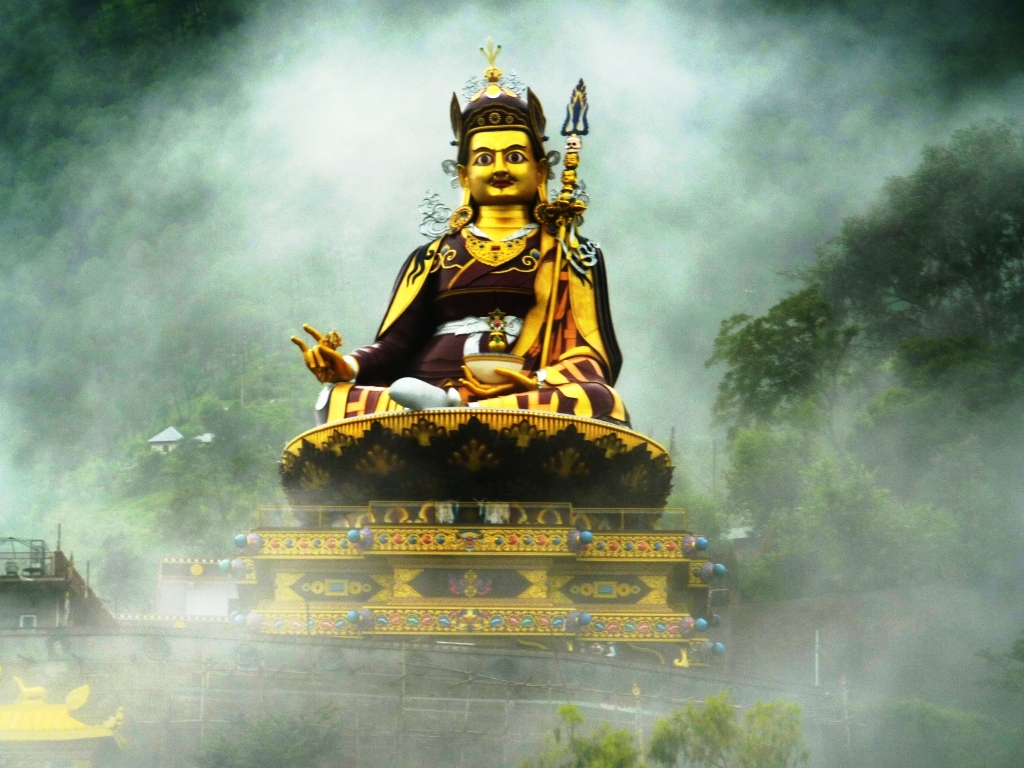
Buddhist tradition holds that Guru Padmasambhava, Guru Rinpoche, stopped at Chungthang on his way back from Tibet in the 8th century. A rock here, called Lhedo or Neydo, is said to bear the prints of his hands and feet, and a small spring flows from an opening in it. Pilgrims touch the rock and collect the water.
Next to it is a small patch of paddy. Rice does not normally grow at this height and latitude, but the legend says Guru Rinpoche, after a meal, scattered his leftover grains on this spot, and rice has grown there ever since. Local accounts say a monastery, Tsunthang Rigzin Choeling, was later built nearby, dated by some sources to 1788. These are traditions of faith, told as such.
Chungthang is also linked by some to the idea of Sikkim as 'Demazong', the hidden valley of rice. The Pilgrim's Guide to the Hidden Land of Sikkim derives the name Tsunthang, its proper pronunciation, from words meaning 'top precious plain'. Stand by the rock, look at the green paddy beside a grey flood plain, and the old stories feel close.
Pinned to the board
Did you know
The Teesta-III dam at Chungthang was a 1,200 MW project; its powerhouse was downstream at Singhik.
Chungthang is about 95 km from Gangtok and sits at roughly 1,790 m, much lower than Lachen or Lachung.
A gurdwara at Chungthang, Gurdwara Nanak Lama, was built by officers of the Assam Rifles in 1970, according to Wikipedia.