Now in the hills

DarjeelingTour Plan
Neora Valley National Park
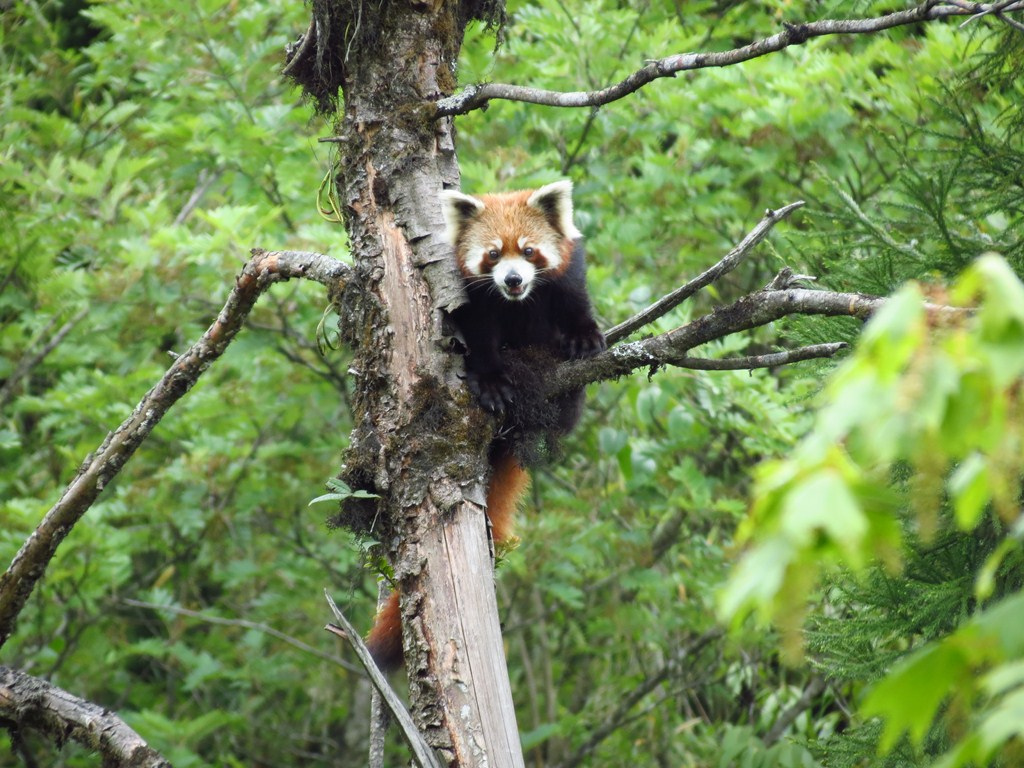
Photo: Anirban Biswas · CC BY-SA 2.0, Wikimedia Commons

national park · Kalimpong and Neora

Red panda forest from the foothills to Rachela Danda

Best Oct – Apr2 nights
Neora Valley National Park protects about 88 sq km of forest in Kalimpong district, rising from about 183 m to 3,200 m at Rachela Danda. It is known as red panda habitat and for birds. Enter on a day permit from Lava, by jeep to Zero Point, between mid-September and mid-June.

Neora Valley was declared a national park in 1986 to protect a block of forest that had been left largely untouched because it is so hard to reach. It runs from the foothills near the Dooars in the south to Rachela Danda, at about 3,200 m, on the border with Sikkim and close to Bhutan in the north. In between lie tropical, subtropical, temperate and sub-alpine forests, one of the widest altitude ranges of any park in West Bengal.

The park is famous as a habitat of the red panda, and also shelters clouded leopard, leopard, Himalayan black bear, goral, serow and barking deer, along with a long list of birds and orchids. Very few visitors see the rarer mammals. What everyone sees is the forest itself: tall oaks and firs hung with moss, bamboo thickets, rhododendrons and ferns, with mist moving through.

Tourism is deliberately limited. The usual visit is a day trip from Lava: permit at the forest range office, a jeep about 13 km into the forest to Zero Point, then a guided walk. A southern entry from Samsing and Mouchuki in the Dooars gives access to the lower forest. The park is closed in the monsoon, usually from 16 June to 15 September.

Don't miss

Highlights of Neora Valley National Park

Jeep to Zero Point

From Lava, permitted jeeps drive about 13 km into the forest to Zero Point, where the road ends. The drive itself passes through oak, fir and rhododendron, and the guided walk from Zero Point is the core of most visits.

Birding in layered forest

The park's range of altitudes means a wide range of birds: laughingthrushes, sibias, fulvettas, parrotbills, pheasants and many more. November to April, with an experienced guide, gives the best results.

Red panda habitat

The higher forests with dense bamboo are prime red panda habitat. Sightings are rare and never promised, but walking quietly in that forest at dawn with a guide is as close as most people get.

Rhododendrons in spring

From March to April, rhododendrons flower in the temperate and upper forests, alongside magnolia and many orchids. Combined with active birds, spring is the most colourful time to visit.

Southern entry from the Dooars

The park's lower forests can be reached from Samsing in the Dooars, with the WBFDC camp at Mouchuki. This side is warmer, wetter and more tropical, and pairs well with a Dooars trip.

Told in the hills

Why the red panda lives here

The red panda is a small, russet, tree-dwelling mammal with a ringed tail, related neither to the giant panda nor to raccoons but in a family of its own. It lives in temperate forests with dense bamboo undergrowth, roughly between 2,200 and 4,800 m, across the eastern Himalaya and south-western China, and feeds mainly on bamboo leaves. It is listed as Endangered, threatened by habitat loss and fragmentation.

Neora Valley offers exactly what it needs: unbroken stretches of oak, fir and rhododendron forest with thick bamboo at the higher altitudes, little human disturbance and connections to forests in Sikkim and Bhutan. Forest staff and researchers have recorded red pandas here using camera traps and surveys, which is why the park describes itself as the land of the red panda. The animals are shy, mostly active at dawn and dusk, and spend much of their time high in trees, so sightings remain rare.

Pinned to the board

Did you know

Neora Valley National Park was established in 1986 and covers about 88 sq km.

The park's highest point is Rachela Danda, at about 3,200 m, near the meeting point of West Bengal, Sikkim and Bhutan.

The Neora river, which rises in the park, is the main water source for Kalimpong town.

Getting there

How to reach Neora Valley National Park

Shared jeepTake a shared jeep from Kalimpong to Lava, about ₹100–150 a seat, indicative for 2026. Inside the park only permitted vehicles may go, hired through the forest office or local operators in Lava. For the southern side, shared jeeps run from Siliguri and Malbazar to Samsing.
Reserved carHire a car to Lava from Kalimpong for about ₹2,000–3,000, or from NJP or Bagdogra for about ₹4,500–6,000, indicative for 2026. From Lava, a park jeep to Zero Point and back costs about ₹1,500–2,500 per vehicle. For Samsing, a car from Siliguri takes about 3 hours.
Rail / AirBagdogra (IXB) is the nearest airport. New Jalpaiguri (NJP) is the main railhead, and Malbazar station is closest to Samsing and to Lava via Gorubathan. Continue by road.

Costs in Neora Valley National Parkindicative, 2026

  • Entry permitAbout ₹120–150 per Indian, ₹500 per foreigner, indicative, 2026
  • Park jeep to Zero Point and back₹1,500–2,500 per vehicle, indicative, 2026
  • Vehicle entry feeAbout ₹300–500, indicative, 2026
  • Forest guide₹300–600 per group, indicative, 2026
  • Camera fee (if charged)₹100–500, indicative, 2026

Fares and fees change with fuel prices, season and local union rates. Check current rates before you travel.

Money-saving tip

Share a park jeep: up to six people can split the vehicle and guide charges, which brings a Zero Point visit down to a few hundred rupees each; ask at the Lava forest office or your lodge to join others.

Where to stay

Sleeping in Neora Valley National Park

There are no hotels inside the park. Most visitors stay at Lava, where the WBFDC Lava Eco Tourism Centre sits among pines close to the permit office, or in homestays at Kolakham on the forest edge, about 10 km beyond. Rishyap and Lolegaon homestays also work as bases with a longer drive. On the southern side, WBFDC runs eco tourism centres at Samsing and a camp at Mouchuki, and there are homestays and resorts around Samsing and Suntalekhola in the Dooars.

On the map

Map of Neora Valley National Park, Lava, Kolakham, Rishyap, LolegaonIndiaChinaBhutanNepalNeora Valley National Park1Neora Valley National ParkLava2LavaKolakham3KolakhamRishyap4RishyapLolegaon5Lolegaon20 kmN
  1. 1Neora Valley National Park
  2. 2Lava
  3. 3Kolakham
  4. 4Rishyap
  5. 5Lolegaon
Drawn by Darjeeling Tour Plan from Natural Earth outlines (public domain). Borders as depicted by India. Not for navigation.

Questions people ask

Neora Valley National Park: questions answered

How do I visit Neora Valley National Park

Most visitors base themselves in Lava or Kolakham, collect a day permit from the forest range office in Lava in the morning, and take a permitted jeep about 13 km to Zero Point, then walk with a forest guide. The southern side can be visited from Samsing and Mouchuki in the Dooars. The park is closed from mid-June to mid-September.

What is the entry fee for Neora Valley National Park

Indicative 2026 charges are about ₹120–150 per Indian and ₹500 per foreigner, plus a vehicle fee of a few hundred rupees, a guide fee of ₹300–600, and the cost of a park jeep to Zero Point, about ₹1,500–2,500 per vehicle. Fees change from time to time, so check current status before you travel.

When is Neora Valley National Park closed

The park closes for the monsoon, usually from 16 June to 15 September, like other national parks and sanctuaries in North Bengal. Closures can be extended or brought forward if weather or roads are bad. Plan to visit between mid-September and mid-June, ideally October to December or March to April.

Can I stay inside Neora Valley National Park

Overnight stays inside the core of the park are not generally offered to tourists. Stay at Lava, at the WBFDC Lava Eco Tourism Centre or a bazaar hotel, or in homestays at Kolakham on the forest edge. On the southern side, WBFDC's Mouchuki camp and Samsing centres sit near the park boundary.

What animals live in Neora Valley

The park is known for the red panda, and also has clouded leopard, leopard, Himalayan black bear, goral, serow, barking deer, wild boar and smaller mammals, along with many birds. Most mammals are shy and rarely seen. Birds, forest and plants are what most visitors actually see on a day trip.

Is Neora Valley good for trekking

Short guided walks from Zero Point are the usual option for visitors. Longer treks deep into the park, including toward Rachela, have been run in the past with special permission, guides and support, but access is restricted and changes with forest department policy. Ask in Lava and check current status before planning a long trek.

Which is the best base for Neora Valley, Lava or Kolakham

Lava is more practical: the permit office, monastery, transport and WBFDC lodge are there. Kolakham is quieter, closer to the forest edge and Changey Falls, with homestays and mountain views. For a two-night trip, many people spend one night in each, or stay in Lava and visit Kolakham by day.

Do I need to be fit to visit Neora Valley

Basic fitness is enough for a jeep trip to Zero Point and a short guided walk. Trails are uneven, often muddy and at around 2,500 m or higher, so walk slowly and wear good shoes. Longer walks need more stamina. Visitors with heart or breathing problems should take medical advice and keep walks gentle.

Are there leeches in Neora Valley

Yes, in the wet months, roughly April to October, especially after rain. Wear long trousers tucked into socks or leech socks, check your legs regularly, and carry salt to remove them. From November to March leeches are scarce. They are harmless, but bites bleed for a while and can itch.

Start planning

Tell us the trip, we'll price it three ways

Dates, who is coming and roughly what you want to spend. A planner replies within one working day with a route and a budget, comfort and premium price, so you can see exactly what each extra rupee buys.

  • No payment to startPay only when you confirm
  • Three prices, in writingBudget, comfort, premium, line by line
  • One plannerOn WhatsApp from pickup to drop
  • Permits handledSikkim and Bhutan paperwork sorted

Get a free plan and price

Reply within one working day · no payment to start

We reply by email or WhatsApp. Read our privacy policy.

Get a free plan