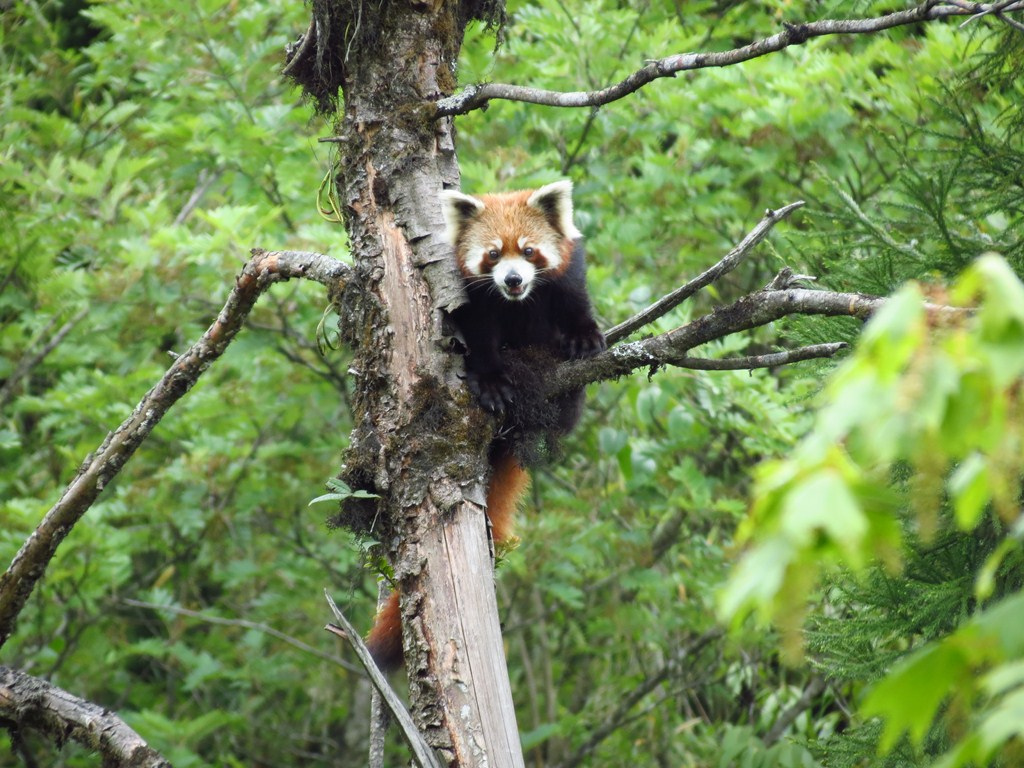
wildlife · Neora Valley National Park, Kalimpong
Jeep to Zero Point and a guided forest walk

Start at the forest range office in Lava, ideally by 8 am, with photo ID for everyone. Permits are issued for the day. The office or local operators then arrange a permitted jeep and a guide. The track runs about 13 km into the forest, climbing slowly through changing vegetation, and ends at Zero Point, the start of the walking trails.
From Zero Point your guide leads a walk of one to three hours depending on the permit, weather and your fitness. The forest here is temperate: oak, maple, fir and rhododendron, with dense bamboo and thick moss. Listen for mixed bird flocks and barking deer, and watch the trees; red pandas live in this kind of forest, but sightings are rare.
Bring water, snacks, a rain layer and warm clothes, as it is cold and often misty. Leeches appear in spring after rain. Keep to the trail and follow the guide's instructions; this is protected forest, and some areas are closed to visitors. Back in Lava by early afternoon, you have time for the monastery or a rest.
Good for
Questions people ask
Good to know
How much does a Neora Valley Zero Point trip cost
Expect about ₹2,500–4,000 per group, indicative for 2026, covering the entry permit (about ₹120–150 per Indian, ₹500 per foreigner), the vehicle entry fee, the jeep to Zero Point and back, and a guide. Costs are per vehicle, so sharing with others brings the per-person cost down. Check current fees before you travel.
Can I book Neora Valley permits online
Generally no; day permits are issued in person at the forest range office in Lava on the day of your visit. Arrive in the morning with photo ID for every visitor. Rules and processes change from time to time, so ask your lodge in Lava the evening before and check current status before you travel.
Is Neora Valley open in the monsoon
No. The park closes to tourists during the monsoon, usually from 16 June to 15 September, as do other national parks in North Bengal. Even just before and after the closure, rain can cut access. Plan visits between mid-September and mid-June, ideally October to December or March to April.
Also in Neora Valley National Park