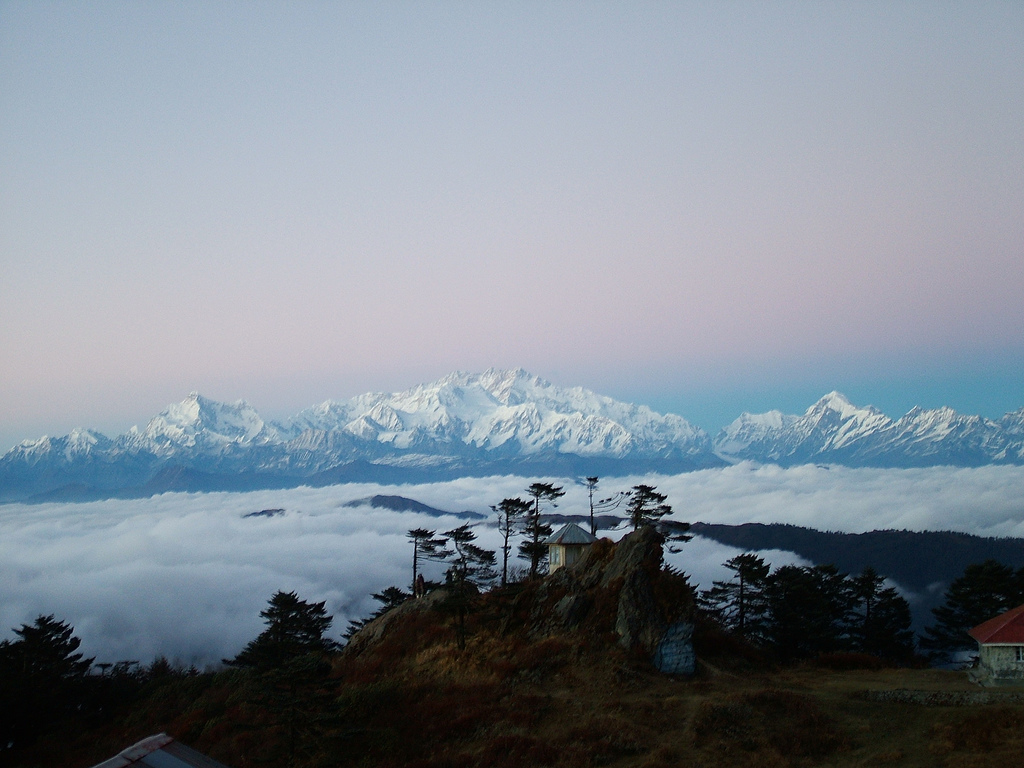
wildlife · Sandakphu, Darjeeling
Red pandas and rhododendrons in Singalila

Singalila National Park covers the Indian slopes of the ridge between about 2,400 m and 3,600 m. Its mix of oak, magnolia, rhododendron and dense bamboo is good red panda country, and the park is known as one of the best places in India to look for them. Red pandas are shy and spend much of the day high in trees, so the best time is early morning, when they come down to feed on bamboo.
Ask your guide to set out from your lodge at first light on a stretch of quiet forest, such as the trail around Gairibas or below Kalipokhri. Walk slowly, keep voices low and scan the upper branches for a reddish ball of fur with a ringed tail. Sightings are a matter of luck, and many groups see none. The birds make up for it: blood pheasants, satyr tragopans in the right season, and noisy flocks of laughingthrushes.
In late March, April and early May the ridge flowers. Several species of rhododendron bloom in red, pink and white, and magnolias open lower down. Do not pick flowers or leave the trail; this is a protected area and the plants are slow to recover. Binoculars help more than a long lens, and a field guide to Himalayan birds makes the walk twice as rewarding.
Good for
Questions people ask
Good to know
Can I see a red panda at Sandakphu
You might, but there is no guarantee. Singalila National Park is one of the best red panda habitats in India, and the forests around Gairibas and Kalipokhri are good areas. The animals are shy and arboreal, so go out with your guide at first light, walk quietly and look high in the trees. Most visitors do not see one.
When do rhododendrons bloom at Sandakphu
Usually from late March to early May, peaking in April, depending on altitude and the year's weather. Lower stretches near Tumling flower first, and the higher slopes near Sandakphu follow. Mountain views are hazier in spring than in autumn, so choose April for flowers and October or November for clear peaks.
Is there an entry fee for Singalila National Park
Yes. Visitors pay a park entry fee at Manebhanjan, around ₹120 a day for Indians and more for foreigners, plus charges for cameras and vehicles, indicative 2026. A licensed guide is also mandatory. Fees are set by the West Bengal Forest Department and change, so check current status before you travel.