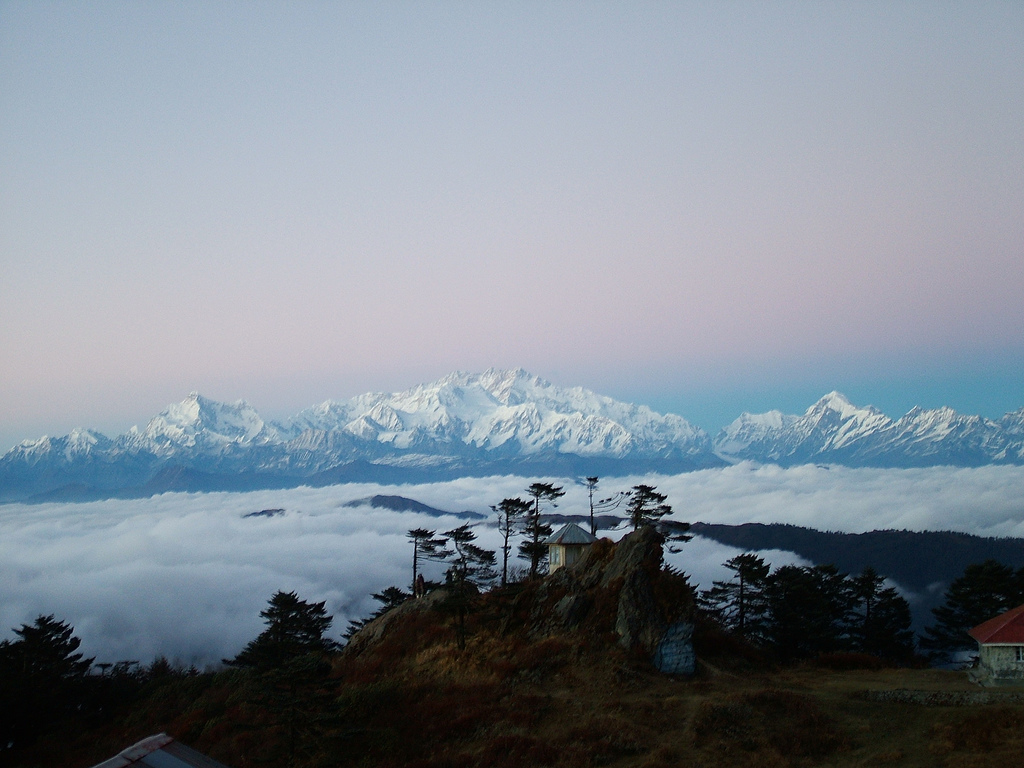
Told in the hills
A hamlet named for the first people of the hills
The name Lepchajagat points to the Lepcha, the people who call themselves Rong and are generally regarded as the earliest inhabitants of the Darjeeling and Sikkim hills. Before tea and the British, this ridge was forest used by Lepcha families for hunting, gathering and small-scale farming. Lepcha tradition holds a deep knowledge of the forest's plants and animals, and many place names across the hills still come from their language.
The ridge changed after the Darjeeling tract passed to the British in 1835 and the hills were opened up for tea, timber and roads. Ghum grew around its railway station and monastery, and the road west towards the Nepal border brought new settlers, most of them Nepali-speaking. Much of the land around Lepchajagat remained under the forest department, which is why it still stands among tall trees while Darjeeling, a short drive away, has spread over every slope.
Pinned to the board
Did you know
Lepchajagat lies on the road from Ghum to Sukhiapokhri, which runs on towards Mirik and close to the Nepal border.
The Lepcha call themselves Rong and are widely regarded as the earliest inhabitants of the Darjeeling and Sikkim hills.
Jorepokhri, a few kilometres beyond Lepchajagat near Sukhiapokhri, is a small protected lake set aside for the Himalayan salamander.