culture · Mahananda Sanctuary and Sevoke, Dooars
The Coronation Bridge and the Teesta gorge
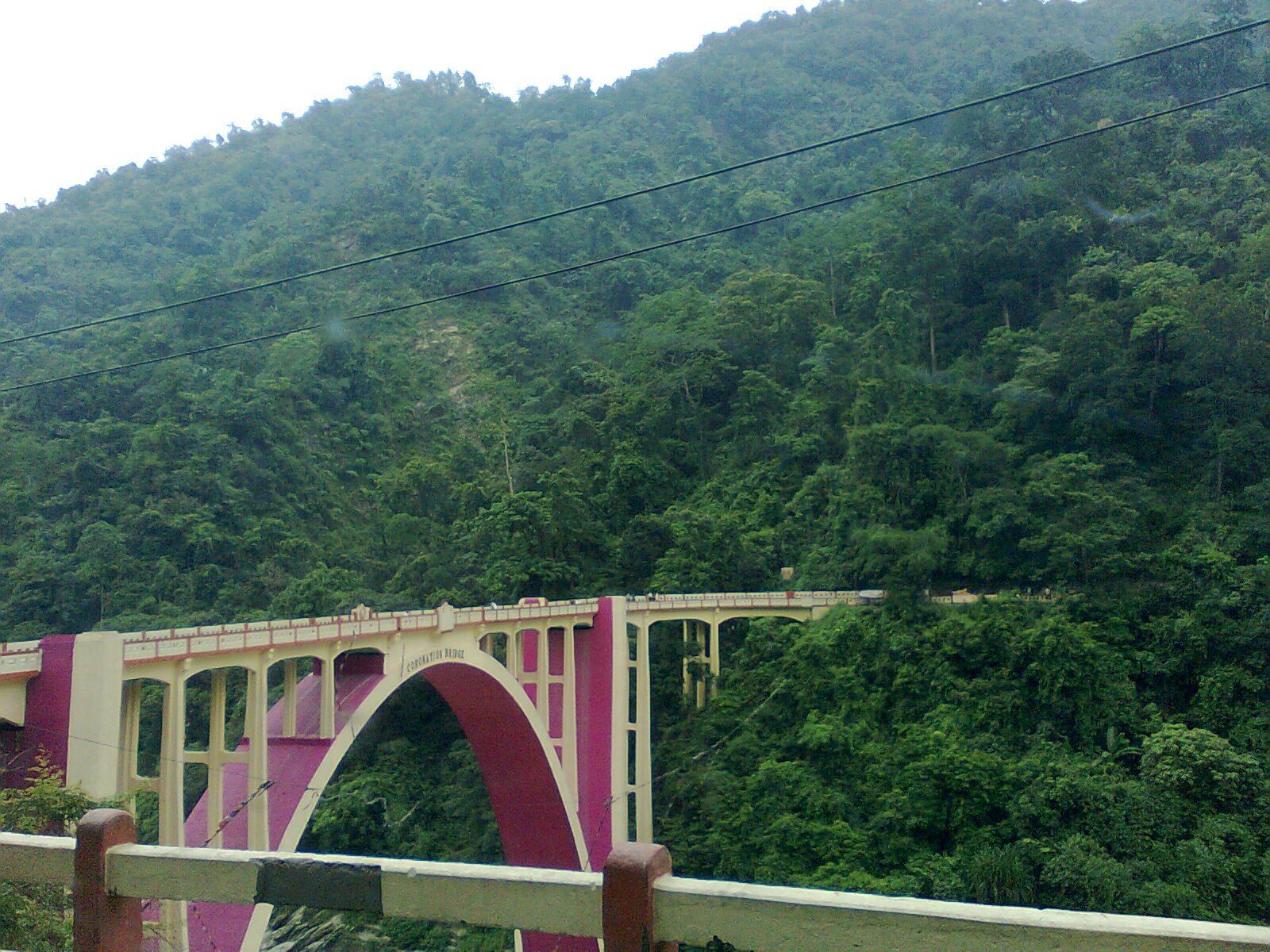
Coming from Siliguri, the road climbs out of Sevoke bazaar and swings onto the bridge. Below, the Teesta squeezes out of a forested gorge, green and clear in winter, brown and roaring in the monsoon. The bridge, a reinforced-concrete arch of about 120 m with its main span over the water, leaps across with no pier in the river, a design meant to survive the Teesta's floods.
Its story is a small piece of empire. The foundation stone was laid in 1937 by the Governor of Bengal to mark the coronation of George VI and Queen Elizabeth, and the bridge opened in 1941. Local people know it as Baghpool, after the big-cat statues at one end. It has carried traffic into the Dooars ever since.
There is no proper viewing platform. Ask your driver to stop at a safe pull-off near one end, and watch for trucks; do not stand on the carriageway. Photography of the bridge is common, but follow any signs, as the area has security installations nearby.
Good for
Questions people ask
Good to know
Why is it called the Coronation Bridge
Its foundation stone was laid in 1937 to commemorate the coronation of King George VI and Queen Elizabeth. The bridge was completed in 1941. Locally it is called Baghpool, or tiger bridge, after the big-cat statues at one end, usually described as lions.
Where is the Coronation Bridge
At Sevoke, about 22 km from Siliguri, where the Teesta comes out of the hills. It carries the road from Siliguri into the Dooars. Every car going from Siliguri to Lataguri, Jaldapara or Bhutan by the main route crosses it.
Can I stop on the Coronation Bridge
Stopping on the bridge itself is unsafe and may be prohibited. Ask your driver to use a safe pull-off near either end and walk a short way for the view, keeping off the carriageway. Traffic rules on the old bridge change during repairs; check current status before you travel.
Also in Mahananda Sanctuary and Sevoke


