Karam Puja in the tea gardens
Aug–Sep, Ekadashi of the bright half of Bhado (lunar calendar)
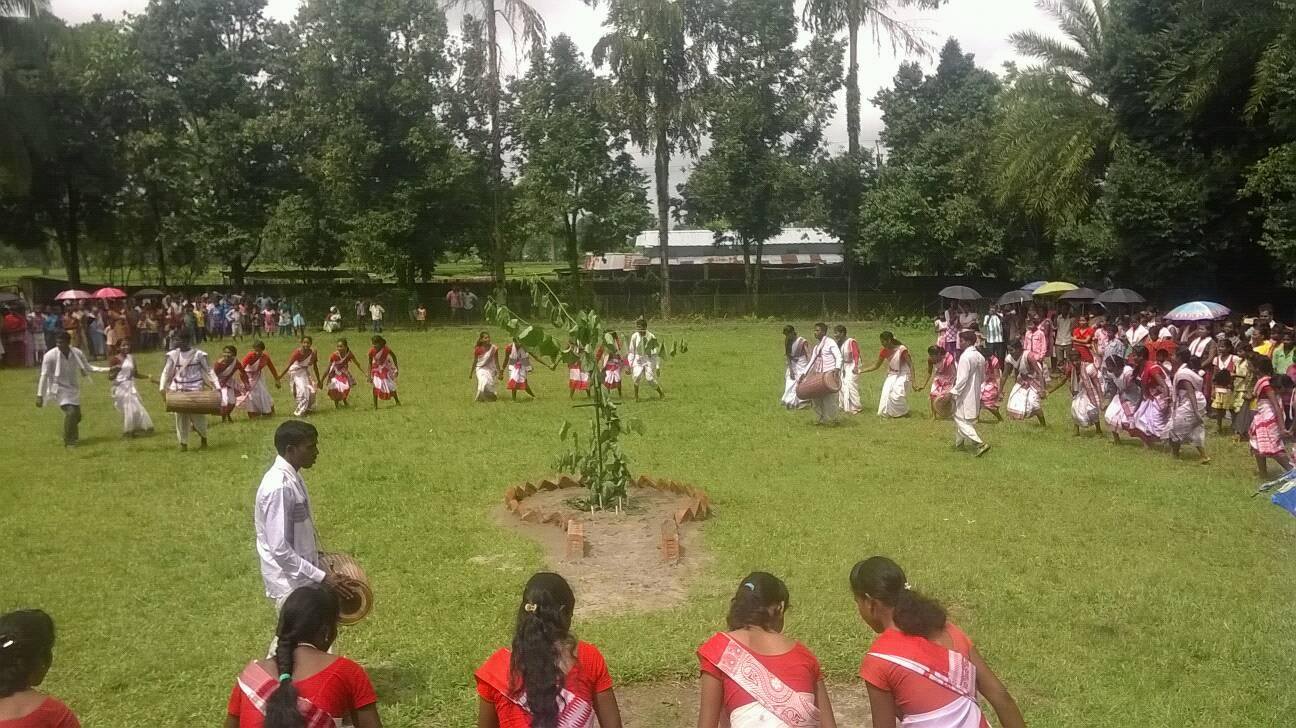
The Oraon, Munda and other communities whose ancestors came to the Dooars tea gardens from the Chota Nagpur plateau brought Karam with them. It falls on the eleventh lunar day of the bright fortnight of Bhado, in late August or September. Young women prepare by planting seeds of rice, wheat, maize and pulses in baskets, the jawa, and tending them for seven to nine days, often fasting.
On the festival day, people bring a branch of the Karam tree from the forest and plant it in the akhra, the village dance ground. It is washed with milk and rice beer and worshipped, the story of Karam is recited, and the community sings and dances around it to the beat of the mandar drum, often all night. The next day the branch is carried in procession and lowered into a river or pond.
In the Dooars, Karam falls in the monsoon, when the parks are closed and few tourists come. If you are in the region then, ask your host near Chalsa, Malbazar or Murti which garden lines are celebrating, and go only if invited or welcomed. It is a community festival, not a performance.
How to do it well
- Karam falls in the monsoon; plan for rain, flooded roads and closed parks.
- Go with a local host who knows the community, and ask before photographing dancers or rituals.
- Accept food or drink offered if you are comfortable, and leave before the late-night celebrations if you are not invited to stay.
Questions people ask
Good to know
When is Karam Puja celebrated
Karam falls on the Ekadashi, the eleventh lunar day, of the bright fortnight of the month of Bhado, which comes in late August or September. Exact dates change each year with the lunar calendar. Check a current calendar or ask local contacts before you travel.
Who celebrates Karam in the Dooars
Mainly Adivasi communities such as the Oraon and Munda, whose ancestors came to work in the tea gardens from the Chota Nagpur plateau in the late nineteenth and early twentieth centuries. Karam is one of the biggest festivals in the tea garden lines of North Bengal.
What happens at Karam Puja
Young women grow seedlings in baskets for about a week, a branch of the Karam tree is planted in the village dance ground and worshipped, the Karam story is told, and people sing and dance around it to the mandar drum, often all night. The branch is lowered into a river or pond the next day.
Can tourists see Karam Puja
Sometimes, if you are welcomed by the community. Go with a local host, keep a low profile, ask before photographing, and do not treat it as a show. Since Karam falls in the monsoon, travel conditions in the Dooars can be difficult.