wildlife · Jaldapara National Park, Dooars
Dawn jeep safari for rhinos
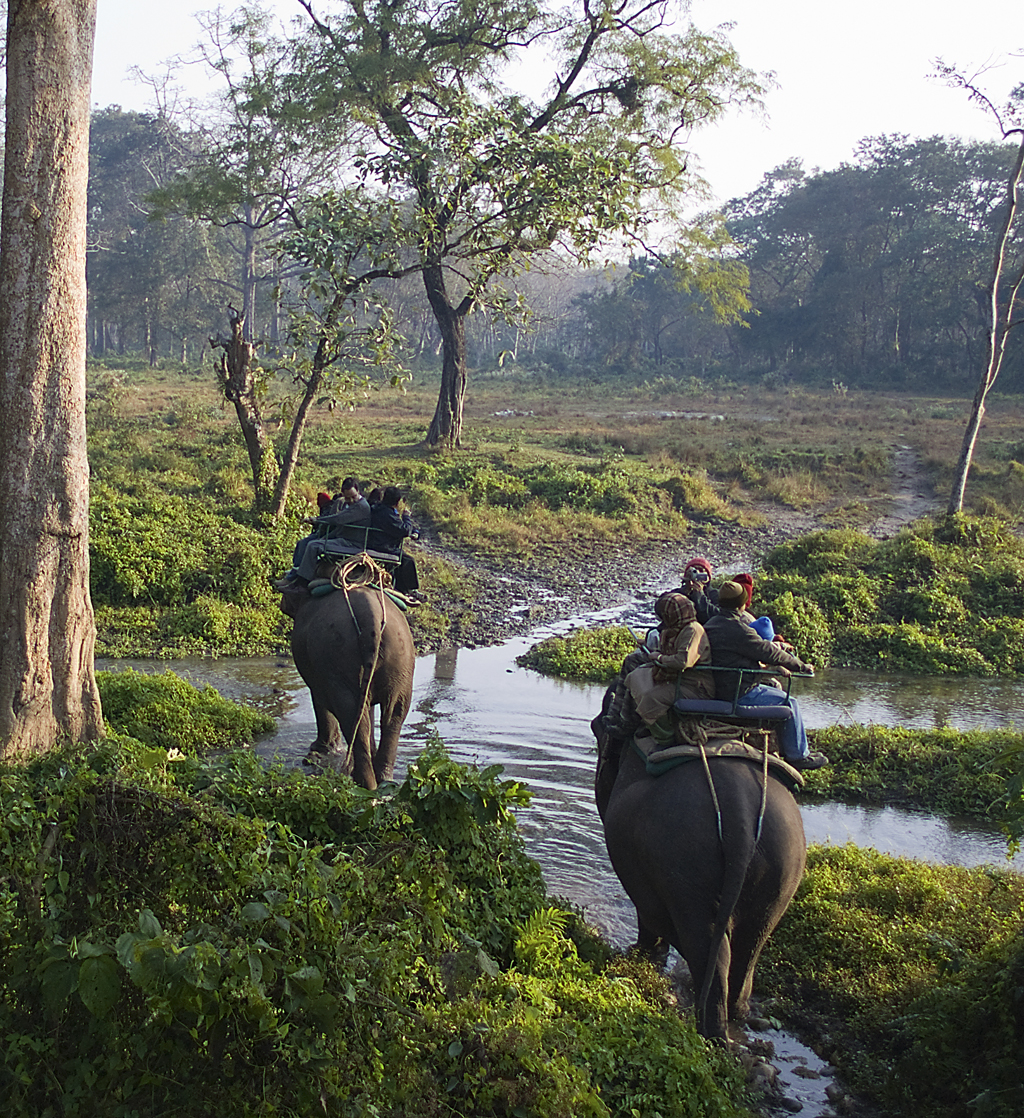
Safari jeeps at Jaldapara are forest-registered vehicles with local drivers, and a guide rides with each one. The morning slots start around sunrise and follow set routes through grassland, riverine forest and along water channels, stopping at watchtowers. Your best chance of a rhino is in the open grass, often at a distance of 50–200 metres; bring binoculars and a zoom lens.
Rhinos are the stars, but look for the rest. Elephants come out of the forest edge, gaur feed in the clearings, hog deer and sambar slip through the grass, and peafowl and junglefowl cross the track. In winter the river channels hold ducks and waders. Leopards are present but seldom seen. The guide's job is to read fresh dung and tracks; listen to him.
Book on the forest department's portal or at the Madarihat counter. Different routes and zones are sold separately, including routes towards the Totopara side and through Chilapata; ask which route your ticket covers. In autumn 2026 online booking was suspended for weeks and touts resold counter tickets, so check current status before you travel.
Good for
Questions people ask
Good to know
What is the Jaldapara jeep safari cost
A jeep safari usually costs about ₹2,800–4,000 per jeep for up to six people, indicative 2026, covering vehicle hire, entry and guide, though some fees are listed separately. Foreign visitors pay a higher entry fee. Prices change, so check current status before you travel and confirm what is included.
What are Jaldapara safari timings
Morning slots run from around sunrise, roughly 5:30–8:30 a.m. in two slots, and there is an afternoon slot from about 3 or 3:30 p.m. Timings shift between summer and winter. Safaris have generally not run on Thursdays, and the park closes from 16 June to 15 September. Check current status before you travel.
What are my chances of seeing a rhino at Jaldapara
Good, especially from February to April. With about 331 rhinos, Jaldapara gives the best odds in Bengal, and most visitors on a morning safari in season see at least one. In November and December the grass is tall and sightings are less certain. Two safaris roughly double your chances.
Also in Jaldapara National Park


